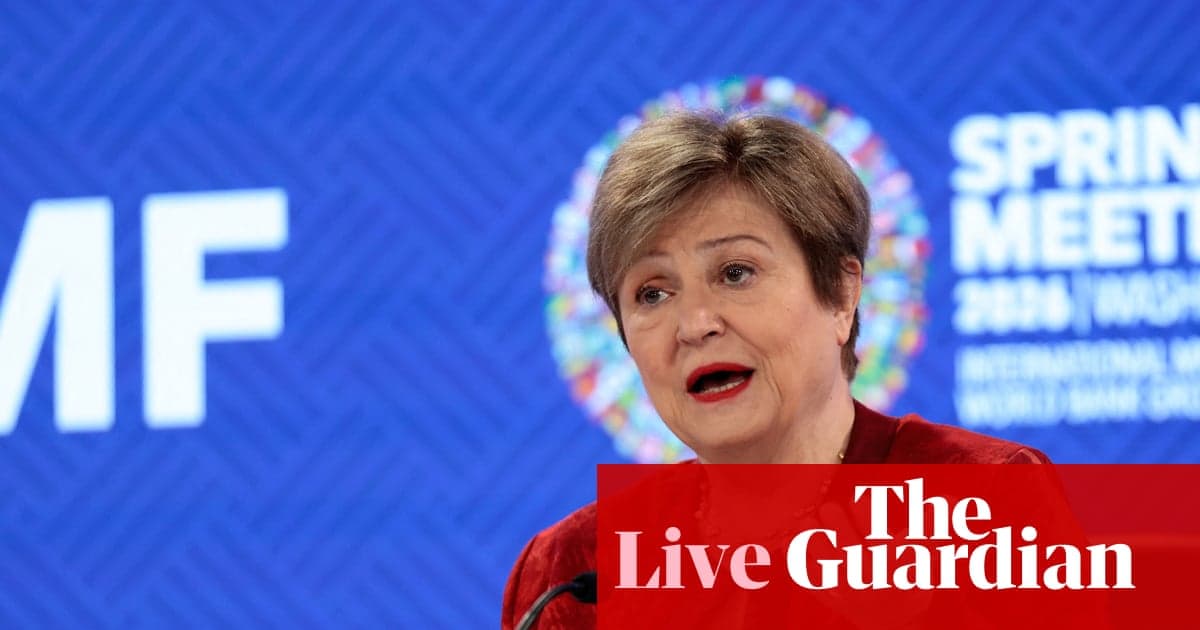
IMF Calls for Countries to Economise on Energy Supplies, and Hails UK’s Budget Deficit Improvement – as It Happened
Why It Matters
The UK’s deficit reduction demonstrates that fiscal tightening can coexist with growth, offering a template for other advanced economies facing rising debt and energy‑price shocks. Energy‑saving policies and targeted lending are now critical to curb inflation and prevent a debt spiral worldwide.
Key Takeaways
- •UK deficit fell to 5.4% of GDP in 2025
- •IMF projects UK deficit at 3.9% in 2026, 1.6% by 2031
- •Georgieva urges energy‑saving measures to curb inflation pressures
- •Global debt could hit 100% of GDP by 2029, war‑driven
Pulse Analysis
The IMF’s latest Fiscal Monitor underscores a rare fiscal success story: the United Kingdom has trimmed its primary deficit through a mix of tax hikes, threshold freezes and the winding down of temporary energy support. By lowering the deficit to 5.4% of GDP, the UK now sits ahead of most advanced economies, with the fund forecasting a steady decline to 1.6% by 2031. This trajectory not only strengthens the UK’s fiscal buffers but also signals to investors that disciplined budgeting can coexist with growth, especially as the United States grapples with larger, more persistent shortfalls.
Beyond the UK, the IMF is sounding an alarm on energy consumption as the Iran conflict pushes oil, gas, naptha and fertilizer prices higher. Kristalina Georgieva warned that blanket energy subsidies would only prolong inflation, urging governments to adopt targeted measures such as free public transport and remote‑work incentives. The fund estimates that the war‑induced shock could generate $20‑$40 billion in new lending requests, while global sovereign debt is on track to reach 100% of GDP by 2029—levels last seen after World War II. These dynamics heighten the urgency for fiscal prudence and strategic financing in both advanced and emerging markets.
Market participants are already reacting. UK gas prices have retreated to pre‑war levels, easing pressure on households and businesses, yet the FTSE 100 slipped as investors weigh the lingering geopolitical risk. Meanwhile, Canada and Japan posted modest deficit improvements, reinforcing the IMF’s narrative that spending restraint can yield tangible results. The fund’s endorsement of the UK’s approach provides a benchmark for policymakers seeking to balance fiscal consolidation with the need to shield economies from volatile energy markets.
IMF calls for countries to economise on energy supplies, and hails UK’s budget deficit improvement – as it happened
Comments
Want to join the conversation?
Loading comments...