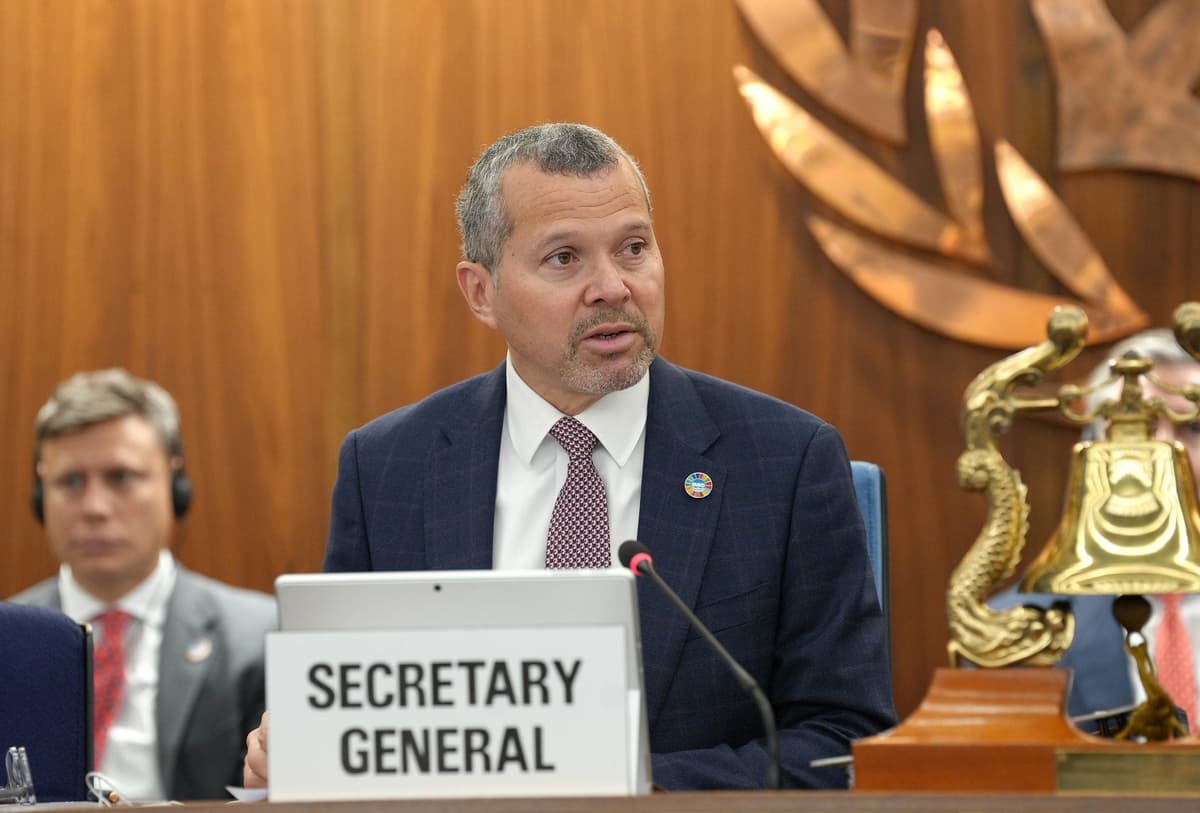
IMO Chief Warns No Safe Passage Exists in Hormuz Despite Rising Traffic Claims
Why It Matters
The warning could trigger tighter insurance terms and force shipowners to reroute, impacting global oil flows and supply‑chain reliability.
Key Takeaways
- •IMO chief declares no safe passage in Hormuz despite traffic claims
- •U.S. officials report rising vessel transits, but numbers stay below pre‑war levels
- •JMIC rates Gulf security as critical, noting 44% weekly transit drop
- •Shipowners bear ultimate responsibility for risk assessments before Hormuz voyages
- •Insurers may tighten policies as operators weigh commercial gains against safety
Pulse Analysis
The Strait of Hormuz remains a chokepoint for global energy markets, channeling roughly 20% of the world’s oil. After the April 8 cease‑fire between the United States and Iran, some vessels have resumed transits, but many still operate with AIS off or at night to avoid detection. U.S. officials cite a modest uptick in traffic, yet figures remain far below the pre‑conflict baseline, underscoring the fragile nature of any recovery.
IMO Secretary‑General Arsenio Domínguez’s stark warning highlights the gap between perceived traffic growth and on‑the‑ground security realities. The Joint Maritime Information Center’s classification of the Gulf and Hormuz as a "critical" security environment, coupled with a 44% week‑over‑week drop in vessel movements, signals persistent threats from mines, missile attacks, and asymmetric tactics. Shipowners now face heightened pressure to conduct rigorous risk assessments, while insurers are likely to reevaluate coverage terms and premiums for Hormuz voyages.
For the broader market, continued uncertainty in Hormuz can ripple through oil prices, freight rates, and downstream supply chains. Any disruption or perceived risk may prompt shippers to seek alternative routes, increasing transit times and costs. As diplomatic efforts aim for a lasting peace, the maritime community must balance commercial incentives with the paramount need to protect crews and cargo, shaping the strategic calculus for energy logistics in the coming months.
IMO Chief Warns No Safe Passage Exists in Hormuz Despite Rising Traffic Claims
Comments
Want to join the conversation?
Loading comments...