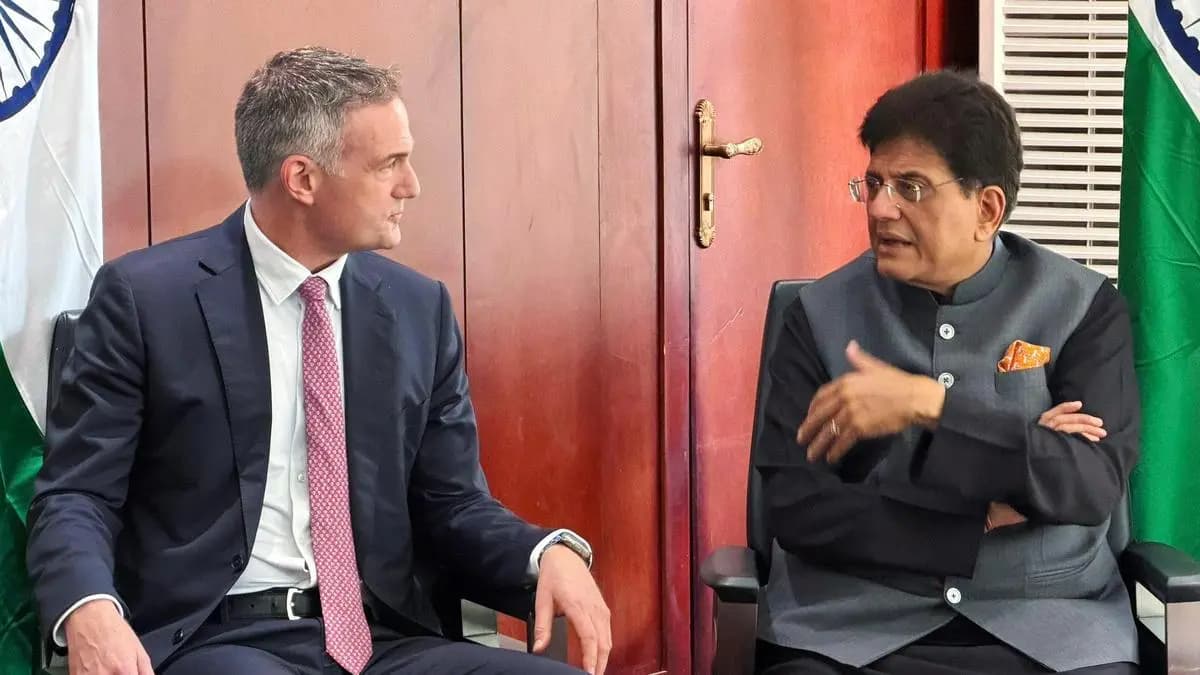
India, UK Discuss Ways to Boost Bilateral Trade
Why It Matters
The meeting signals a concerted effort to accelerate the India‑UK trade agenda, unlocking new market access and investment pipelines that could reshape both economies’ export‑import balances.
Key Takeaways
- •CETA grants zero duty for 99% of Indian exports to UK.
- •Tariffs on British cars and whisky cut in India.
- •Goal to double $56B trade by 2030.
- •Virtual talks signal deeper strategic partnership.
- •Both ministers stress investment opportunities under CETA.
Pulse Analysis
The India‑UK Comprehensive Economic and Trade Agreement, signed in July 2025, created a framework that eliminates duties on almost all Indian goods entering Britain and trims tariffs on key British products. By removing these barriers, the pact is designed to catalyze a surge in cross‑border commerce, positioning the two economies to capitalize on complementary strengths—India’s manufacturing scale and the UK’s premium consumer brands. Analysts view the agreement as a cornerstone for expanding the $56 billion trade baseline toward the ambitious target of $112 billion by 2030.
Sector‑specific opportunities are already emerging. British automotive manufacturers stand to benefit from reduced Indian import duties, opening pathways for joint ventures and localized production. Conversely, Indian exporters of textiles, pharmaceuticals, and information technology services gain unfettered access to the UK market, enhancing their competitive edge against EU rivals. The lowered tariff environment also encourages British whisky and luxury goods producers to deepen their footprint in India’s growing affluent consumer base, while Indian investors eye UK fintech and green‑energy projects as avenues for diversification.
Beyond economics, the dialogue reflects broader geopolitical shifts. Post‑Brexit Britain is actively courting high‑growth markets to offset reduced EU trade, and India is pursuing a multi‑aligned strategy to broaden its export destinations. The virtual meeting between Goyal and Kyle underscores political will to translate policy into practice, yet challenges remain, including regulatory harmonisation and supply‑chain resilience. If both sides sustain momentum, the partnership could become a model for other emerging‑market agreements, reinforcing the strategic relevance of Indo‑British trade in the global economy.
India, UK discuss ways to boost bilateral trade
Comments
Want to join the conversation?
Loading comments...