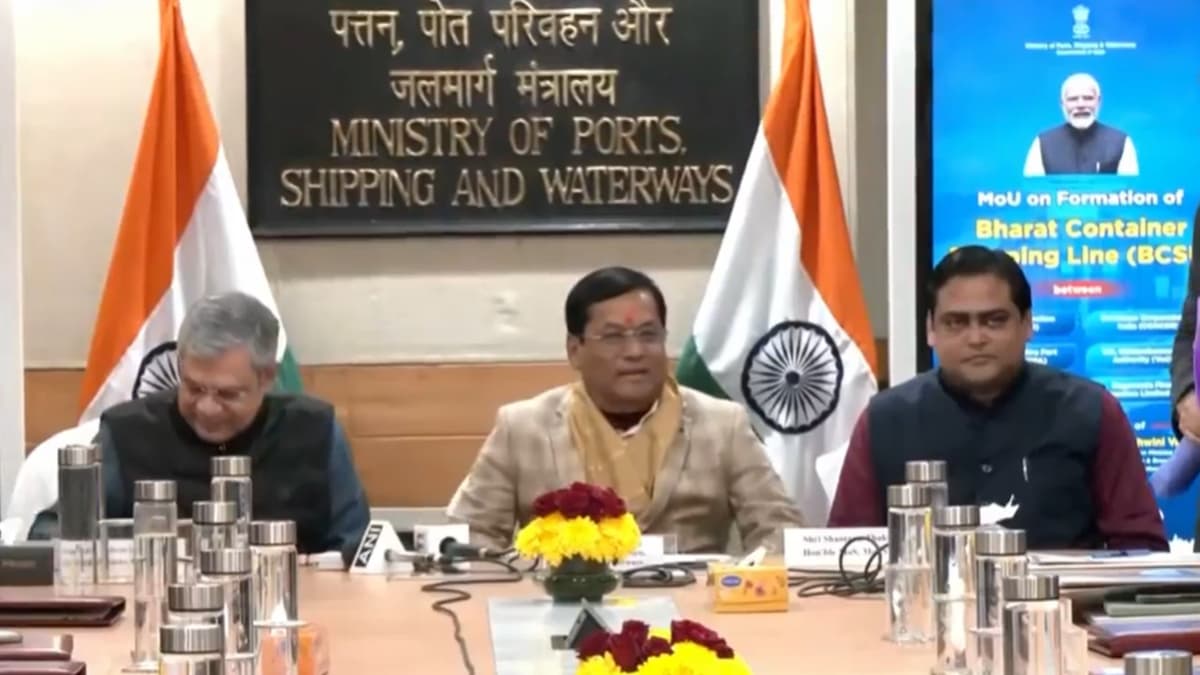
Indian Container Line Takes Shape with MoU Signing
•February 11, 2026
0
Why It Matters
The initiative anchors India’s container trade in domestic hands, boosting self‑reliance and reshaping global shipping competition. It also catalyzes shipbuilding, port infrastructure, and ancillary logistics across the country.
Key Takeaways
- •Six entities sign MoU, creating Bharat Container Shipping Line.
- •SCI and Concor each hold 30% equity in BCSL.
- •BCSL plans 15 new ships, 51 vessels by 2027.
- •$2.6bn funding supports shipbuilding and port capacity expansion.
- •Initial focus regional, later expanding to Africa, Europe, US.
Pulse Analysis
India’s maritime policy is undergoing a decisive shift as the Bharat Container Shipping Line (BCSL) materialises through a multi‑agency MoU. By consolidating stakes from the Shipping Corporation of India, Container Corporation of India, and key port authorities, the government is creating a national champion designed to capture a larger share of the burgeoning container market. This move dovetails with the Amrit Kaal 2047 vision, which seeks to make the nation self‑sufficient in critical logistics and to position shipping as a growth engine for the broader economy.
The BCSL blueprint calls for 15 new vessels built in Indian shipyards, expanding to a 51‑ship fleet within five years. The $1 billion Container Manufacturing Assistance Scheme and a $1.6 billion port‑capacity fund provide the financial backbone for domestic shipbuilding and infrastructure upgrades, promising to generate jobs and stimulate ancillary industries. By anchoring production locally, India aims to reduce reliance on foreign shipyards, lower charter costs, and create a sustainable supply chain for container vessels.
Strategically, BCSL’s initial focus on regional routes to the Red Sea and intra‑Asian lanes establishes a revenue base while building operational expertise. The long‑term ambition to link Africa, Europe and the United States signals a bid to challenge established global carriers and diversify trade corridors. If successful, the carrier could reshape freight rates, enhance India’s bargaining power in international trade negotiations, and accelerate the country’s transition toward a high‑value, export‑driven maritime economy.
Indian container line takes shape with MoU signing
0
Comments
Want to join the conversation?
Loading comments...