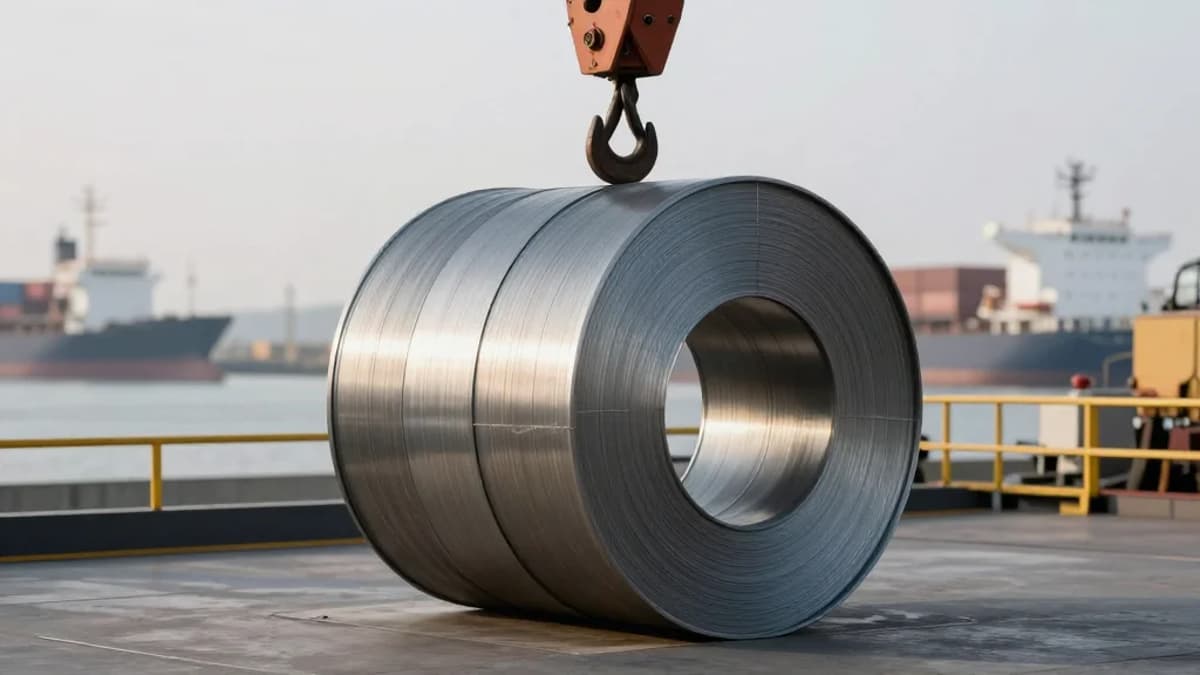
India's Finished Steel Exports Jump 36.6% in April-February
•March 9, 2026
0
Why It Matters
The export surge and import decline improve India's trade balance and signal growing competitiveness in the global steel arena.
Key Takeaways
- •Exports up 36.6% to 6.02 Mt.
- •Imports down 37.4% to 5.6 Mt.
- •Crude steel output rose 11.2% year‑on‑year.
- •Domestic consumption increased 7.2% to 147.7 Mt.
- •Export surge narrows trade deficit in steel sector.
Pulse Analysis
India has cemented its position as the world’s second‑largest crude‑steel producer, trailing only China. In the first eleven months of FY2025‑26, crude‑steel output climbed 11.2% to 153.6 million metric tonnes, reflecting steady capacity utilisation and recent investments in modern blast‑furnace technology. The country’s domestic consumption also rose 7.2%, driven by infrastructure projects and automotive demand. Yet the growth in production outpaced internal use, creating a surplus that manufacturers are now channeling toward overseas markets.
The export data released by the Ministry of Commerce shows finished‑steel shipments jumping 36.6% to 6.02 million tonnes, while imports fell 37.4% to 5.6 million tonnes. This reversal is partly attributable to a weaker rupee, which makes Indian steel more price‑competitive abroad, and to protective tariffs that discourage low‑cost imports from rival producers. Additionally, global steel prices have risen amid supply constraints, encouraging Indian firms to lock in higher margins overseas. The net effect is a modest improvement in the country’s trade balance for the sector.
Looking ahead, India’s ability to sustain export growth will hinge on raw‑material availability, energy costs, and compliance with tightening environmental standards. The government’s recent push for green steel, including incentives for electric‑arc furnace adoption, could raise production costs but also open premium markets in Europe and North America. If logistics bottlenecks are eased and trade agreements with key destinations such as the United Arab Emirates and Southeast Asia are finalized, Indian steelmakers could capture an additional 1‑2 million tonnes of export volume by FY2027‑28. The sector’s trajectory therefore remains a bellwether for the broader manufacturing recovery.
India's finished steel exports jump 36.6% in April-February
0
Comments
Want to join the conversation?
Loading comments...