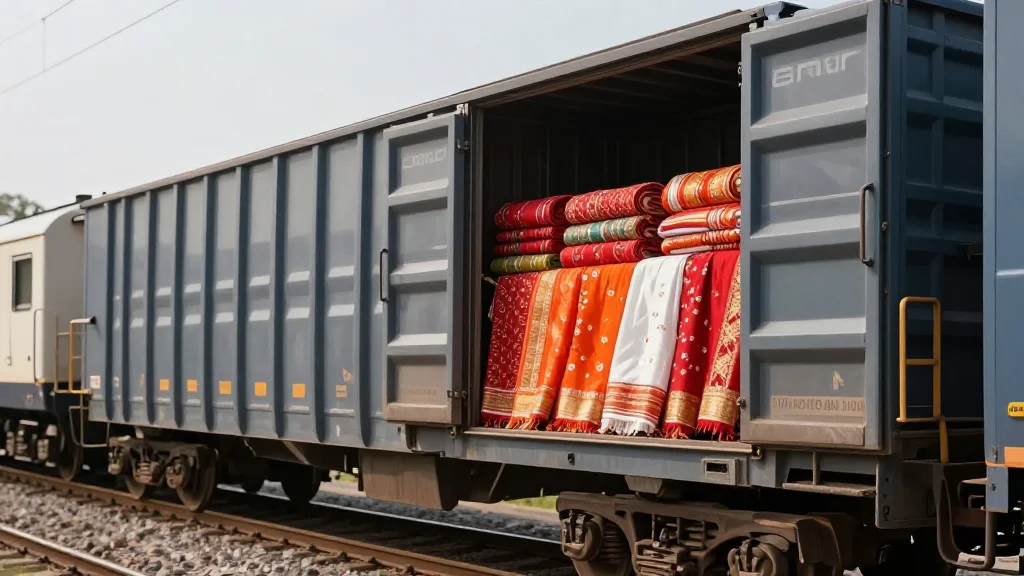
India's Textile Exports Grow 2.1 Pc to Rs 3.16 Lakh Cr in 2025-26
Why It Matters
The modest yet resilient export expansion signals that Indian textiles can sustain demand despite protectionist pressures, reinforcing the sector’s role in trade balances and employment. Upcoming free‑trade agreements with the UK and EU could further amplify market access and profitability.
Key Takeaways
- •Textile exports rose 2.1% to ₹3.16 lakh cr (~$38 bn) FY 2026
- •Ready‑made garments led growth, up 2.9% to $16.7 bn
- •Handicrafts posted highest segment gain, 6.1% to $1.9 bn
- •Exports grew in 120+ markets; Egypt +38.3%, Sudan +205.6%
- •Upcoming UK/EU FTAs aim to lift export competitiveness
Pulse Analysis
India’s textile sector demonstrated surprising resilience in FY 2026, expanding 2.1% to roughly $38 billion in export value despite a punitive U.S. tariff regime that peaked at 50%. The escalation of duties, initially aimed at curbing a trade imbalance, forced exporters to diversify away from the United States and lean on emerging demand in Asia, the Middle East and Africa. This shift underscores the sector’s ability to adapt supply chains and pricing strategies, preserving margins while maintaining a steady flow of shipments.
Within the export basket, ready‑made garments continued to dominate, contributing $16.7 billion and posting a 2.9% year‑on‑year rise. Man‑made yarn and fabrics outpaced traditional cotton products, reflecting a global tilt toward synthetic blends and technical textiles. Handicrafts, a high‑value‑added niche, surged 6.1% to $1.9 billion, driven by consumer appetite for culturally rich, artisanal goods. Geographic diversification was evident, with over 120 markets reporting growth; the most dramatic jumps came from Egypt (+38.3%) and Sudan (+205.6%), highlighting untapped potential in African economies.
Policy levers remain pivotal. The extension of the RoSCTL and RoDTEP schemes, alongside the pending UK and EU free‑trade agreements, promise to lower tariff barriers and improve cost competitiveness. For investors, the combination of robust demand, expanding market access, and sustained government support positions Indian textiles as a compelling growth story in the global apparel supply chain. Continued focus on technology adoption, sustainability, and skill development will be essential to translate this export momentum into higher value‑added products and deeper integration into international value chains.
India's textile exports grow 2.1 pc to Rs 3.16 lakh cr in 2025-26
Comments
Want to join the conversation?
Loading comments...