Indonesia Eyes China Partnerships to Build Industry and Tech ‘Better than the EU Standard’
•February 10, 2026
0
Why It Matters
The collaboration fast‑tracks Indonesia’s green infrastructure, boosting competitiveness while reshaping ASEAN’s tech supply chain toward higher sustainability standards.
Key Takeaways
- •Danantara targets waste‑to‑energy, smart grids, data centres
- •Partnerships focus on Chinese tech leadership
- •Aim to surpass EU environmental standards
- •Patient capital drives long‑term ASEAN ecosystem
- •Hong Kong serves as financial bridge
Pulse Analysis
Indonesia’s push to partner with Chinese firms reflects a pragmatic response to the nation’s urgent need for sustainable energy and digital infrastructure. By channeling Danantara’s sovereign wealth into waste‑to‑energy plants, smart‑grid networks, and high‑density data centres, the country hopes to leapfrog traditional development pathways and meet emissions targets that outpace EU benchmarks. Chinese corporations, already leaders in these technologies, provide a ready‑made toolbox, while Indonesia supplies a massive market and regulatory support, creating a symbiotic dynamic that accelerates deployment timelines.
The concept of patient capital, championed by Danantara’s leadership, underpins the long‑term nature of these projects. Unlike short‑term venture funding, patient capital tolerates extended payback periods, allowing complex infrastructure—such as grid‑scale battery storage and waste‑derived power plants—to mature. This financing model also encourages deeper knowledge transfer, as Chinese partners can embed their expertise within Indonesian firms, fostering a homegrown talent pool capable of maintaining and expanding the systems beyond the initial rollout. The emphasis on surpassing EU standards signals a strategic ambition to position Indonesia as a regional benchmark for green technology.
Regionally, the initiative reshapes ASEAN’s competitive landscape. Hong Kong’s role as a financial bridge facilitates capital flows and risk mitigation, linking mainland Chinese investors with Southeast Asian opportunities. As more Chinese tech firms establish a foothold in the archipelago, the traditional dominance of Western equipment suppliers may wane, prompting a realignment of supply chains. This partnership not only bolsters Indonesia’s economic resilience but also contributes to a broader Asian narrative of self‑sufficiency in sustainable tech, potentially influencing policy and investment trends across the continent.
Indonesia eyes China partnerships to build industry and tech ‘better than the EU standard’
SubSovereign wealth fund Danantara targets waste‑to‑energy, smart grids, and data centres, leveraging a global tech leader for green and infrastructure growth
Reading time: 2 minutes
By Kandy Wong – Jakarta, Indonesia
Published: 8:10 pm, 10 Feb 2026 Updated: 8:13 pm, 10 Feb 2026
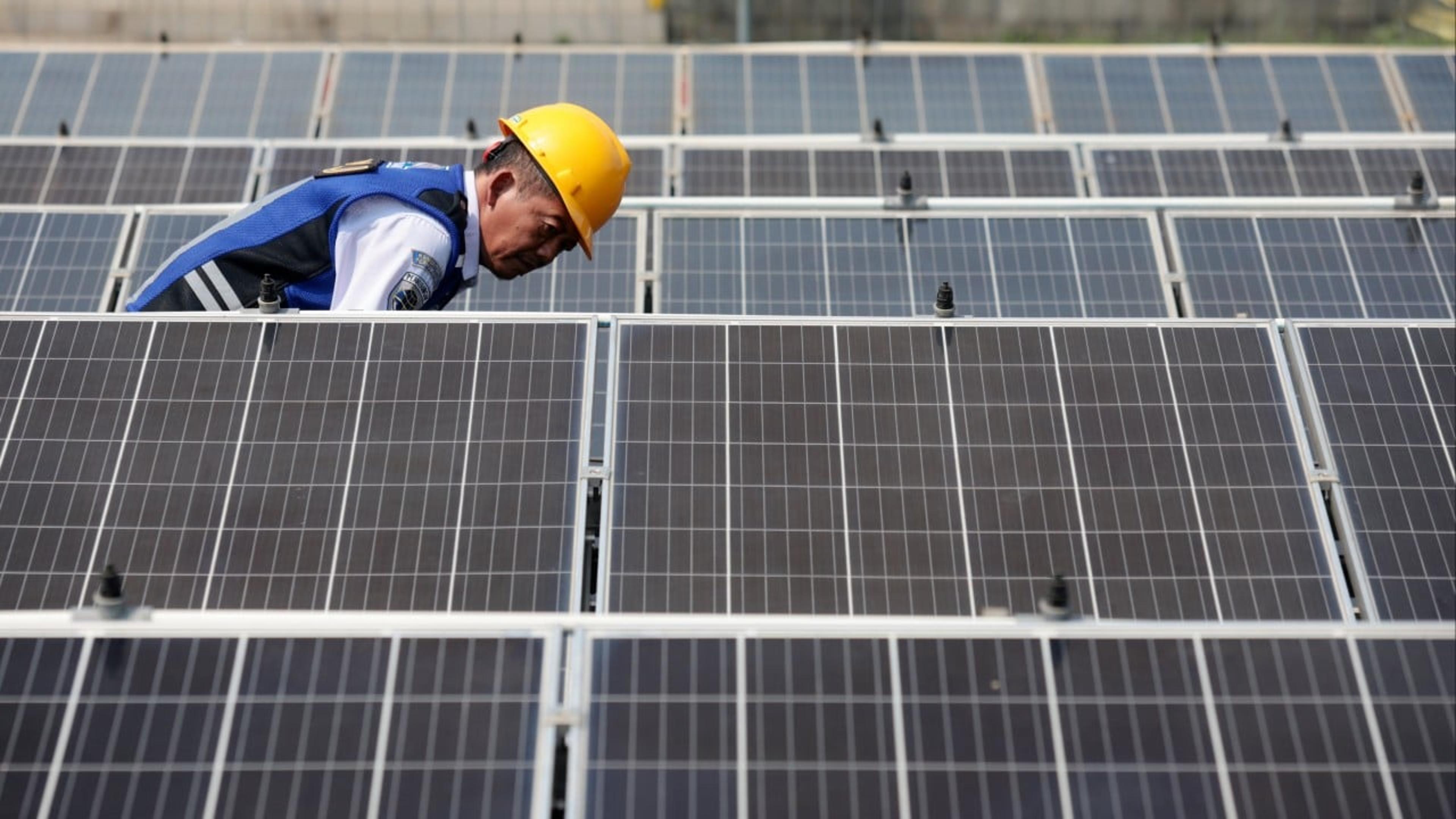
A technician checks and cleans solar panels at a bus station in Depok, Indonesia. The Southeast Asian country has set its sights on cooperating with China to lower emissions and fix environmental problems while strengthening infrastructure, energy and technology developments. Photo: EPA‑EFE
Developing partnerships with Chinese corporations is crucial for Indonesia, especially in three main areas – turning waste to energy, smart grids and data centres – as China is at the forefront of such new technology, according to an executive of the Southeast Asian country’s sovereign wealth fund.
Danantara Indonesia, the investment arm that consolidates and optimises the government’s investment to support national economic growth, has set its sights on cooperating with China to lower emissions and fix environmental problems while strengthening infrastructure, energy and technology developments that “can be even better than the EU standard”.
“Last week, I had a very good discussion with [Chinese business representatives who] supervise all [issues] related to waste, energy, renewables and the battery ecosystem, and we have shared a lot of potential projects,” said Stefanus Ade Hadiwidjaja, managing director at Danantara Indonesia, speaking on Tuesday in Jakarta at the South China Morning Post’s China Conference: Southeast Asia 2026.
“They invited us to come to China,” he added. “Hopefully we’ll continue … to build the right approach for knowledge and technology transfer, and by doing this, it’s a win‑win partnership between Chinese corporations as well as Indonesian local corporations.”
At a China Conference panel on Tuesday, the function of patient capital – which focuses on long‑term development – was discussed in the process of building up ecosystems in Association of Southeast Asian Nations (ASEAN) markets and the role of China in collaborating with countries in the region to drive up growth.
At the 2026 World Economic Forum in January, Pandu Patria Sjahrir, chief investment officer at Danantara Indonesia, affirmed the position of the investment arm as a source of patient capital that will help strengthen national strategic sectors through global partnerships.
Speaking on the same China Conference panel, Jason Chen, chief operating officer and managing director at Gobi Partners, said that “it’s really our strategy to create a network of footprints across Asia” as a venture‑capital firm, and stay in a position to “provide the space for a lot of Chinese tech companies to come to land in ASEAN countries”.
Saying the collaboration aims to “make Asia great again”, Chen also highlighted that Hong Kong is “very useful”, as the financial centre sits between ASEAN and mainland China.
“So,” Chen said, “the term Greater Bay Area, for us, is not just the GBA, it’s a Greater Bay ASEAN – it’s connecting other parts of China into ASEAN, and Hong Kong is exactly the nexus.”
0
Comments
Want to join the conversation?
Loading comments...