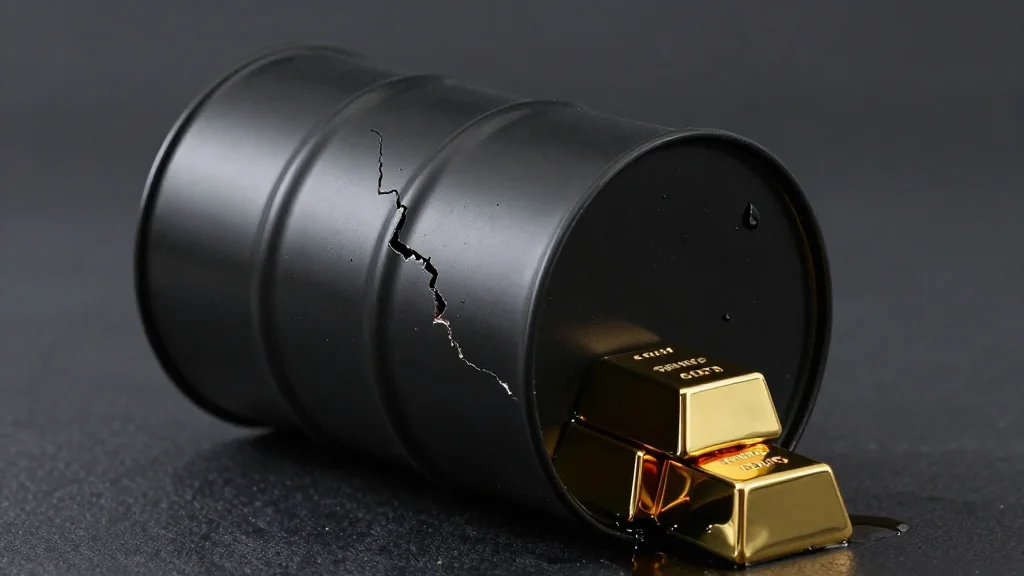
Iran‑Israel‑US War Cuts Over $50 Bn of Oil Output, Raising Global Stagflation Risks

Companies Mentioned
Why It Matters
The $50 bn loss of oil output amplifies inflationary pressures at a time when many economies are already grappling with post‑pandemic supply chain disruptions and elevated debt levels. For import‑dependent nations, especially in Africa and the Asia‑Pacific, higher oil prices erode real incomes, widen trade deficits, and strain fiscal balances, increasing the risk of stagflation—a scenario where stagnant growth coexists with rising prices. Beyond immediate price spikes, the prolonged shutdown of the Strait of Hormuz threatens long‑term energy security. Persistent inventory draws could force countries to tap strategic reserves, raise borrowing costs, and accelerate the shift toward alternative energy sources, reshaping global trade flows and investment patterns for years to come.
Key Takeaways
- •500 million barrels of crude and condensate removed from market since late February
- •Estimated $50 bn in lost oil revenue at $100 per barrel
- •Gulf Arab output fell by 8 million barrels per day in March, matching Exxon Mobil + Chevron output
- •Sub‑Saharan Africa faces potential hunger for 20 million people, IMF warns
- •Global on‑shore inventories down ~45 million barrels; production outages ~12 million bpd
Pulse Analysis
The war’s abrupt supply shock has revived concerns that the global economy could slip into stagflation, a condition last seen in the 1970s. Unlike that era, however, today’s economies are more financially interlinked and carry higher sovereign debt loads, meaning inflationary spikes translate quickly into fiscal stress. Advanced economies with robust monetary policy tools can temper inflation, but emerging markets—especially those with limited foreign‑exchange reserves—may see real wages erode and debt‑service ratios climb, prompting tighter fiscal tightening and potentially triggering a wave of sovereign defaults.
Historically, large‑scale disruptions in the Strait of Hormuz have prompted swift price adjustments, but the current geopolitical entanglement involving three major powers adds a layer of uncertainty that markets struggle to price in. The risk premium embedded in oil futures is likely to stay elevated, encouraging a faster transition toward alternative fuels and reinforcing the strategic importance of diversifying energy imports. Countries that can accelerate renewable investments or secure long‑term supply contracts will mitigate the worst of the inflationary shock.
Looking ahead, the durability of the cease‑fire will be the decisive factor. If diplomatic channels keep the strait open, inventories may stabilize by late summer, allowing oil prices to retreat. Conversely, a renewed closure could push prices above $120 per barrel, forcing central banks to hike rates further and deepening the stagflation dilemma. Policymakers worldwide will need to balance short‑term relief measures—such as targeted subsidies for food and energy—with longer‑term strategies to reduce oil dependence, lest the current crisis become a catalyst for a broader re‑ordering of the global economic architecture.
Iran‑Israel‑US War Cuts Over $50 bn of Oil Output, Raising Global Stagflation Risks
Comments
Want to join the conversation?
Loading comments...