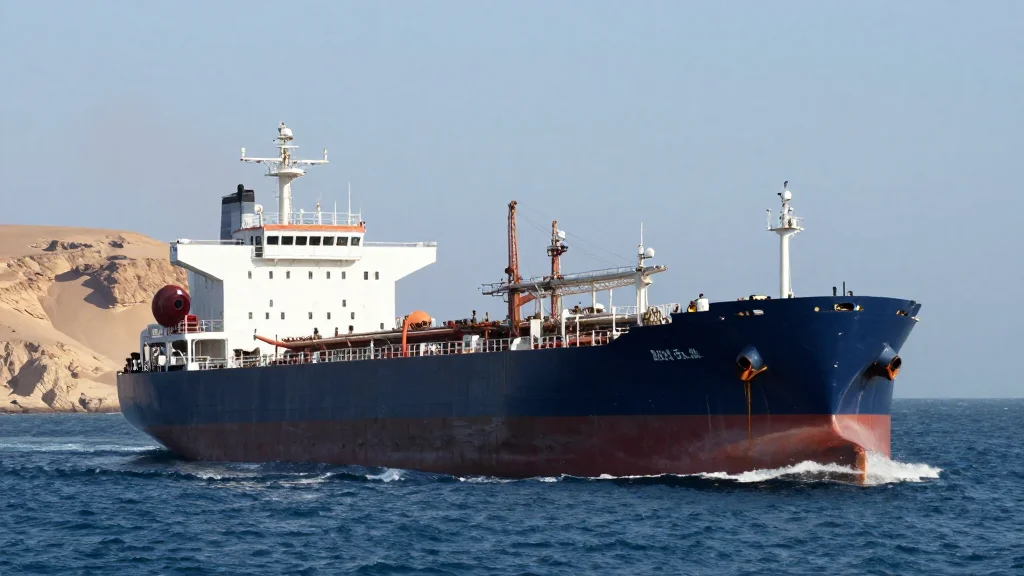
Iran's Kharg Island Loads 1st Tanker in a Week
Companies Mentioned
Why It Matters
The loading demonstrates Iran’s ability to bypass U.S. blockade narratives, preserving export revenue and complicating enforcement of sanctions. It signals to markets that Iranian oil supply may be more resilient than official U.S. estimates suggest.
Key Takeaways
- •First Kharg loading since May 7 disproves US claim of full storage
- •Windward estimates 20 idle tankers near Kharg, 25 mn barrels capacity
- •Six empty carriers crossed Strait of Hormuz last week despite US blockade
- •US Treasury claims no recent loadings, but data shows contrary activity
- •Blockade curtails exports but hasn't driven Iranian production into steep decline
Pulse Analysis
Kharg Island remains Iran’s primary oil export gateway, and its recent activity offers a litmus test for the efficacy of the U.S. blockade that began in April. The loading of a 500,000‑barrel tanker—its first in a week—underscores Tehran’s strategic use of water‑borne storage, a tactic that keeps crude moving while sidestepping on‑shore capacity limits. Data from Windward and TankerTrackers.com reveal a fleet of roughly 20 idle tankers, collectively able to hold more than 25 million barrels, effectively turning the Persian Gulf into a floating reservoir.
U.S. officials, including Treasury Secretary Scott Bessent, have publicly claimed that Iran’s storage is saturated and that no new loadings are occurring. However, independent vessel‑tracking firms contradict that narrative, documenting not only the recent Kharg loading but also six empty carriers that traversed the Strait of Hormuz last week without interception. This discrepancy highlights the challenges of enforcing maritime sanctions in a region where ships can quickly reposition and where on‑water storage blurs the line between compliance and evasion. The ability to stage tankers offshore gives Iran flexibility to respond to market signals and to mitigate the impact of on‑shore bottlenecks.
For global oil markets, the Kharg development injects uncertainty into supply forecasts. Analysts who had factored a sharp drop in Iranian exports into price models may need to revise assumptions, especially if water‑borne storage continues to support steady outflows. While the blockade has undeniably reduced Tehran’s export volumes, the persistence of floating storage suggests that a complete curtailment of Iranian oil is still out of reach. Investors and policymakers should monitor subsequent loadings and any shifts in U.S. enforcement tactics, as these will shape the balance between sanction pressure and the resilience of Iran’s oil revenue stream.
Iran's Kharg Island loads 1st tanker in a week
Comments
Want to join the conversation?
Loading comments...