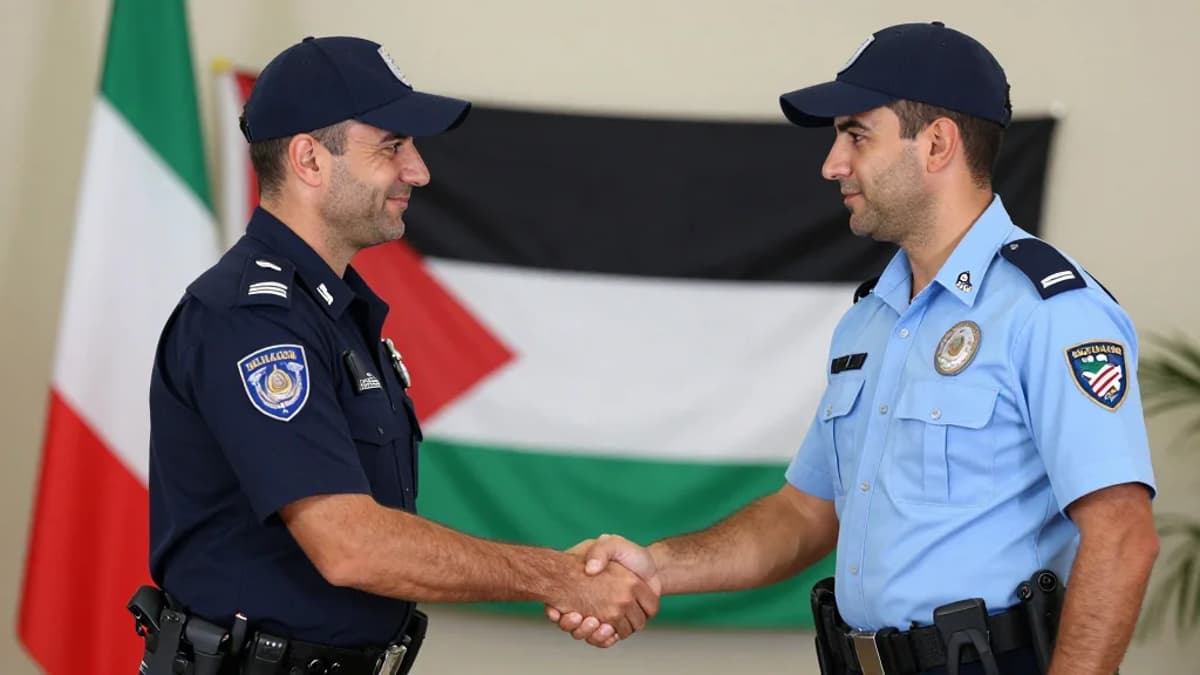
Italy Says It Stands Ready to Train Police in Gaza
•February 16, 2026
0
Why It Matters
Italian police‑training support could strengthen law‑enforcement capacity in Gaza, aiding civilian security and peace‑building. The engagement also deepens Italy’s strategic partnership with the United States and its influence in the Israeli‑Palestinian conflict.
Key Takeaways
- •Italy offers police training for Gaza and West Bank
- •Training aims to bolster security and public order
- •Tajani will join U.S. Trump peace board as observer
- •Initiative signals Italy's deeper Middle East engagement
- •Collaboration could improve Israeli-Palestinian stability prospects
Pulse Analysis
The security vacuum in Gaza has intensified since the latest hostilities, leaving civilian policing fragmented and under‑resourced. By proposing to train a dedicated Gaza police force, Italy addresses a critical gap that could reduce crime, curb militia activity, and provide a semblance of normalcy for residents. Such capacity‑building aligns with broader international efforts to stabilize the enclave, offering a non‑military avenue for conflict mitigation while fostering local trust in state institutions.
Rome’s willingness to sit on President Donald Trump’s Board of Peace underscores a strategic pivot toward deeper involvement in U.S.-led diplomatic frameworks. Italy’s participation as an observer not only enhances its bilateral ties with Washington but also positions it as a conduit for European perspectives within the peace initiative. This dual approach—combining on‑the‑ground training with high‑level diplomatic engagement—reflects a nuanced foreign‑policy calculus aimed at amplifying Italy’s relevance in Middle‑East affairs while supporting multilateral conflict‑resolution mechanisms.
Nonetheless, the initiative faces hurdles, including the complex political landscape of the Palestinian territories and the need for coordination with Israeli security forces. Effective training will require clear mandates, robust funding, and sustained oversight to avoid politicization. If successfully implemented, Italy’s program could serve as a model for other EU members, potentially catalyzing a broader coalition of states committed to building resilient policing structures that underpin lasting peace in the region.
Italy says it stands ready to train police in Gaza
0
Comments
Want to join the conversation?
Loading comments...