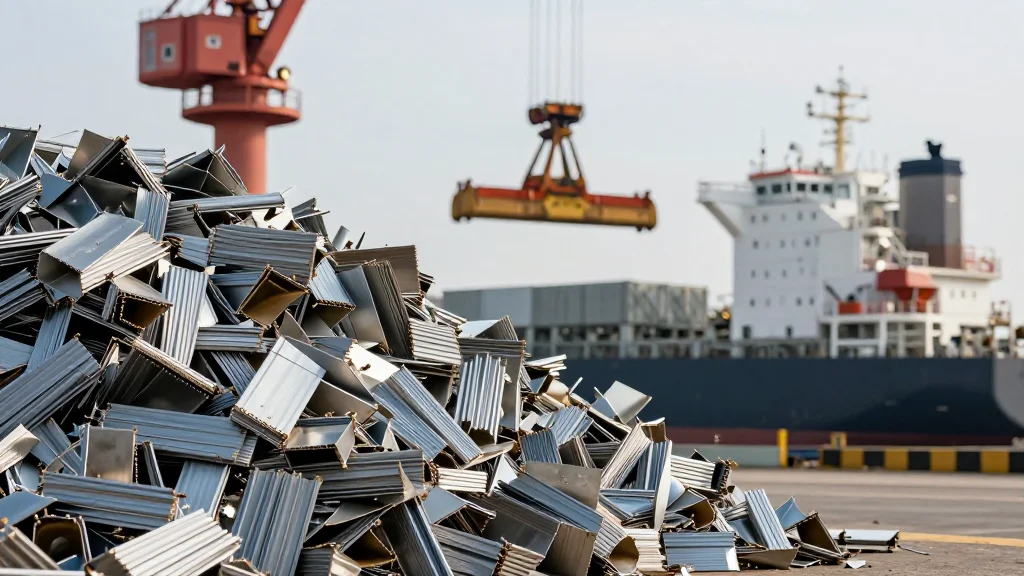
Japan’s Ferrous Scrap Exports Dip in March
Why It Matters
The shift toward domestic sales tightens global scrap supply, raising costs for steel producers that rely on Japanese imports and signaling a more protectionist stance amid geopolitical uncertainty.
Key Takeaways
- •March ferrous scrap exports fell 5.1% month‑on‑month to 597,000 t.
- •Domestic scrap prices rose ¥7,000/t (~$44/t), prompting local sales shift.
- •Vietnam remained top buyer, up 6.9% month‑on‑month.
- •Bangladesh shipments down 16% from February but 29% above last year.
- •Export outlook weak as overseas buyers resist higher Japanese prices.
Pulse Analysis
Japan’s ferrous scrap market entered a tightening phase in early March, as domestic steel mills accelerated procurement to capitalize on a sudden price rally. Customs data show scrap prices jumped ¥7,000 per tonne, roughly $44, a level that made local sales more attractive than exporting at marginal margins. Suppliers responded by redirecting volumes toward Japanese mills, reducing the total export flow to 597,000 tonnes in March, a 5.1% decline from February and 7.5% lower than a year earlier. This shift reflects a broader trend where exporters prioritize higher‑priced domestic contracts when global freight and geopolitical risks add uncertainty.
The export mix also revealed regional nuances. Vietnam, Japan’s largest recipient, posted a 6.9% month‑on‑month increase to 263,000 tonnes, buoyed by a low February baseline caused by the Lunar New Year holiday. Bangladesh’s shipments fell 16% from February yet remained 29% above the prior‑year level, driven by new steel‑making capacity that revived demand for Japanese scrap. South Korea slipped to the third‑largest destination as its own scrap prices stayed below Japanese levels, limiting trade. These patterns underscore how local holidays, capacity expansions, and price differentials shape bilateral scrap flows.
The contraction in Japanese scrap exports carries implications for the global steel supply chain. Higher domestic prices and lingering uncertainty in seaborne markets—exacerbated by the Middle East conflict—are prompting overseas buyers to delay purchases until steel prices recover enough to justify the added raw‑material cost. Should this cautious stance persist, import‑dependent producers in Southeast Asia may face tighter supply and potentially higher production costs, feeding through to downstream metal prices. Analysts therefore expect Japan’s export volumes to dip further in April, while the domestic market may continue to absorb the surplus, reinforcing Japan’s role as a net supplier rather than an exporter.
Japan’s ferrous scrap exports dip in March
Comments
Want to join the conversation?
Loading comments...