Logistics Challenges See Chinese Production Reactivated
•February 4, 2026
0
Companies Mentioned
Why It Matters
The re‑shoring trend reshapes global supply chains, boosting demand for Chinese ports while pressuring freight markets and influencing pricing dynamics across Asia‑Europe routes.
Key Takeaways
- •Up to 50% of re‑shored production may return to China
- •Southeast Asian port congestion drives manufacturers back to Chinese factories
- •High‑value cargo shifting from air to ocean for cost savings
- •Intra‑Asian trade volumes rise, rates fall on excess capacity
Pulse Analysis
The resurgence of Chinese manufacturing reflects a pragmatic response to persistent logistics constraints in Southeast Asia. After years of tariff‑driven diversification, firms are confronting chronic port congestion, limited ground handling infrastructure, and unreliable vessel slots that erode the benefits of a dual‑production strategy. By consolidating high‑value lines—electronics, precision components—back to China, exporters regain control over lead times and mitigate the risk of delayed deliveries that have plagued alternative hubs.
Concurrently, the freight landscape is undergoing a cost‑performance recalibration. High‑value shipments, traditionally air‑freighted for speed, are increasingly routed by ocean carriers that offer premium, fast‑boat services at a fraction of air costs. This modal shift not only slashes logistics expenses by up to 90% but also elevates the importance of schedule reliability, prompting shippers to pay modest premiums for carriers like Gemini Cooperation that guarantee tighter transit windows. The resulting demand surge for reliable sea lanes is tempering rate declines, even as overall capacity expands.
Regionally, intra‑Asian trade flows are rebalancing. While volumes from Greater China to Southeast Asia have jumped 12% year‑over‑year, routes from North Asia to China have contracted sharply, reflecting the broader re‑allocation of production. However, the influx of extra loaders and repositioning moves has lifted available capacity, driving utilisation down to roughly 70% and compressing freight rates. Stakeholders must monitor how these dynamics evolve, especially as Chinese domestic demand remains weak and global consumer markets stay subdued, to anticipate the next wave of supply‑chain adjustments.
Logistics challenges see Chinese production reactivated
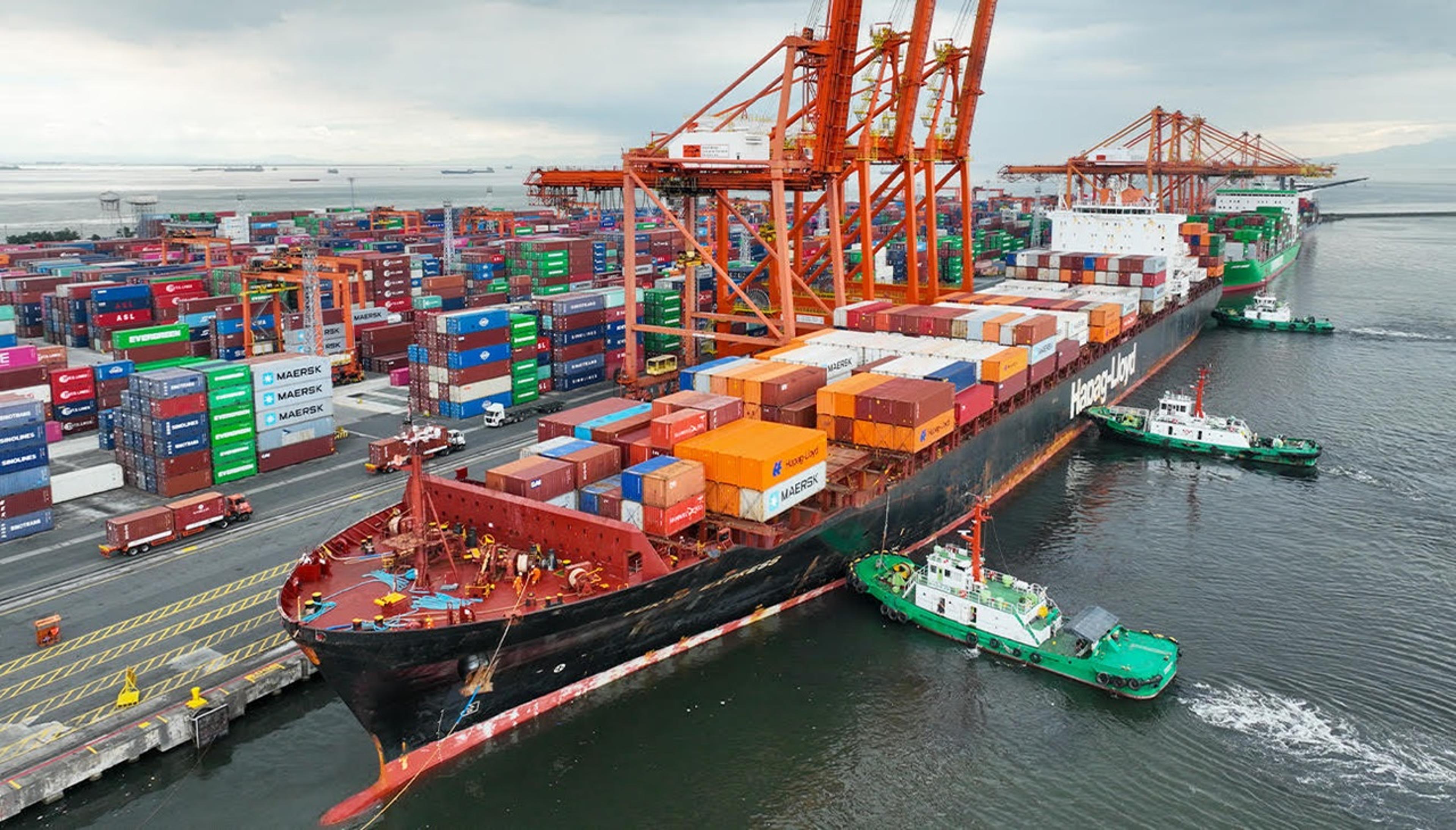
Manufacturers that moved production out of China during the first US trade war in 2018, and more recently, are returning production to China so that exporters have more stable supply chains.
In an exclusive interview with Seatrade Maritime News, Kathy Liu, VP global sales and marketing at Dimerco Express Group said that the reverse migration of up to 50 % of re‑shored production could return to China as port congestion and rolled‑over cargo in alternative markets mean that supply chains have become unstable.
“One thing we are monitoring is that some of those manufacturers that moved out of China to Southeast Asia last year [and before] are facing big problems, logistics‑wise, because of the lack of capacity,” said Liu.
Dimerco can see “at least 50 %” of exporters of certain high‑value goods such as electronics and other similar products reverting production to China, said Liu.
“The ground handling the infrastructure in those Southeast Asian countries will not improve from one day to another, right? So, they [supply chain managers] need time to improve services, but shippers cannot wait that long,” explained Liu, adding that manufacturers have maintained two production centres. With one production centre in China and one in a Southeast Asian country, the locations facilities are managed based on market demand.
Related: Synergy bags management of Yang Ming newbuild pair
In Donald Trump’s first term, it had been expected that tariffs would largely be applied to Chinese exports, but in his second presidency import duties had spread to most countries, said Liu, making the cost differential negligible but the importance of maintaining services became much more critical.
Meanwhile, there is very low demand, particularly in the major consumer regions in Europe and the US, which saw major front‑loading ahead of tariffs early last year, but similar demand has not materialised in 2026.
“Intra‑Asia is different because this year is quite busy and the rates are much higher, sometimes even higher than into the US,” said Liu, this, in part, is a consequence of considerable port congestion in the southeast Asian region.
James Hookham, director at the Global Shippers’ Forum, believes in part production is being ramped up by the Chinese government because domestic demand is weak, so there are easy alternative markets in Southeast Asia, Latin America and India.
Moreover, Dimerco believes there has been a transfer of some high‑value cargo from air cargo to sea as the economic efficiency of ocean freight is much higher and — even with high‑value or time‑sensitive cargo — the cost savings can be up to one‑tenth of the price of air freight.
Related: HMM stays in the black in Q4
Some shippers, said Liu, are willing to pay a premium for higher‑reliability ocean services, such as those offered by the Gemini Cooperation, because the ocean freight premium is still much lower than air freight costs.
“For the high‑value part of the business, schedule reliability is very important and I think for some of those cargos they will be more likely to use those fast boat services because then they can control the schedule quite well compared with normal services,” said Liu.
Speaking for shippers, Hookham pointed out that another challenge for cargo owners in Southeast Asia was the fact that Europe‑ and US‑bound ships leaving China were often already heavily loaded, so that when they reached intermediate ports in Asia for loading to primary markets there were few slots left.
Drewry’s senior consultant Stijn Rubens agrees that some intra‑Asian port calls are way‑port calls for China‑to‑Europe services, while there have also been ‘extra loaders’ intended to reposition empty containers in time for the post‑Lunar New Year rush.
Even so, the intra‑Asian trade has developed fast since US tariffs were first imposed, with Vietnam and Indonesia showing strong growth in volumes, while South Korea has been a net loser in this regard.
Related: SeaLead plummets in shipping line rankings
“For full‑year 2025, the total intra‑Asian trade volume was 53.87 m TEU, only 14,000 TEU more than in 2024. But at the trade‑route level, there were some big volume shifts. The biggest winner was the trade from Greater China to Southeast Asia, which grew 1.2 m TEU or +12 % compared to 2024. The biggest loser was the trade from North Asia to Greater China, which shrank –1.1 m TEU or –31 % compared to 2024,” according to Drewry.
Moreover, Rubens points out that even with a slight increase in volumes and shifting but relatively stable demand, rates have deteriorated substantially, and that has been caused by major increases in capacity.
“There was [regional] port congestion in October and November, but that was resolved so that frees up capacity,” said Rubens. “The extra loaders to reposition boxes has added supply, so utilisation is down to 70 %. And that combination is, in our assessment, what softened trade rates right now.”
About the Author

Nick Savvides – Europe correspondent
Experienced journalist working online, in monthly magazines and daily news coverage. Nick Savvides began his journalistic career working as a freelance from his flat in central London, and has since worked in Athens, while also writing for major publications including The Observer, The European, Daily Express and Thomson Reuters.
Most recently Nick joined The Loadstar as the publication’s news editor to develop its profile, increase readership, and build a team that markets, sells, and reports on supply‑chain issues and container‑shipping news.
He previously worked at ci‑online (Containerisation International and Container News), International Freighting Weekly (IFW), Informa’s publications, ICIS (chemical tanker reporter), Lloyd’s Register (technical magazine), The Naval Architect (Royal Institution of Naval Architects), and Fairplay (where he won the Seahorse Club Journalist of the Year and Feature Writer of the Year 2018 awards).
After Fairplay closed, Nick joined the US start‑up FreightWaves.
0
Comments
Want to join the conversation?
Loading comments...