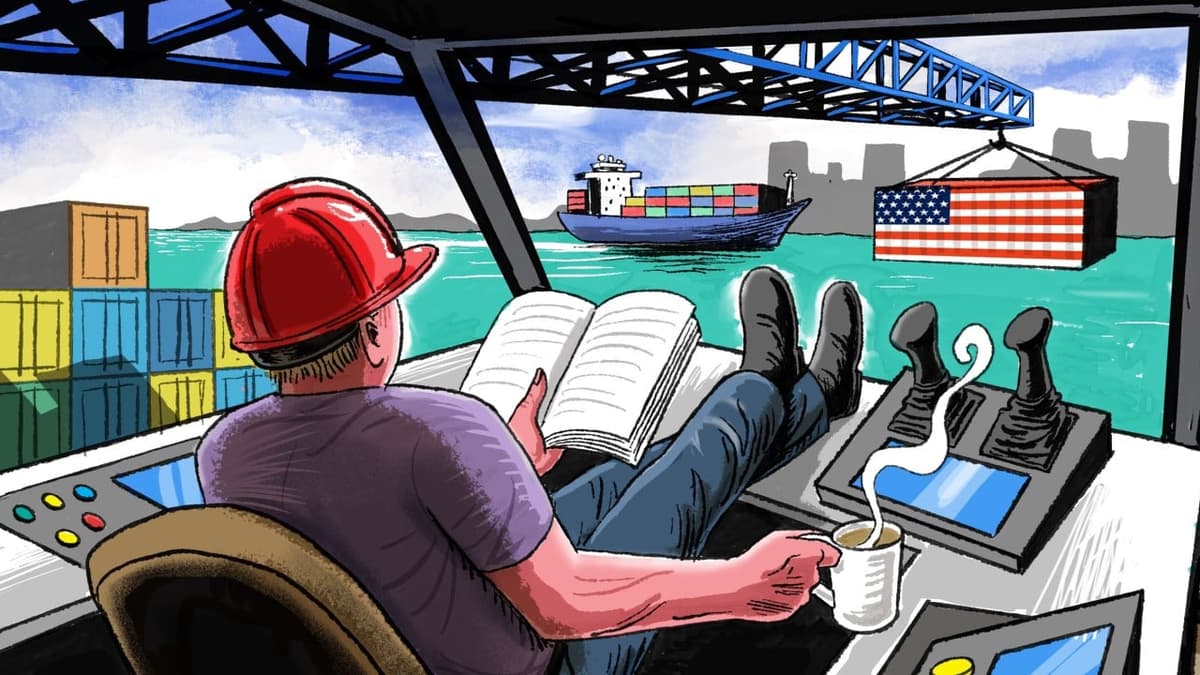
Many Countries Are ‘Quiet Quitting’ the US and China on Trade
Why It Matters
The new tariff regime forces allied and partner economies to renegotiate supply‑chain rules, reshaping trade flows and potentially weakening China’s export advantage while testing U.S. diplomatic leverage.
Key Takeaways
- •Trump admin to replace expired 10% global tariff with Section 301 duties
- •New tariffs will hit 60 economies over forced‑labour concerns
- •Additional 16 countries face tariffs for “excess capacity” trade surpluses
- •Shift aims to curb US‑China dominance via new trade rules and anchors
Pulse Analysis
The Trump administration’s latest trade offensive builds on a legacy of unilateral tariffs, but this round diverges by coupling forced‑labour enforcement with structural capacity concerns. Section 301, traditionally used to address intellectual‑property violations, is being repurposed to penalize countries that fail to eliminate forced labour from their supply chains, a move that aligns with growing consumer and investor scrutiny of ESG practices. Simultaneously, Section 232 security tariffs—originally justified on national‑defense grounds—are being layered onto existing duties for steel and aluminium, signaling a broader use of security rhetoric to justify trade barriers.
Targeted economies span a mix of traditional allies and emerging markets, including Indonesia, Malaysia, and several nations wrestling with Chinese overcapacity. By imposing 10‑12.5 percent duties on these partners, Washington is leveraging its market size to extract concessions without resorting to overt retaliation. The approach mirrors the corporate concept of “quiet quitting,” where firms do the minimum required while seeking alternative value streams. In trade terms, countries are quietly adjusting to new rules of origin and supply‑chain anchors, preserving market access while diversifying away from both U.S. and Chinese dominance.
The broader implication is a gradual re‑engineering of global trade networks. As the U.S. tightens its grip on strategic sectors, firms are incentivized to redesign sourcing strategies, invest in regional hubs, and adopt more transparent labour standards. This could accelerate the fragmentation of the existing trade order, prompting China to deepen its own regional agreements to counterbalance U.S. pressure. For investors and policymakers, the evolving tariff landscape underscores the importance of monitoring supply‑chain resilience and the geopolitical undercurrents shaping the next decade of international commerce.
Many countries are ‘quiet quitting’ the US and China on trade
Comments
Want to join the conversation?
Loading comments...