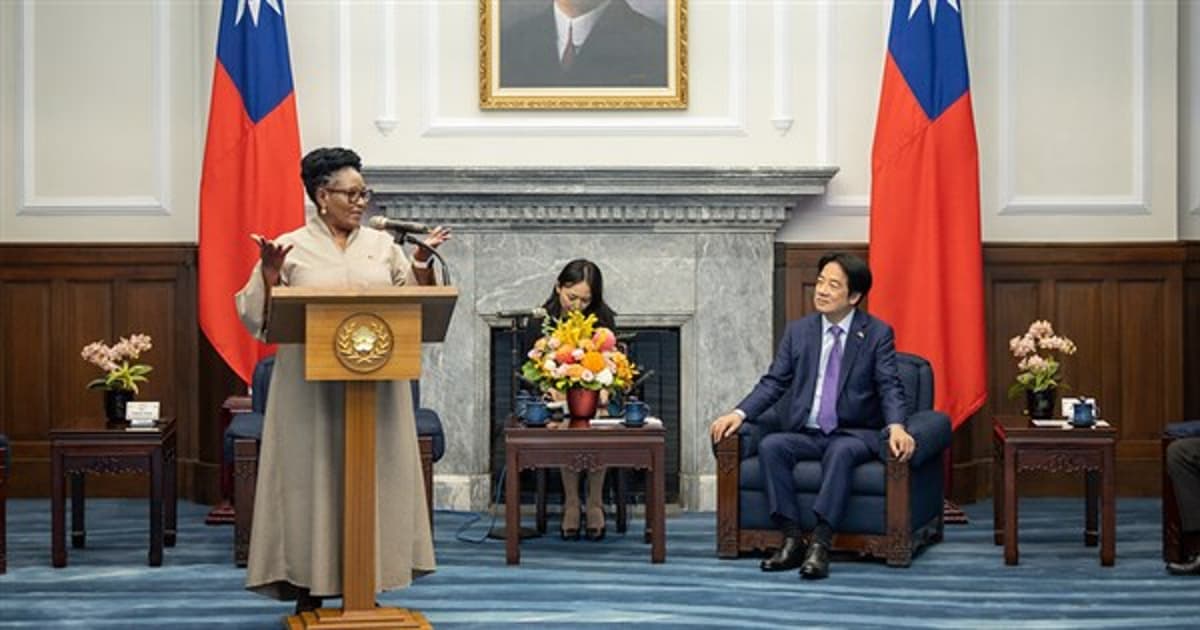
No Force Can Break Eswatini, Taiwan Ties: Special Royal Envoy
Why It Matters
The episode underscores Taiwan’s reliance on a dwindling pool of allies and highlights China’s willingness to use economic coercion to isolate the island diplomatically.
Key Takeaways
- •Eswatini envoy Thulisile Dladla met Taiwan President Lai in Taipei
- •China pressured airspace revocations, canceling Lai's planned Eswatini visit
- •Taiwan and Eswatini call their 58‑year bond “family”
- •Dladla urged Lai to visit, showcasing free African airspace
- •The incident highlights Beijing’s coercive tactics against Taiwan allies
Pulse Analysis
Taiwan’s diplomatic landscape has narrowed dramatically over the past decade, leaving the island with just a handful of formal allies. Among them, Eswatini stands out as the sole African nation maintaining official ties, a relationship forged in 1968 and celebrated for its longevity. This partnership provides Taiwan with a strategic foothold on a continent where Beijing’s Belt and Road initiatives dominate, and it offers Eswatini a counterbalance to Chinese investment pressures. The mutual commitment is frequently framed in personal terms, with both leaders likening the bond to family, a narrative that reinforces political solidarity beyond mere protocol.
The latest flashpoint emerged when President Lai Ching‑te’s scheduled visit to Eswatini was abruptly canceled. Chinese authorities allegedly pressured three Indian Ocean island states—Seychelles, Mauritius and Madagascar—to deny over‑flight permissions, effectively grounding the delegation before departure. In response, Eswatini’s deputy prime minister and special envoy, Thulisile Dladla, traveled to Taipei, meeting Lai and Foreign Minister Lin Chia‑lung. Dladla’s remarks emphasized that no external force could sever the 58‑year friendship, and she called on Lai to visit the kingdom to demonstrate that African airspace remains free and independent. The diplomatic choreography highlighted Taiwan’s resolve to showcase its sovereignty despite Beijing’s coercive tactics.
The incident carries broader implications for Taiwan’s foreign policy and regional geopolitics. By publicly rejecting Chinese pressure, both Taipei and Mbabane signal to other potential partners that diplomatic ties with Taiwan can withstand economic intimidation. For China, the episode illustrates a willingness to leverage airspace control—a subtle yet powerful tool—to isolate Taiwan’s allies. Observers note that such maneuvers may prompt other nations to reassess the costs of aligning with Taipei versus Beijing, especially as the contest over legitimacy intensifies in international forums. Going forward, Taiwan is likely to double down on high‑visibility engagements with its remaining allies, using soft power and shared democratic values to cement relationships that China cannot easily dismantle.
No force can break Eswatini, Taiwan ties: special royal envoy
Comments
Want to join the conversation?
Loading comments...