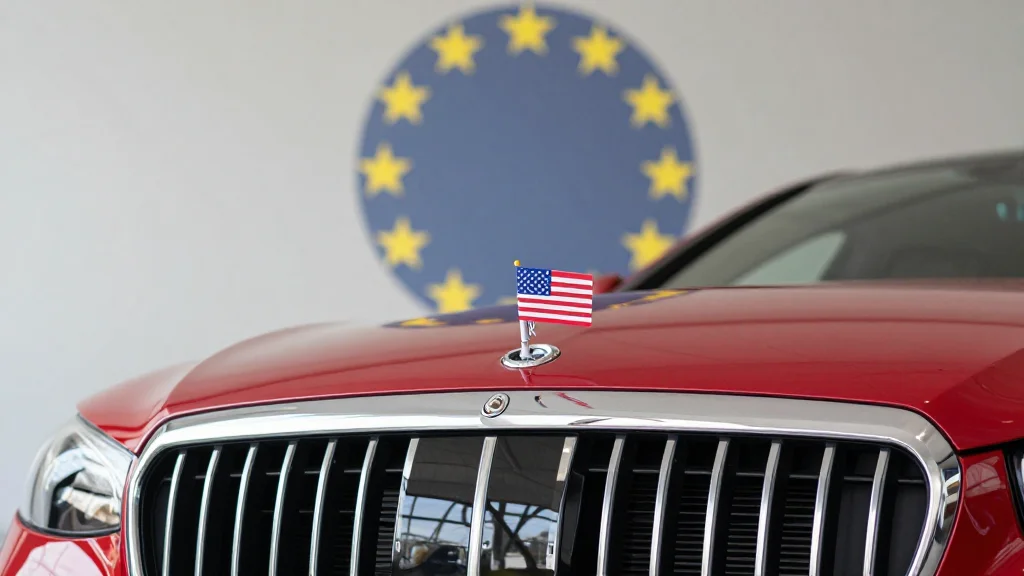
'No Way to Treat Close Partners': Trump Hikes Tariffs on EU Cars to 25%
Companies Mentioned
Why It Matters
The tariff hike threatens to reshape the transatlantic automotive supply chain and could trigger retaliatory measures, deepening the trade rift between the United States and Europe. It also signals a broader shift in U.S. foreign‑policy posture toward European allies.
Key Takeaways
- •Tariff on EU cars rises from 15% to 25%
- •EU vehicle exports to US exceed $20 billion annually
- •Higher tariffs push manufacturers to consider U.S. production
- •EU calls U.S. an unreliable trading partner
- •Trump also threatens troop withdrawals from Italy, Spain
Pulse Analysis
The United States’ decision to double the tariff on European Union automobiles reflects growing frustration over the 2025 US‑EU trade agreement, which was hailed as a milestone for market access but has faced criticism for vague compliance mechanisms. By raising the levy to 25 %, the Trump administration aims to leverage economic pressure to force European carmakers to invest in U.S. factories, a strategy reminiscent of past tariff escalations on China. While the president framed the move as a compliance enforcement tool, analysts note that the lack of specific grievances suggests a broader protectionist agenda.
For the automotive sector, the tariff increase translates into a direct cost hike of up to $5,000 per vehicle for consumers, eroding price competitiveness of popular European brands such as Volkswagen, Stellantis, and BMW. Companies may accelerate plans to expand U.S. assembly lines, a trend already underway with several joint ventures in the Midwest. However, the abrupt policy shift could disrupt supply chains, delay model launches, and trigger a wave of retaliatory duties from the EU, potentially affecting a broader range of U.S. exports. Stakeholders are closely watching whether the tariff will spur genuine reshoring or simply inflate market volatility.
Beyond cars, the tariff announcement dovetails with heightened diplomatic tension, as the EU Parliament’s trade committee labeled the United States an "unreliable" partner and President Trump floated the prospect of pulling troops from Italy and Spain. Such rhetoric threatens to undermine NATO cohesion and could prompt the EU to launch counter‑measures, including tariffs on U.S. agricultural products. The convergence of trade and security disputes underscores a pivotal moment for transatlantic relations, where economic levers are increasingly used to signal broader geopolitical dissatisfaction.
'No way to treat close partners': Trump hikes tariffs on EU cars to 25%
Comments
Want to join the conversation?
Loading comments...