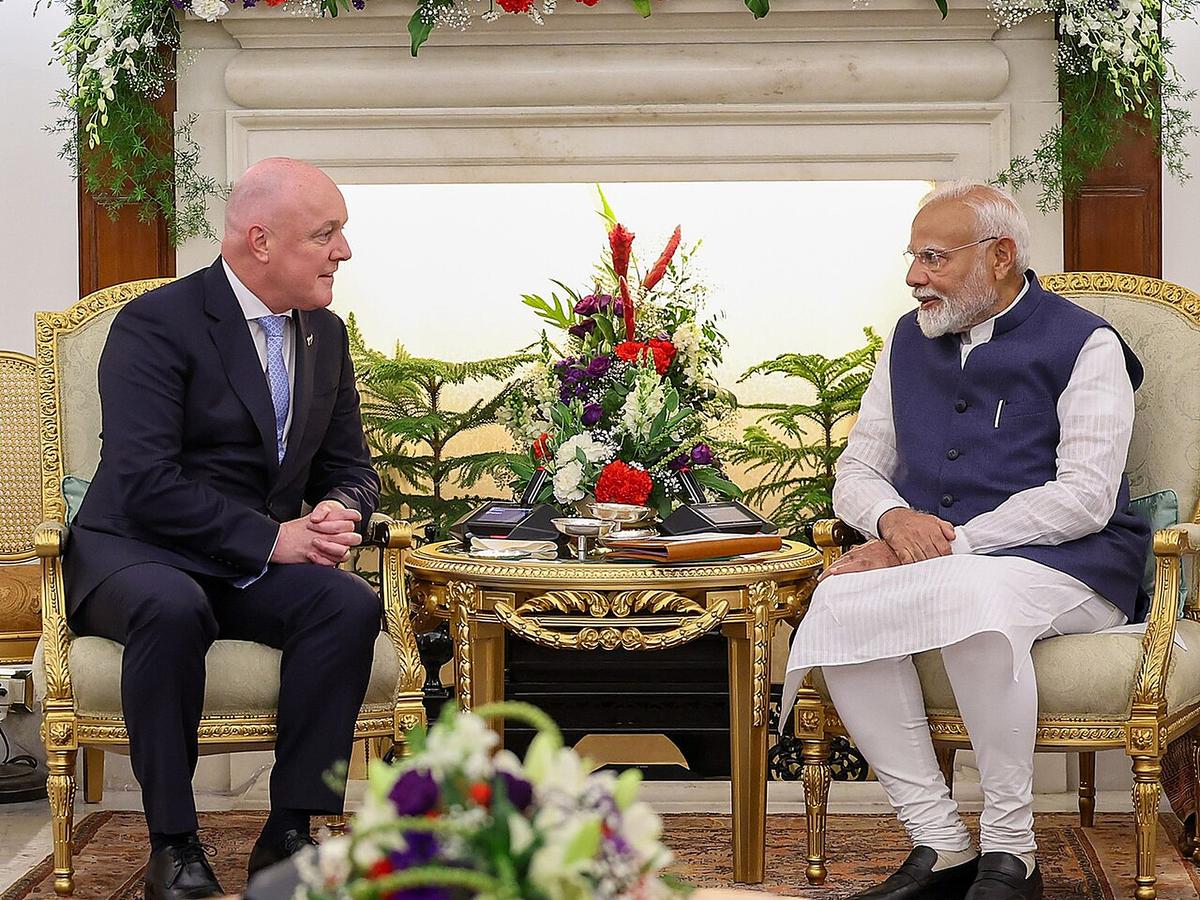
NZ, India Set to Sign FTA Despite Labour Calling Rush ‘Reckless’
Why It Matters
The agreement unlocks the fast‑growing Indian market for New Zealand’s forestry sector, diversifying export revenue away from China and adding billions of dollars in trade potential. It also signals a strategic shift in NZ’s trade policy amid domestic political debate.
Key Takeaways
- •NZ-India FTA eliminates tariffs on 95% of NZ timber exports.
- •Immediate duty‑free access lifts 57% of NZ exports, 82% when fully phased.
- •Trade forecast jumps from $1.34 bn to $5.14 bn in five years.
- •NZ wood exports rebounded from $5.7 m (2023) to $45.9 m (2024).
- •Labour opposition warns deal lacks parliamentary majority backing.
Pulse Analysis
The New Zealand‑India Comprehensive Free Trade Agreement marks a watershed for the Kiwi forestry industry. After a failed negotiation in 2014‑15 and a subsequent methyl‑bromide dispute that slashed radiata pine shipments from $196 million in 2019 to a mere $5.7 million in 2023, the sector has struggled to replace lost Chinese demand. The new pact wipes out the 5.5‑11% duties that previously hampered NZ wood products, instantly granting duty‑free status to the bulk of timber, pulp and paperboard lines and setting a seven‑year phase‑out for the remaining 5% of tariffs. This tariff certainty is expected to catalyse higher‑value engineered‑wood production and broaden market access beyond raw logs.
Economic projections underscore the deal’s magnitude. With 57% of New Zealand’s exports becoming duty‑free at signing and 82% once fully implemented, trade analysts anticipate bilateral merchandise flow to more than triple, climbing from roughly $1.34 billion today to $5.14 billion in five years. Early indicators already show a rebound in wood export values, rising from $5.7 million in 2023 to $45.9 million in 2024, suggesting that Indian buyers are poised to become a major revenue stream. The agreement also aligns with New Zealand’s broader diversification strategy, reducing reliance on Chinese markets and creating a more resilient export portfolio.
Politically, the pact has sparked controversy. Labour leader Chris Hipkins has labeled the accelerated signing “recklessly irresponsible” without a clear parliamentary majority, while NZ First’s Winston Peters has withheld support over unrelated skilled‑worker visa provisions. Despite the dissent, the coalition government argues that the economic upside outweighs procedural concerns. The FTA not only strengthens bilateral ties with one of the world’s fastest‑growing economies but also positions New Zealand as a competitive supplier of high‑value wood products in the Asia‑Pacific region, setting a precedent for future trade negotiations.
NZ, India Set to Sign FTA Despite Labour Calling Rush ‘Reckless’
Comments
Want to join the conversation?
Loading comments...