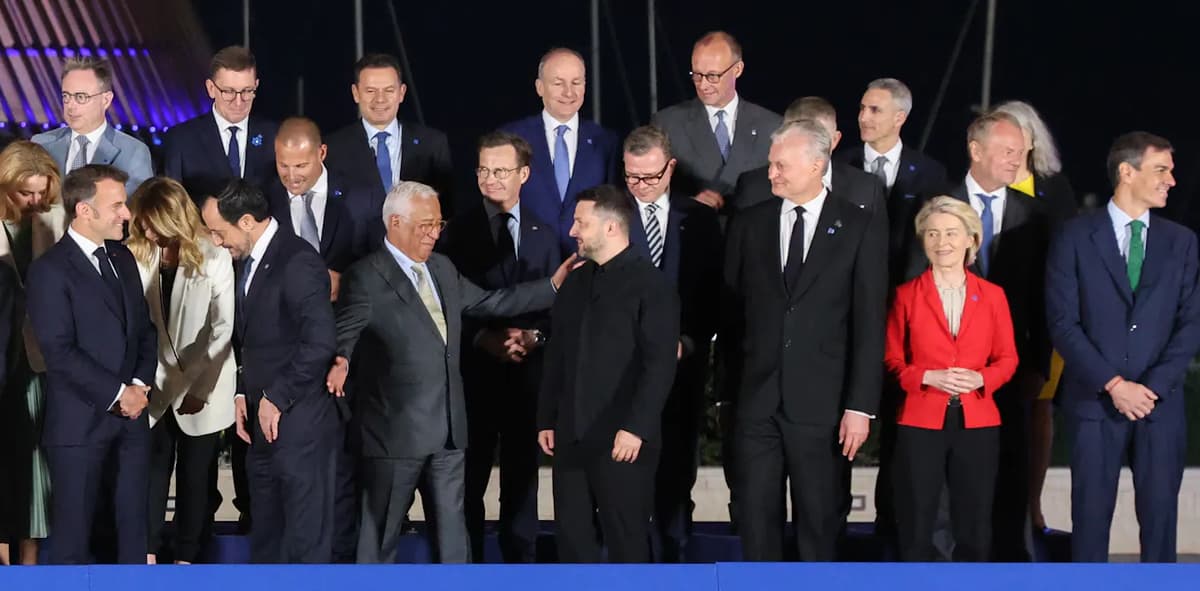
Orbán’s Election Loss Frees up €90 Billion for Kyiv but Raises Thorny Question of EU Membership for Ukraine
Why It Matters
The loan provides essential resources for Ukraine’s war effort and post‑war rebuilding, yet the unresolved accession debate could reshape Europe’s strategic unity and its ability to counter Russian aggression.
Key Takeaways
- •EU releases $97 bn loan to Ukraine after Hungary’s veto ends
- •20th EU sanctions package against Russia approved alongside loan disbursement
- •Member states remain divided on Ukraine’s EU accession timeline and terms
- •Potential compromise may grant limited EU benefits without full voting rights
- •Young Ukrainian workforce could drain if free movement precedes full membership
Pulse Analysis
The European Union’s decision to release a €90 billion ($97 bn) loan marks a watershed moment in its support for Ukraine. Hungary’s shift in government removed the long‑standing veto that had stalled the disbursement, allowing Brussels to activate the financing mechanism agreed upon last year. Coupled with the adoption of the EU’s 20th sanctions package against Russia, the move underscores a renewed commitment to counter Moscow’s aggression while bolstering Kyiv’s capacity to fund defence operations and reconstruction projects. This financial lifeline arrives at a crucial juncture as Ukraine faces mounting fiscal pressures and a protracted conflict.
Beyond the immediate cash infusion, the loan highlights deepening fissures within the bloc over Ukraine’s future relationship with the EU. France and Germany advocate a cautious, process‑driven approach, emphasizing the need for institutional reforms before granting full membership. Poland, despite its current pro‑European government, remains wary of opening its agricultural market to Ukrainian producers. The prospect of an “enhanced status” – offering limited EU benefits without voting rights – reflects a compromise that could satisfy some member states while leaving Kyiv’s long‑term aspirations in limbo. Such a partial integration risks creating a brain‑drain, as young Ukrainians might seek free movement across Europe without the full security of statehood benefits.
The broader strategic stakes are high. A cohesive EU stance on Ukraine reinforces the continent’s collective security architecture and signals resolve to Russia. Conversely, prolonged accession debates could erode confidence in the EU’s enlargement credibility and embolden Moscow’s narrative of Western disunity. Policymakers must balance immediate financial support with a clear, credible pathway toward deeper integration, ensuring that Ukraine remains a steadfast partner rather than a peripheral ally. The coming months, especially the foreign ministers’ vote on negotiation clusters, will shape the trajectory of Europe’s eastern frontier for years to come.
Orbán’s election loss frees up €90 billion for Kyiv but raises thorny question of EU membership for Ukraine
Comments
Want to join the conversation?
Loading comments...