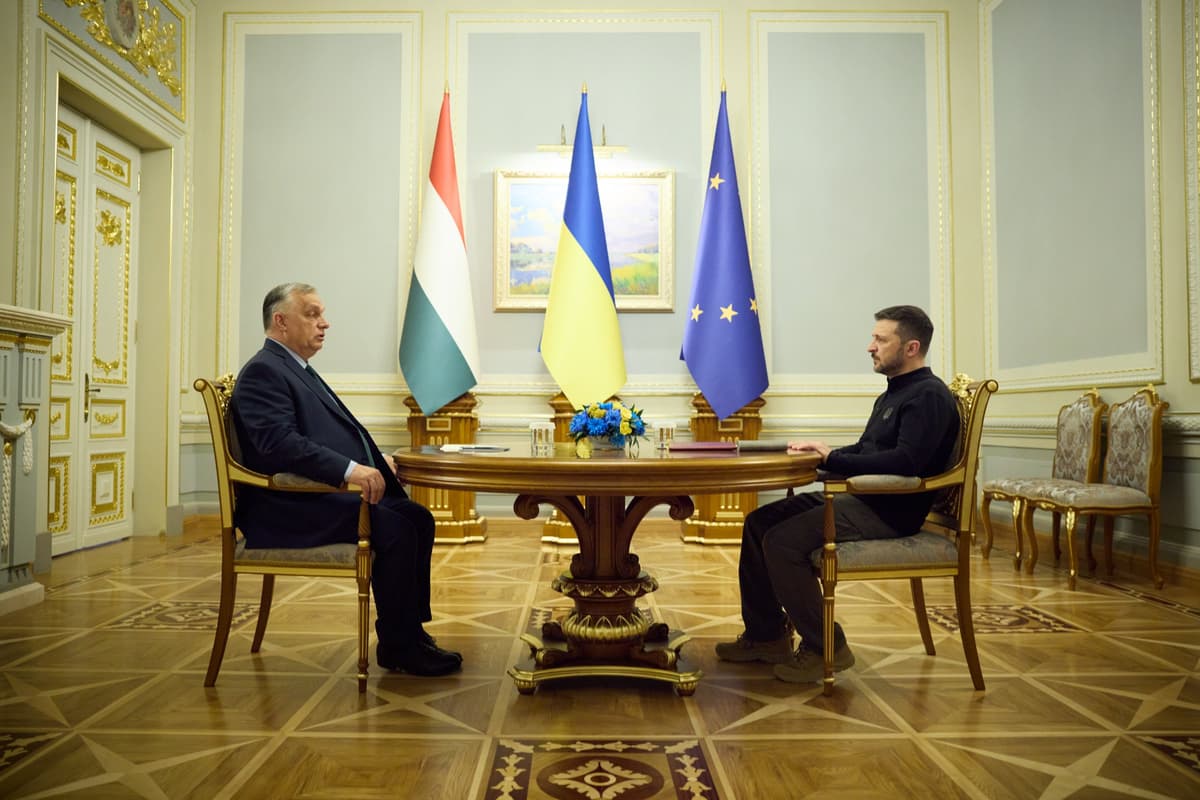
Orbán–Zelensky Clash Deepens After Cash Seizure, Pipeline Dispute, and Kremlin Interference Fears
Why It Matters
Blocking the EU loan jeopardizes Ukraine’s wartime financing and tests EU unity, while the pipeline deadlock threatens regional energy security and deepens geopolitical friction between Budapest and Kyiv.
Key Takeaways
- •Zelensky threatens Orbán over blocked €90 bn EU loan.
- •Hungary halts Druzhba oil pipeline restart, citing political motives.
- •Orbán met Putin, securing POW release, raising Kremlin ties concerns.
- •Seven Ukrainian cash‑transport workers detained by Hungarian police.
- •Tensions risk EU cohesion and Ukraine’s wartime financing.
Pulse Analysis
The political showdown between Kyiv and Budapest has moved beyond rhetoric, directly affecting the flow of European financial support to Ukraine. Zelensky’s ultimatum to Orbán underscores how the €90 bn EU loan—critical for Ukraine’s defense procurement and macro‑economic stability—has become a bargaining chip in Hungary’s domestic power calculus ahead of the April elections. By leveraging the loan blockage, Orbán aims to pressure both the EU and Ukrainian leadership, while signaling to his electorate a hard‑line stance against perceived external interference.
Energy security adds another volatile layer. The Druzhba pipeline, a legacy conduit for Russian crude to Central Europe, has remained idle since a Russian strike in January. Hungary and Slovakia argue the shutdown is politically motivated, accusing Kyiv of using oil transit as leverage. Restarting the pipeline would not only alleviate Hungary’s reliance on costly alternatives but also reduce the EU’s exposure to Russian energy leverage. However, any move to repair the line risks Ukrainian personnel amid ongoing attacks, complicating EU diplomatic efforts to balance energy needs with frontline safety.
The detention of seven Ukrainian cash‑transport employees by Hungary’s Counter‑Terrorism Centre marks a rare instance of outright hostage‑taking between allied states. This incident, coupled with Orbán’s recent meeting with Putin—resulting in the release of dual‑national prisoners—feeds narratives of Hungarian alignment with Kremlin interests. Such actions threaten to erode trust within the EU’s Eastern Partnership, potentially prompting stricter sanctions or diplomatic isolation. As the electoral clock ticks, both nations face heightened scrutiny, and the broader European community must navigate a delicate path to preserve cohesion while supporting Ukraine’s war effort.
Orbán–Zelensky clash deepens after cash seizure, pipeline dispute, and Kremlin interference fears
Comments
Want to join the conversation?
Loading comments...