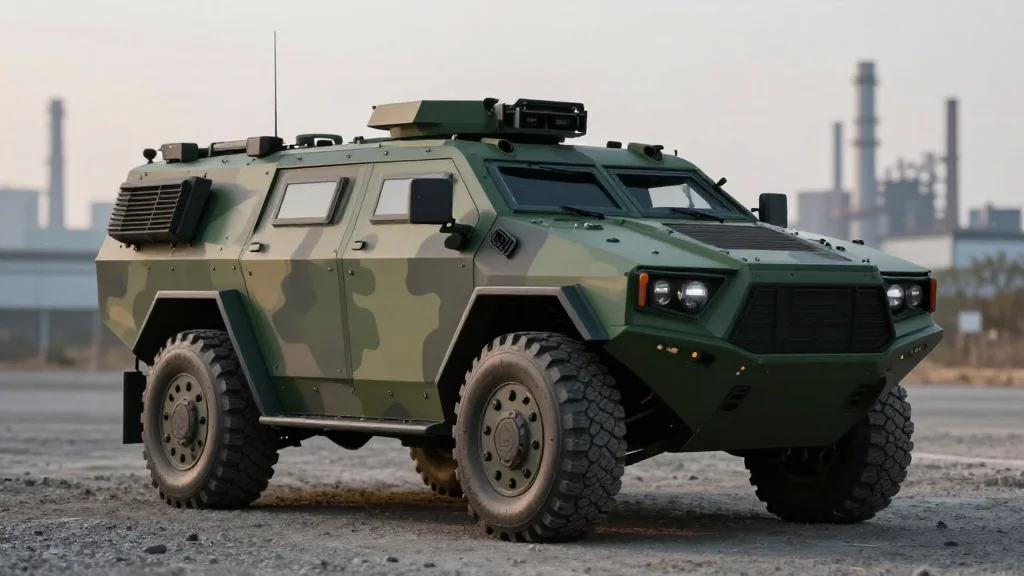
Pentagon Courts Detroit’s Big Three for Next‑Gen Infantry Vehicle Contract

Companies Mentioned
Why It Matters
The Pentagon’s outreach to GM and Ford reflects a broader shift in U.S. industrial policy, where national security imperatives are driving the government to tap into commercial manufacturing expertise. A defense contract of this scale could inject significant cash flow into an auto sector that is grappling with the high costs of electrification and a soft consumer market, potentially stabilizing employment and preserving critical supply‑chain capabilities. Beyond the immediate financial impact, the move raises strategic questions about the future of the American manufacturing ecosystem. If automakers successfully integrate defense production, it could create a dual‑use industrial base that enhances resilience against future supply‑chain disruptions, while also blurring the line between civilian and military manufacturing priorities.
Key Takeaways
- •Pentagon has opened talks with GM and Ford about a next‑generation infantry squad vehicle contract.
- •The contract aims to replace the aging Humvee and address shortfalls in U.S. defense production capacity.
- •Detroit’s auto industry faces slowing sales, tightening margins, and costly EV transitions.
- •A defense contract could provide a multi‑year, multi‑billion‑dollar revenue stream for automakers.
- •The discussions are preliminary; no formal agreement or contract value has been disclosed.
Pulse Analysis
The Pentagon’s outreach to Detroit’s Big Three is more than a procurement footnote; it is a strategic maneuver to leverage the United States’ most advanced mass‑production platform for a critical defense need. Historically, the U.S. has turned to its automotive sector in times of crisis—most famously during World War II—when civilian factories were repurposed to produce tanks, aircraft and trucks. Today, the same logic is resurfacing, but the context has shifted. The modern auto supply chain is heavily digitized, with just‑in‑time logistics, advanced robotics, and a workforce skilled in high‑precision assembly. These attributes align well with the Pentagon’s demand for rapid, scalable production of sophisticated infantry vehicles that incorporate electronics, communications, and survivability technologies.
From an economic perspective, the potential contract could act as a counter‑balance to the headwinds facing the auto industry. The transition to electric vehicles has required massive capital outlays—estimates suggest that U.S. automakers have collectively invested over $150 billion in EV development over the past five years—yet consumer adoption remains uneven. A defense contract would provide a predictable cash flow that could help amortize these investments, support employment, and sustain supplier ecosystems that have been strained by the EV shift. Moreover, the contract could catalyze a broader re‑evaluation of how industrial policy is crafted, encouraging a more integrated approach that blends commercial competitiveness with national security objectives.
However, the partnership is not without risks. Defense manufacturing imposes stringent quality, testing, and compliance standards that differ markedly from civilian automotive regulations. Retooling plants to meet mil‑spec requirements could entail significant upfront costs and operational disruptions. Additionally, the political optics of diverting resources from consumer vehicles to military hardware could provoke criticism, especially if the move is perceived as a bailout for struggling automakers. The success of this initiative will hinge on the ability of GM and Ford to navigate these technical and reputational challenges while delivering a product that meets the Pentagon’s performance criteria.
In sum, the Pentagon’s courting of Detroit could reshape the contours of the U.S. industrial base, offering a potential lifeline to an auto sector in transition and reinforcing the nation’s defense readiness. The next few months will reveal whether this historic alignment of civilian manufacturing and military procurement can be operationalized without compromising either’s core objectives.
Pentagon Courts Detroit’s Big Three for Next‑Gen Infantry Vehicle Contract
Comments
Want to join the conversation?
Loading comments...