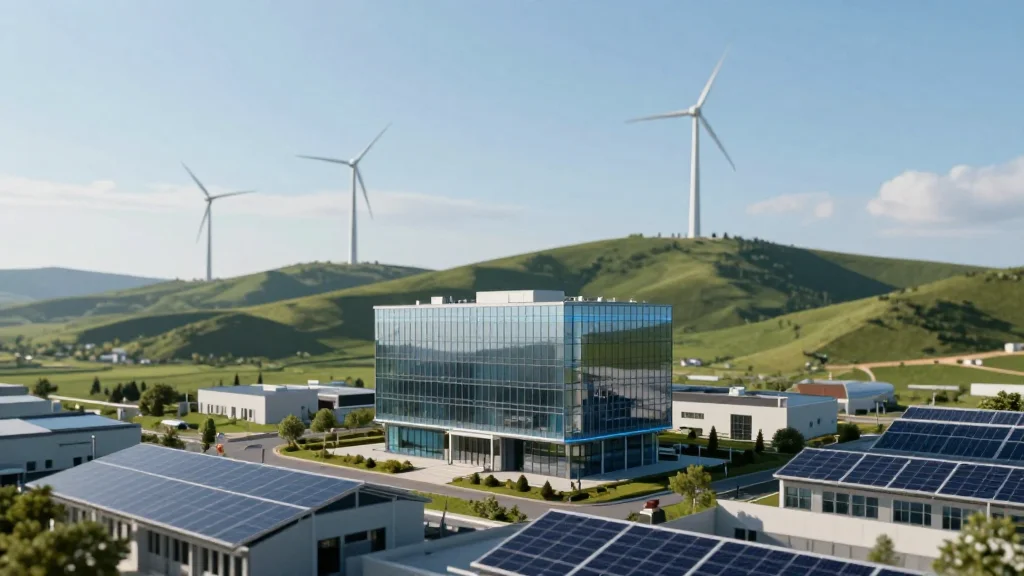
Peripheral Regions Are Overtaking Big Cities as Laboratories of Economic Resilience
Why It Matters
Policymakers and investors must look beyond traditional hubs, as resilient, agile regions become new sources of scalable innovations that can reshape global supply chains and climate strategies.
Key Takeaways
- •Small jurisdictions prototype AI governance faster than nations
- •Local renewable grids test hydrogen and microgrid models
- •Bio‑industrial clusters emerge in agricultural heartlands
- •Integrated digital‑physical systems boost regional economic agility
- •Investors target peripheral labs for scalable, resilient solutions
Pulse Analysis
The post‑pandemic era has accelerated a structural rebalancing in global competitiveness. While megacities once derived advantage from sheer scale, the rise of artificial intelligence, cloud‑based services, and rapid energy decarbonisation rewards speed of adaptation. Smaller jurisdictions—ranging from Baltic microstates to U.S. interior provinces—can align regulatory frameworks, data ecosystems, and physical infrastructure within a single administrative loop, allowing them to iterate policies in months rather than years. This agility creates a fertile laboratory where emerging technologies are stress‑tested before being exported to larger markets.
Across the governance, energy, and bio‑industrial domains, the evidence is mounting. Estonia’s e‑government platform, Dubai’s blockchain land registry, and Kansas’s cloud‑enabled water management illustrate how local authorities can embed AI into public services without the inertia of national bureaucracy. In the energy sphere, Iceland and Uruguay approach near‑full renewable generation, while Kansas and Colorado pilot hydrogen‑fuelled microgrids co‑located with data centers, showcasing the synergy of digital and physical assets. Simultaneously, bio‑manufacturing clusters in Finland, New Zealand and Canada’s prairies combine AI‑driven crop robotics with research institutions, turning agricultural land into high‑value biotech hubs.
For capital allocators and policy architects, these peripheral labs represent low‑cost, high‑impact opportunities. Venture funds can tap early‑stage pilots that prove scalability, while multinational corporations can partner with regional governments to secure supply‑chain resilience and carbon‑neutral credentials. Governments, in turn, can replicate successful regulatory sandboxes, accelerating national transitions without the political gridlock of larger capitals. As AI becomes the operating system of the economy, the next wave of global growth will likely be charted not from New York or Shanghai, but from the agile, interconnected regions that have mastered the art of rapid experimentation.
Peripheral regions are overtaking big cities as laboratories of economic resilience
Comments
Want to join the conversation?
Loading comments...