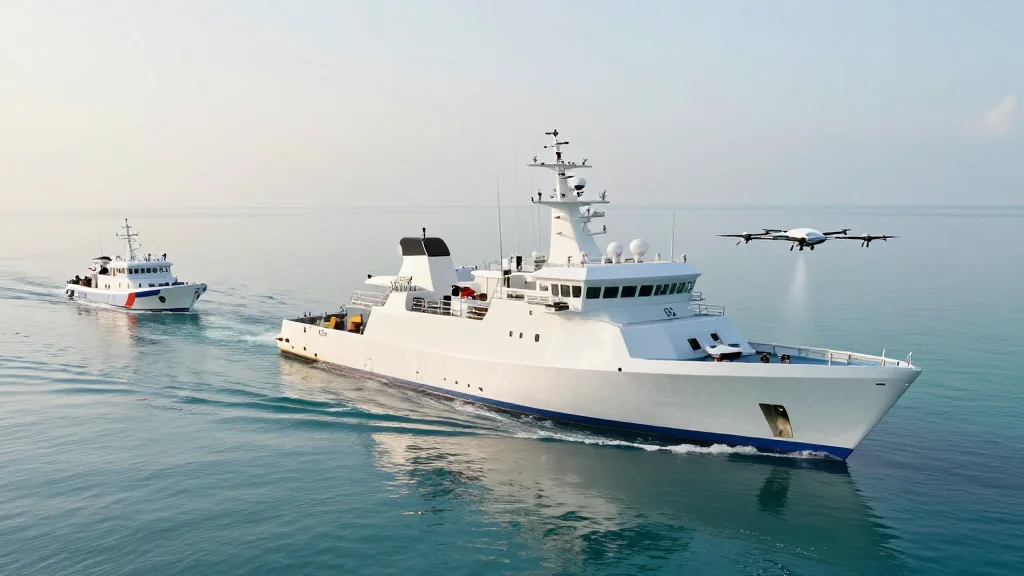
Philippines Accuses China of Conducting Illegal Marine Research
Why It Matters
The allegation highlights escalating maritime rivalry that could spark confrontations, threatening regional trade routes and the broader security architecture in the Indo‑Pacific.
Key Takeaways
- •Four Chinese ships alleged conducting unauthorized marine research in Philippine waters.
- •Vessels include deep‑sea survey ship and first intelligent drone mothership.
- •Philippines threatens to use aircraft and boats to repel the ships.
- •Incident occurs near contested sites: Itbayat, Jackson Atoll, Scarborough Shoal.
- •Tension may push Philippines closer to U.S. defense commitments.
Pulse Analysis
The South China Sea remains a flashpoint where overlapping sovereign claims intersect with strategic maritime interests. By labeling the Chinese presence as illegal marine scientific research, the Philippine Coast Guard invoked the United Nations Convention on the Law of the Sea, which requires prior consent for any scientific activity. The vessels in question—a deep‑sea survey platform and a pioneering drone mothership—represent China’s growing capability to conduct high‑resolution seafloor mapping and multi‑dimensional ocean surveys, tools that can bolster both civilian research and military situational awareness.
Manila’s decision to threaten the deployment of aircraft and patrol boats signals a shift from diplomatic protest to active deterrence. The move dovetails with the Philippines’ recent deepening of defense cooperation with the United States, including joint patrols and increased arms sales. For Beijing, the research missions serve dual purposes: gathering data to support territorial claims and testing unmanned systems in contested waters. The confrontation therefore risks spiraling into a broader security dilemma, where each side’s actions are interpreted as aggressive, potentially drawing in allied forces and complicating diplomatic resolution.
Beyond the bilateral dispute, the episode underscores vulnerabilities in global supply chains that rely on the South China Sea’s shipping lanes. Any escalation could disrupt the flow of goods worth trillions of dollars annually, prompting multinational firms to reassess risk management strategies. Moreover, the incident may accelerate regional initiatives aimed at establishing clearer rules for scientific activities at sea, balancing legitimate research needs with sovereignty concerns. Observers will watch closely how both Manila and Beijing navigate this standoff, as their choices will shape the future stability of one of the world’s most vital maritime corridors.
Philippines Accuses China of Conducting Illegal Marine Research
Comments
Want to join the conversation?
Loading comments...