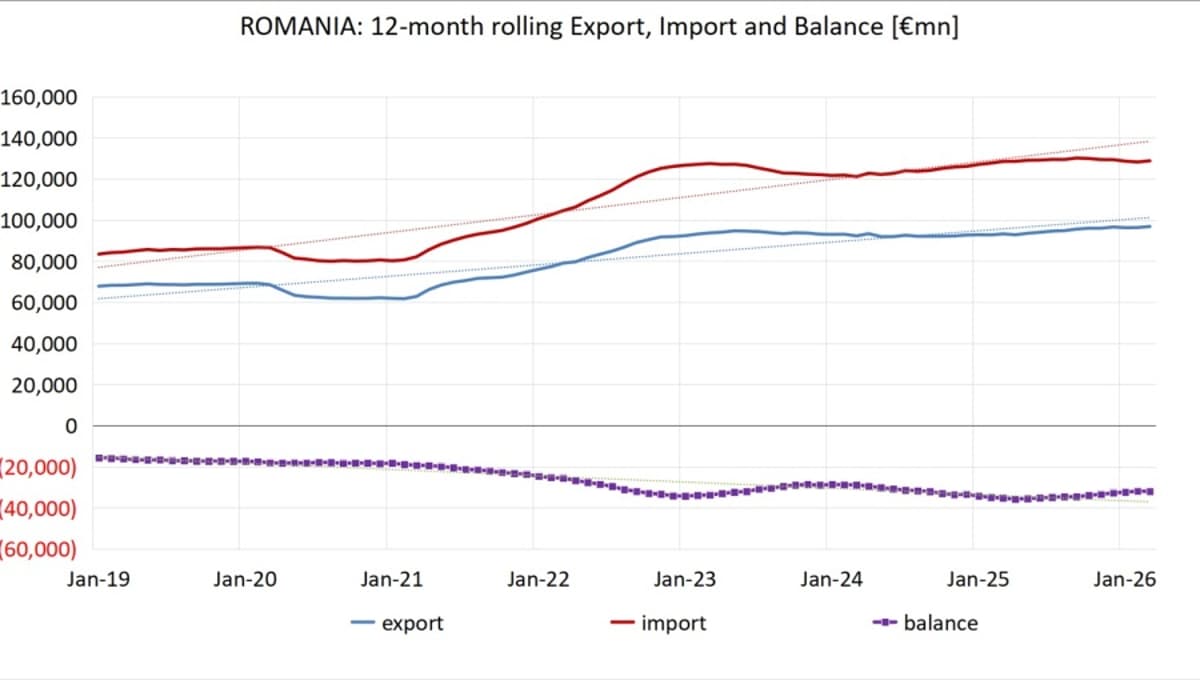
Romania’s Trade Deficit Narrows 9.3% to €7.7bn in Q1
Why It Matters
A shrinking trade deficit eases pressure on Romania’s current‑account balance and signals that fiscal consolidation and weaker domestic demand are beginning to curb import growth without derailing export resilience.
Key Takeaways
- •Q1 trade deficit fell 9.3% to €7.7bn ($8.3bn)
- •Imports dropped 1.7% to €31.5bn ($34bn) amid weaker demand
- •Exports rose 1.1% to €23.8bn ($25.7bn), led by automobiles
- •Mineral fuels imports fell 14.2% due to refinery shutdowns
- •Trade deficit now 2.0% of GDP, down from 2.4%
Pulse Analysis
Romania’s external balance is showing its first signs of improvement in years, as the Q1 2026 trade deficit narrowed to €7.7 bn, roughly $8.3 bn. The contraction reflects a broader slowdown in domestic consumption, spurred by the VAT hike introduced in August 2025 and tighter fiscal policies aimed at reducing public debt. While the overall import bill fell 1.7% to €31.5 bn, the most pronounced decline came from mineral fuels, oil and natural gas, which dropped 14.2% after two refineries entered technical shutdowns. This reduction in energy imports helped offset the modest rise in other categories, such as food, which only slipped 0.2%.
Export performance, though modest, remained positive, with a 1.1% increase to €23.8 bn. The automotive sector continued to dominate, delivering €11.1 bn in transport equipment exports, while food and raw‑material shipments grew 5.2% and 3.4% respectively. These sectors benefit from Romania’s strategic location within the EU supply chain and from ongoing investments in manufacturing capacity. However, the export‑to‑GDP ratio fell to 25.6%, indicating that export growth is not keeping pace with the broader economy, which is still grappling with subdued consumer spending.
The narrowing deficit improves Romania’s current‑account outlook, reducing reliance on external financing and enhancing its credibility with investors and EU partners. A lower deficit as a share of GDP—down to 2.0%—signals that fiscal consolidation is beginning to translate into tangible trade outcomes. Looking ahead, the trajectory will depend on whether domestic demand can stabilize without reigniting import surges, and whether export‑oriented industries can sustain momentum amid global supply‑chain uncertainties. Analysts will watch upcoming policy adjustments and the reopening of the refineries for clues on the durability of this trend.
Romania’s trade deficit narrows 9.3% to €7.7bn in Q1
Comments
Want to join the conversation?
Loading comments...