Global Economy News and Headlines
  • All Technology
  • AI
  • Autonomy
  • B2B Growth
  • Big Data
  • BioTech
  • ClimateTech
  • Consumer Tech
  • Crypto
  • Cybersecurity
  • DevOps
  • Digital Marketing
  • Ecommerce
  • EdTech
  • Enterprise
  • FinTech
  • GovTech
  • Hardware
  • HealthTech
  • HRTech
  • LegalTech
  • Nanotech
  • PropTech
  • Quantum
  • Robotics
  • SaaS
  • SpaceTech
AllNewsDealsSocialBlogsVideosPodcastsDigests

Global Economy Pulse

EMAIL DIGESTS

Daily

Every morning

Weekly

Sunday recap

NewsDealsSocialBlogsVideosPodcasts
Global EconomyNewsRubio Holds Joint Talks with Syria's FM and SDF Commander in Munich
Rubio Holds Joint Talks with Syria's FM and SDF Commander in Munich
Global EconomyDefense

Rubio Holds Joint Talks with Syria's FM and SDF Commander in Munich

•February 13, 2026
0
Al-Monitor – All
Al-Monitor – All•Feb 13, 2026

Companies Mentioned

X (formerly Twitter)

X (formerly Twitter)

Why It Matters

The dialogue signals a potential realignment of U.S. support, facilitating Syrian state consolidation while reshaping the Kurdish role in the country’s post‑war order.

Key Takeaways

  • •Rubio met Syrian FM and SDF leader in Munich
  • •Cease‑fire signed Jan 30 includes Kurdish forces integration
  • •US signals policy shift toward Damascus, away from Kurdish allies
  • •Integration could reshape control of northeast Syria
  • •Regional actors watch Kurdish fate amid Syrian power transition

Pulse Analysis

The Munich Security Conference has once again become a crucible for high‑stakes Middle‑East diplomacy, and this year’s spotlight fell on a rare three‑way encounter between Washington, Damascus, and the Kurdish‑led Syrian Democratic Forces. By convening the Syrian foreign minister and the SDF commander alongside Secretary of State Marco Rubio, the forum provided a neutral arena for dialogue that would be difficult to achieve in Baghdad or Damascus. The meeting’s timing—just weeks after a Jan. 30 cease‑fire—suggests that the international community is keen to cement the fragile peace before the summer heat intensifies regional rivalries.

At the heart of the discussion lies the integration of SDF fighters into Syria’s national military, a cornerstone of the cease‑fire agreement. For the United States, backing this plan marks a strategic pivot from its long‑standing partnership with Kurdish militias toward a more Damascus‑centric approach. The shift reflects Washington’s assessment that a unified Syrian state, even under President Ahmed al‑Sharaa, may better contain the remnants of ISIS and limit external interference. For the Kurds, the promise of integration offers a pathway to political legitimacy but also raises concerns about losing autonomous control over the northeast.

The broader implications extend beyond Syria’s borders. Regional powers—Saudi Arabia, Qatar, Iraq, and the Gulf Security Council—are closely monitoring the outcome, as Kurdish integration could alter the balance of power in a historically contested area. Moreover, the United States’ nuanced stance may influence its relationships with other allies and adversaries, including Turkey, which views Kurdish forces with suspicion. As the cease‑fire matures, the success of integration will hinge on Damascus’s capacity to deliver security guarantees and on the international community’s willingness to support a unified, yet inclusive, Syrian state.

Rubio holds joint talks with Syria's FM and SDF commander in Munich

US Secretary of State Marco Rubio holds joint meeting with Syrian counterpart and Kurdish SDF leader at Munich Security Conference

US Secretary of State Marco Rubio on Friday held a joint meeting with his Syrian counterpart and the head of the Kurdish‑led Syrian Democratic Forces on the sidelines of the Munich Security Conference.

What happened

Syrian Foreign Minister Asaad al‑Shibani sat next to SDF commander‑in‑chief General Mazloum Kobane during the meeting with Rubio, some two weeks after a cease‑fire was reached between both sides.

After weeks of clashes in northeastern Syria, the government and the SDF agreed on Jan. 30 to a comprehensive cease‑fire, which included plans to integrate Kurdish fighters into the national military. For months, the government under Syrian President Ahmed al‑Sharaa had been negotiating with Kobane over a U.S.‑brokered deal that would integrate the SDF and extend state control over much of the northeast, which has been under Kurdish administration.

Speaking to reporters following the meeting in Munich, Kobane called it a “positive session.”

“Generally, the meeting went well,” he said. “We discussed the issue of integration, the fate of the Kurdish people, the current situation in Syria, and the future of Syria.”

As Amberin Zaman notes in her Al‑Monitor Turkey newsletter, the last time Kobane was in Europe he was the head of the European wing of the Kurdistan Workers Party, which remains on the U.S. list of designated terrorist organizations.

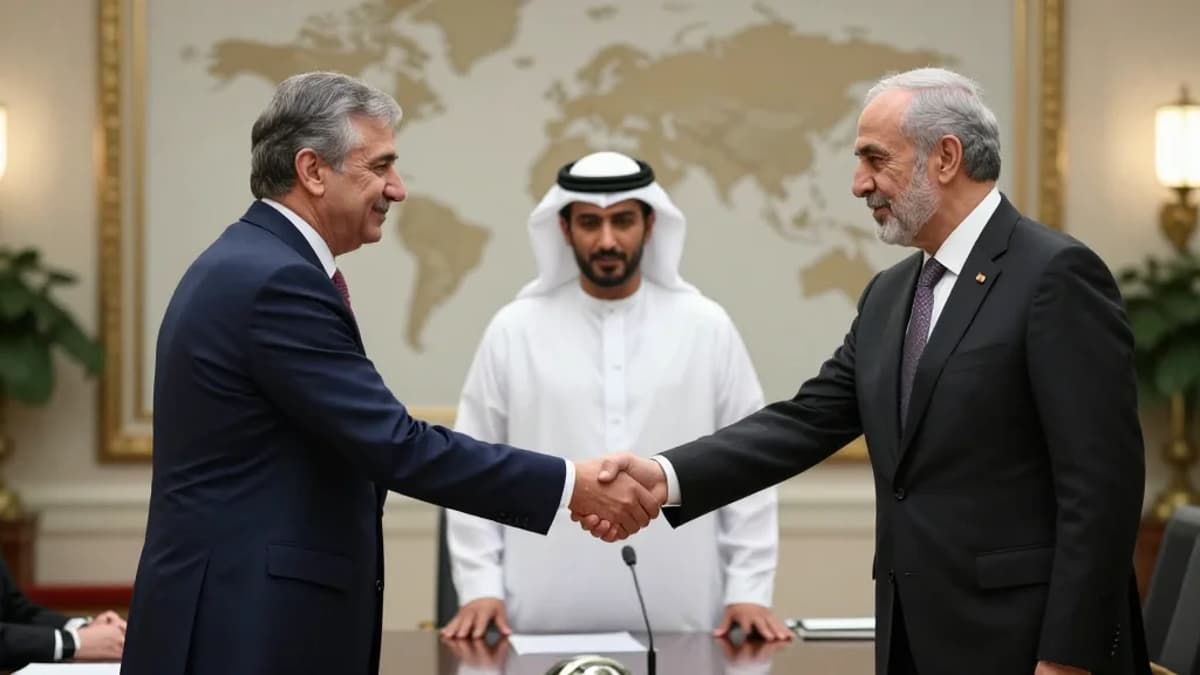
The Trump administration’s Syria envoy Tom Barrack posted a photo of the meeting to X, with the caption: “A picture is worth a thousand words — a new beginning.”

Last month, Barrack said Washington believed Damascus could handle the country’s continued fight against the Islamic State, signaling a major shift in U.S. policy toward the Kurdish forces that had partnered with American troops to defeat ISIS.

The Trump administration has thrown its weight behind Sharaa, a former jihadist who took power in Syria over a year ago after his forces ousted longtime Syrian dictator President Bashar al‑Assad. Sharaa has pledged to unify the country, which remains deeply fractured after more than 13 years of civil war. Several waves of sectarian violence targeting Kurds, Alawites and Druze over the past year have raised questions in Washington about his ability to lead.

Background

The Munich Security Conference, which opened Friday and runs until Sunday, is bringing together a number of Middle‑East officials that include, besides Shaibani and Kobane, Saudi Foreign Minister Prince Faisal bin Farhan, Qatari Foreign Minister and Prime Minister Sheikh Mohammed bin Abdulrahman Al Thani, Lebanese Prime Minister Nawaf al‑Salam, Gulf Security Council secretary‑general Jasem Mohamed Albudaiwi, Kuwaiti Prime Minister Ahmad Abdullah Al‑Ahmad Al‑Sabah, Iraqi Foreign Minister Fuad Hussein and President of Iraq’s Kurdistan Region, Nechirvan Barzani.

In January, the conference withdrew an invitation for senior Iranian officials amid the Islamic Republic’s violent repression of protests and riots in the country. Iranian Foreign Minister Abbas Araghchi was reportedly set to attend.

Two panels will be featured on Iran, one with Reza Pahlavi, the son of the deposed former Shah of Iran and a prominent opposition figure. The other panel includes U.S. Sen. Lindsey Graham, a vocal critic of the Islamic Republic and a confidant of Trump.

Ukrainian President Volodymyr Zelenskyy said on Friday that he met Pahlavi at the conference.

Know more

Other relevant discussions include a Saturday event on cooperation in the Caspian Sea region featuring Azerbaijan’s President Ilham Aliyev and a Friday town hall on the Sahel.

Read Original Article
0

Comments

Want to join the conversation?

Loading comments...