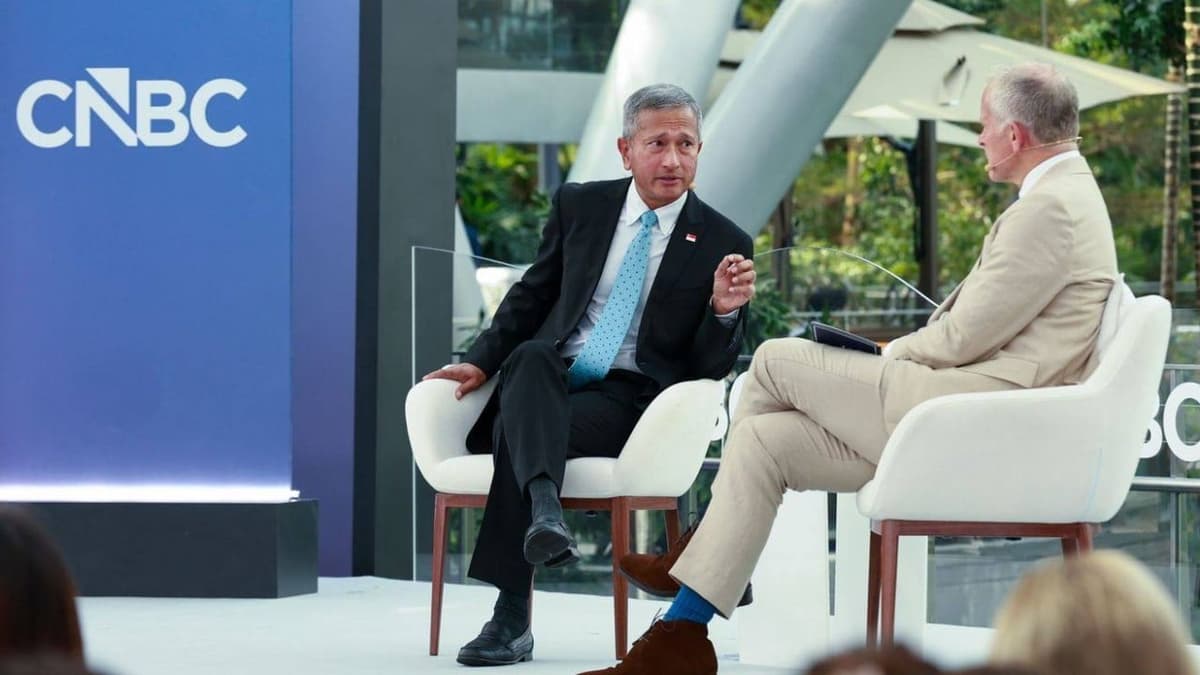
Singapore’s Balakrishnan Warns Hormuz Just a ‘Dry Run’ if US, China Clash
Why It Matters
Disruptions in Hormuz signal a testing ground for power rivalries that could jeopardize the world’s most important shipping lanes, affecting global supply chains and regional stability.
Key Takeaways
- •Hormuz blockage viewed as rehearsal for Pacific superpower clash
- •Singapore, Malaysia, Indonesia prioritize Strait of Malacca security
- •US‑China tension could reroute $3 trillion of annual trade
- •Maritime chokepoints become leverage in geopolitical bargaining
- •Regional cooperation essential to prevent trade disruptions
Pulse Analysis
The Strait of Hormuz has long been a flashpoint for Middle‑East volatility, but Singapore’s top diplomat reframes it as a practice run for a broader US‑China confrontation. By labeling the recent chokehold a "dry run," Vivian Balakrishnan signals that the real strategic theater lies in the Indo‑Pacific, where the convergence of sea lanes, energy supplies, and military assets creates a high‑stakes environment. This perspective aligns with Washington’s increasing focus on the Pacific as the next arena for great‑power competition, and it underscores how regional actors are recalibrating their security postures in anticipation of possible spill‑over effects.
For Singapore, Malaysia and Indonesia, the Strait of Malacca is the lifeline of their economies, handling roughly a third of global maritime trade and over $3 trillion in goods each year. Any disruption—whether from naval confrontations, blockades, or cyber‑attacks—could trigger cascading supply‑chain shocks, inflating shipping costs and prompting firms to seek alternative routes like the Cape of Good Hope. Consequently, these nations are deepening trilateral naval exercises, investing in surveillance technologies, and lobbying for multilateral frameworks that guarantee freedom of navigation. Their collective stance reflects a pragmatic blend of economic self‑interest and diplomatic balancing between the United States and China.
The broader implication for investors and policymakers is clear: stability of maritime chokepoints is no longer a peripheral concern but a core component of global risk assessment. As the US and China vie for influence, the Pacific’s strategic waterways will likely see heightened military presence, diplomatic overtures, and possibly new security architectures. Stakeholders should monitor policy shifts, joint patrol announcements, and infrastructure projects like the Singapore‑Malaysia high‑speed rail, which could serve both commercial and strategic mobility purposes. Understanding these dynamics equips businesses to anticipate cost fluctuations and supply‑chain rerouting, while governments can better craft cooperative mechanisms that mitigate the risk of a full‑scale maritime showdown.
Singapore’s Balakrishnan warns Hormuz just a ‘dry run’ if US, China clash
Comments
Want to join the conversation?
Loading comments...