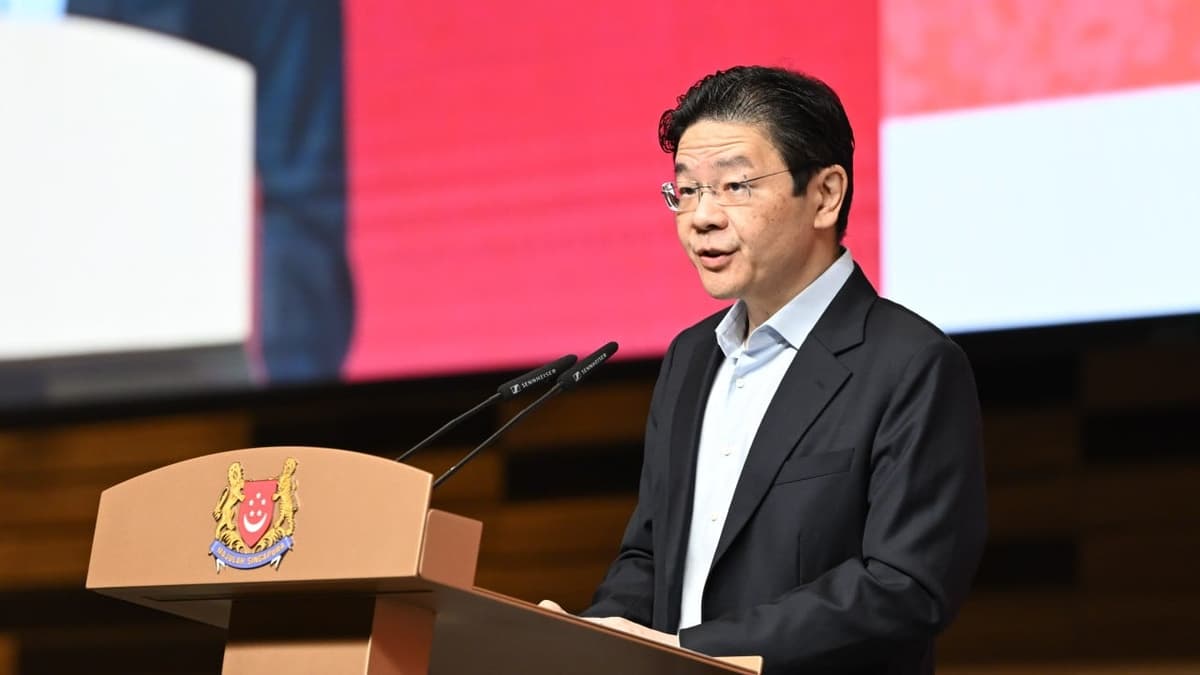
Singapore’s Lawrence Wong Urges Global Push for Upholding International Sea Laws
Why It Matters
Weakened maritime law threatens Singapore’s trade‑dependent economy and regional stability, while AI‑related liability gaps could reshape global legal norms.
Key Takeaways
- •Singapore relies on open sea lanes for 90% of trade volume
- •UNCLOS weakening could raise shipping costs and disrupt supply chains
- •ASEAN reaffirmed commitment to UNCLOS amid Middle‑East energy shock
- •AI's legal challenges highlighted, urging new liability frameworks
Pulse Analysis
Singapore’s economy is inextricably linked to the free flow of maritime traffic through the Strait of Malacca and surrounding sea lanes. As a hub that handles roughly 90% of its external trade by sea, any disruption to the legal framework that guarantees open navigation can translate into higher freight rates, longer transit times, and reduced competitiveness. The 1982 United Nations Convention on the Law of the Sea (UNCLOS) has long underpinned this stability, providing predictable rules that protect smaller, trade‑dependent states from the whims of larger powers.
Regional dynamics are intensifying the urgency of Singapore’s plea. Recent discussions in ASEAN reaffirmed a collective commitment to UNCLOS, even as the Middle‑East conflict reshapes global energy supply chains and fuels speculation about tolls in the Malacca Strait. While Indonesia clarified it would not impose levies, the very debate signals a willingness to test the limits of maritime freedom. Simultaneously, negotiations on a South China Sea code of conduct—over two decades in the making—remain stalled, leaving a flashpoint that could further jeopardize safe navigation for all regional users.
Beyond the seas, Wong warned that artificial intelligence is outpacing existing legal structures, creating ambiguity over responsibility when machines make consequential decisions. This concern extends to maritime operations, where autonomous vessels and AI‑driven logistics could blur lines of liability. Singapore’s call for updated legal frameworks reflects a broader global need to align accountability standards with emerging technologies, ensuring that human oversight remains central while protecting commerce from unforeseen legal fallout.
Singapore’s Lawrence Wong urges global push for upholding international sea laws
Comments
Want to join the conversation?
Loading comments...