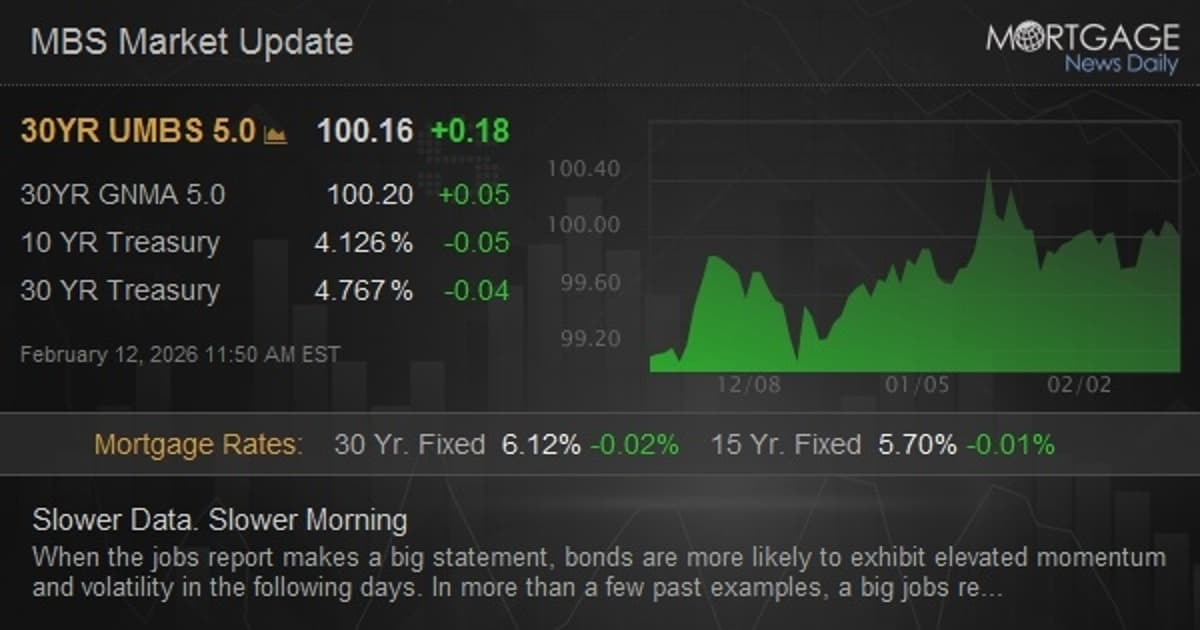
Slower Data. Slower Morning
•February 12, 2026
0
Why It Matters
Bland claims data reduces short‑term bond volatility, stabilizing yields ahead of the CPI report, which could reshape monetary‑policy expectations.
Key Takeaways
- •Jobless claims rose to 227k, missing forecasts
- •Bond momentum eases, returning to sideways trading
- •CPI release next day remains primary market driver
- •Yield curves steadied after earlier volatility spike
Pulse Analysis
Bond markets are highly sensitive to macro‑economic releases, especially employment figures that signal the health of the U.S. labor market. When a jobs report deviates sharply from expectations, it often triggers heightened momentum and volatility in Treasury yields as investors reassess inflation pressures and the Federal Reserve’s policy path. This dynamic has been evident in recent weeks, where a robust jobs report set a bullish tone for bonds, pushing yields higher and prompting active trading.
This morning’s jobless‑claims report, however, offered little surprise. Claims increased to 227,000, a modest uptick over the 222,000 consensus but still below the previous week’s 232,000. The data’s tepid nature led traders to abandon the earlier aggressive positioning, resulting in a return to the typical low‑volatility, range‑bound behavior that characterizes ordinary trading days. With the market now digesting a relatively neutral employment signal, attention is shifting toward the upcoming Consumer Price Index (CPI) release, which historically exerts a stronger influence on bond yields and Fed rate expectations.
Looking ahead, the subdued claims figure provides a short‑term cushion for fixed‑income investors, allowing them to recalibrate risk exposure before the CPI data arrives. Should inflation readings come in hotter than anticipated, the market could quickly revert to heightened volatility, potentially reigniting the momentum seen after the previous jobs report. Conversely, a softer CPI could cement the current calm, supporting a stable yield curve and reinforcing expectations of a dovish monetary stance. Investors should monitor both data streams closely, as their interplay will dictate bond market direction in the coming weeks.
Slower Data. Slower Morning
0
Comments
Want to join the conversation?
Loading comments...