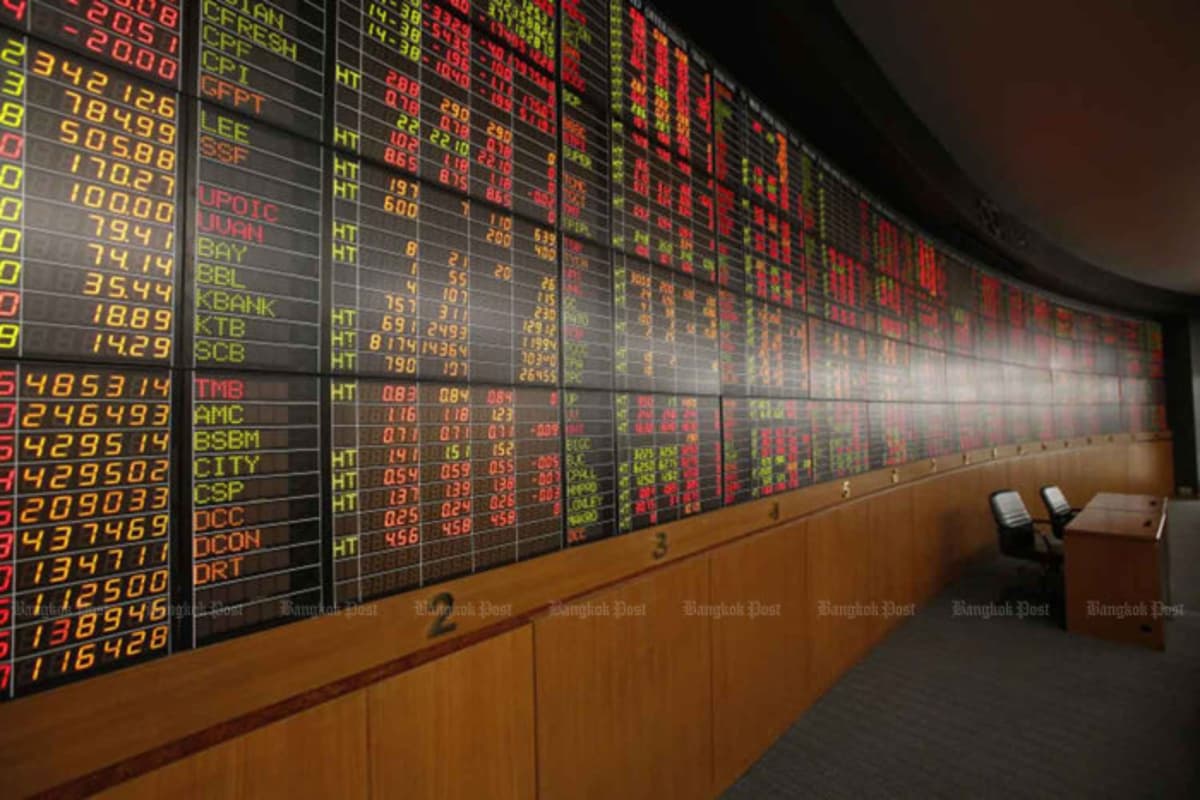
Stocks Fall in Asia After Fed Holds Interest Rate Steady
Companies Mentioned
Why It Matters
The Fed’s hawkish pause lifts borrowing costs worldwide, curbing equity valuations and prompting investors to reassess risk, especially in tech‑heavy markets. Thailand’s relative resilience offers a defensive foothold for portfolios seeking yield amid global volatility.
Key Takeaways
- •Fed held rates at 3.5‑3.75%, signaling higher‑for‑longer stance
- •8‑4 Fed vote shows unprecedented dissent, hinting policy uncertainty
- •Thai market outperforms; banks, energy, electronics recommended
- •Analysts advise barbell approach: global equities plus high‑dividend Thai banks
Pulse Analysis
The Federal Reserve’s decision to keep its benchmark rate steady at 3.5‑3.75% sent a clear message that U.S. interest rates will likely stay elevated for an extended period. By opting for a third consecutive pause, the Fed reinforced a higher‑for‑longer stance that has already pushed Treasury yields upward, compressing valuations for growth‑oriented sectors such as technology. The 8‑4 split among policymakers— the widest dissent in decades—underscores lingering uncertainty about inflation’s trajectory and the timing of any future easing, prompting heightened volatility across global equity markets.
Across Asia, the ripple effects were immediate. Major exchanges, including Thailand’s SET, fell in line with Wall Street, yet the Thai market showed relative strength thanks to a stable domestic monetary policy. The Bank of Thailand’s unanimous decision to keep its policy rate at 1% supports a gradual recovery in banks’ net interest margins, especially for institutions with floating‑rate loan exposure. Analysts highlight high‑dividend Thai banks as defensive plays, while sectors such as energy, refining, electronics, and retail are positioned to benefit from foreign inflows and a resilient export environment.
Investors are now weighing a “barbell” approach: maintaining selective exposure to global equities that can weather higher yields while anchoring a portion of the portfolio in high‑dividend Thai banking stocks. This strategy balances growth potential with income stability, especially as markets watch for any shift in Fed leadership that could tilt policy toward a more dovish stance later in the year. Until yields retreat or inflation eases, the emphasis remains on defensive positioning and sector rotation within Asia’s more buoyant markets.
Stocks fall in Asia after Fed holds interest rate steady
Comments
Want to join the conversation?
Loading comments...