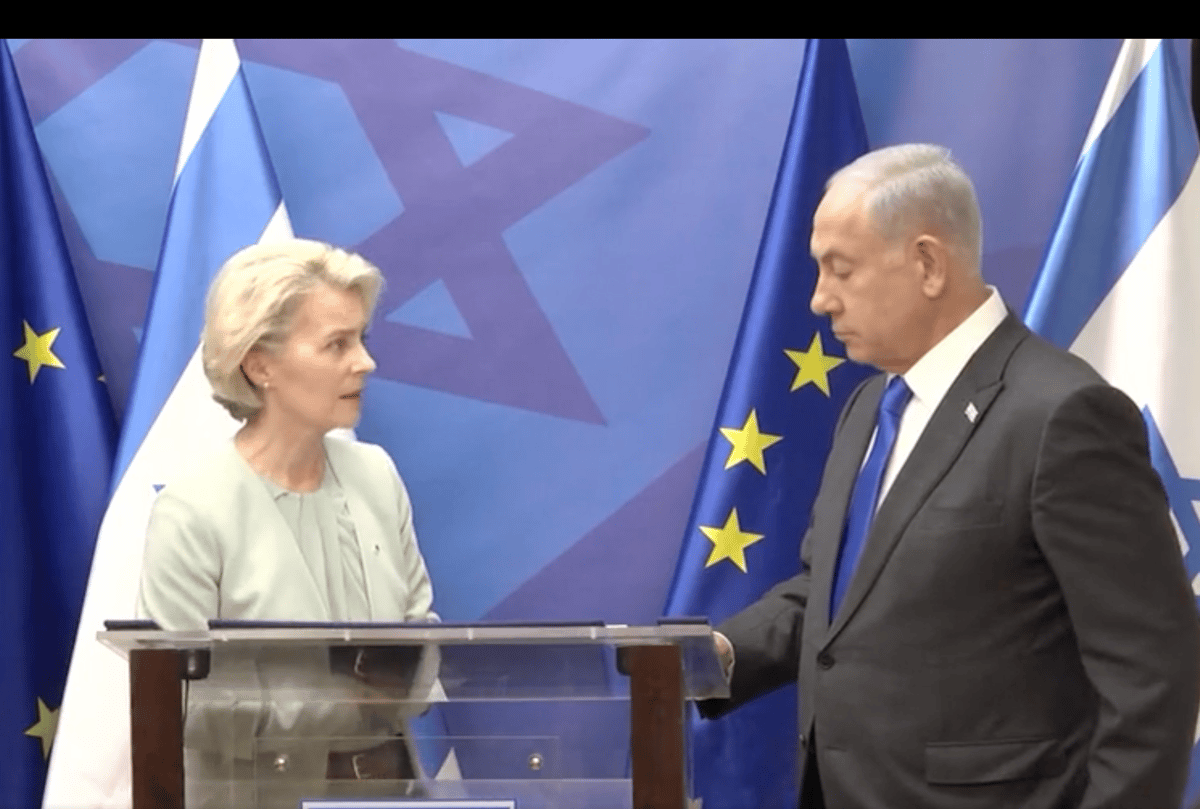
Suspending the EU-Israel Trade Deal Is Now the only Tool Left for Brussels
Why It Matters
Suspending the EU‑Israel trade deal would restore the bloc’s credibility and signal a firm commitment to international law, pressuring Israel to address alleged violations. It also reshapes the EU’s strategic leverage in a volatile Middle‑East context.
Key Takeaways
- •EU is Israel's largest trading partner, yet rarely uses leverage
- •Association Agreement's Article 2 mandates respect for human rights
- •Suspending the deal would signal EU commitment to a rules‑based order
- •EU policy emphasizes Palestinian reforms, sidestepping the occupation issue
- •Inaction could erode EU credibility and highlight double standards
Pulse Analysis
The EU‑Israel Association Agreement, signed in 1995, underpins a deep economic relationship that makes the bloc Israel’s largest trading partner. While the deal grants Israel preferential market access, it also contains Article 2, which obliges both parties to uphold democratic principles and human‑rights standards. Over the past decade, repeated reports from UN agencies and NGOs have documented alleged war crimes in Gaza and the West Bank, yet Brussels has largely refrained from leveraging its trade advantage to demand accountability. This disconnect raises questions about the EU’s willingness to enforce the very norms it champions on the global stage.
Recent geopolitical shifts have intensified scrutiny of the EU’s Middle‑East policy. Critics argue that the bloc’s focus on Palestinian institutional reforms—often framed as capacity‑building—diverts attention from the core issue of Israel’s ongoing settlement expansion, which many international bodies label as illegal under international law. By keeping the Association Agreement intact, the EU appears to prioritize stable commercial ties over principled action, inadvertently reinforcing a narrative of selective enforcement. A suspension would not only align policy with the agreement’s human‑rights clause but also send a clear message to other trade partners about the EU’s commitment to a rules‑based order.
Strategically, suspending the deal could recalibrate the EU’s influence in the region. While short‑term economic repercussions for European exporters are possible, the long‑term diplomatic payoff includes restored credibility among Arab and African nations that view the EU’s current stance as hypocritical. Moreover, a decisive move could pressure Israel to reconsider policies that have drawn widespread condemnation, potentially reopening space for renewed peace negotiations. In an era where multilateral institutions are under strain, the EU’s willingness to act on its own agreements may become a litmus test for its relevance on the world stage.
Suspending the EU-Israel trade deal is now the only tool left for Brussels
Comments
Want to join the conversation?
Loading comments...