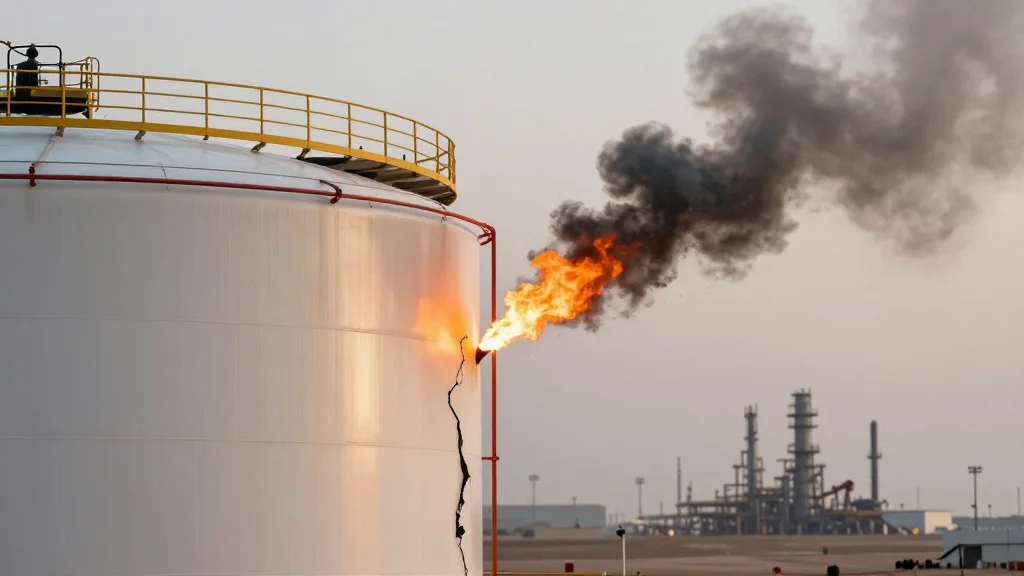
The Iran War Has Already Unleashed a $25 Billion Energy Repair Bill
Companies Mentioned
Why It Matters
The $25 billion repair bill underscores how geopolitical flashpoints can instantly inflate energy‑related expenditures, tightening global oil supply and pressuring prices. Stakeholders from investors to policymakers must reassess risk exposure in the Middle East’s energy landscape.
Key Takeaways
- •$25B repair costs already incurred.
- •Iran's oil facilities heavily damaged.
- •Global oil supply disruptions risk price spikes.
- •Reconstruction may delay Iran's export capacity.
- •Regional investors face heightened geopolitical risk.
Pulse Analysis
The Iran war’s early financial toll on energy infrastructure is staggering. Satellite imagery and on‑the‑ground reports confirm that several of Iran’s primary oil processing sites, including the Kharg Island terminal, have suffered significant damage. Rystad Energy estimates the immediate repair bill at roughly $25 billion, a figure that rivals the annual capital spending of many multinational oil majors. This surge in emergency spending diverts capital from longer‑term projects, accelerating the need for external financing and potentially reshaping Iran’s fiscal priorities.
Beyond Iran’s borders, the disruption reverberates through global oil markets. With a portion of the world’s fourth‑largest crude producer offline, supply tightness could lift Brent and WTI benchmarks, especially if the conflict extends into the summer driving season. Traders are already pricing in a risk premium, and downstream industries—from petrochemicals to aviation—face higher input costs. The uncertainty also fuels speculative activity, prompting investors to seek safer assets while monitoring the conflict’s trajectory.
Looking ahead, the reconstruction phase will be as consequential as the damage itself. Restoring capacity will require not only massive capital outlays but also access to technology and expertise that may be constrained by sanctions. Delays could prolong reduced export volumes, weakening Iran’s balance‑of‑payments and influencing regional energy geopolitics. For multinational energy firms, the situation presents both a cautionary tale and a potential opening for strategic partnerships, provided they can navigate the complex regulatory and security environment. The $25 billion repair bill thus serves as a barometer for the broader economic ripple effects of Middle‑East conflicts on the global energy ecosystem.
The Iran War Has Already Unleashed a $25 Billion Energy Repair Bill
Comments
Want to join the conversation?
Loading comments...