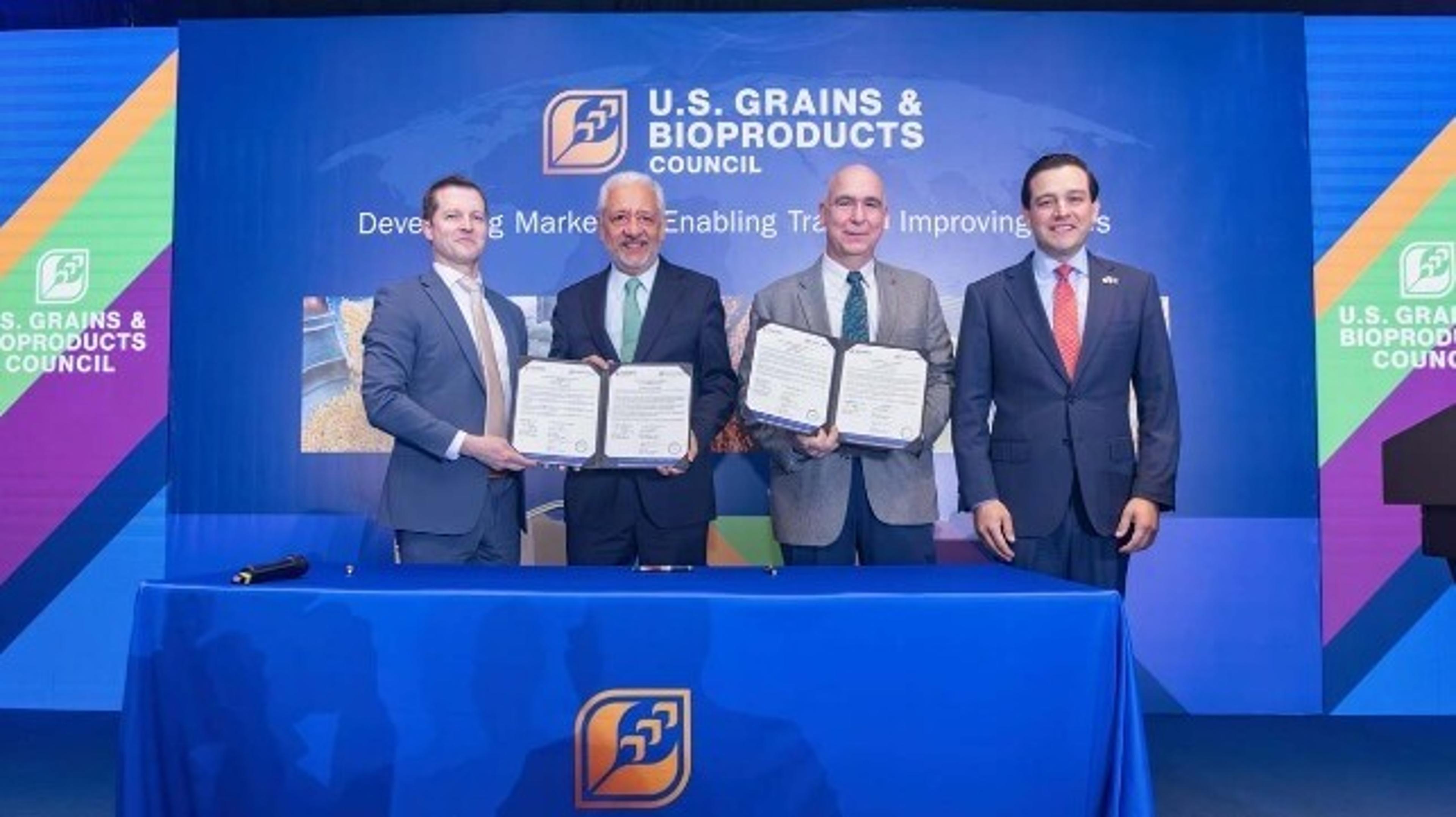
The Panama Canal and The U.S. Grains & BioProducts Council Sign MoU
•February 13, 2026
0
Why It Matters
The MOU enhances U.S. grain competitiveness while securing revenue and sustainability gains for the Panama Canal, strengthening a vital supply‑chain link.
Key Takeaways
- •MOU targets faster, greener U.S. grain shipments
- •Canal moves ~25 Mt grain FY2025
- •Joint data sharing improves logistics forecasting
- •Strengthens U.S.–Panama trade partnership
- •Supports sustainable, reliable global food supply
Pulse Analysis
The Panama Canal remains one of the world’s most consequential maritime shortcuts, handling millions of tons of cargo each year. Grain shipments alone represent a quarter of the canal’s total volume, with FY 2025 seeing about 25.1 million metric tons of U.S. corn, wheat and soybeans transit its locks. This traffic not only fuels global food markets but also contributes significantly to Panama’s toll revenues, making the waterway a linchpin in North‑South trade dynamics.
The newly signed Memorandum of Understanding between the canal authority and the U.S. Grains & BioProducts Council formalizes a collaborative framework aimed at streamlining grain logistics. By pooling economic analyses, trade data and operational insights, both parties can anticipate bottlenecks, optimize lock scheduling and reduce carbon footprints associated with long‑haul shipping. Sustainability clauses emphasize low‑emission vessel incentives and best‑practice handling, aligning the partnership with broader ESG goals that investors and regulators increasingly demand.
For U.S. agriculture, the agreement translates into a more predictable export corridor, potentially lowering freight costs and shortening delivery windows to Asian and European markets. A more efficient canal route can also buffer the sector against geopolitical disruptions elsewhere, reinforcing food‑security resilience. As global demand for grains rises, the Panama Canal‑USGBC alliance positions both entities to capture growth opportunities while showcasing how public‑private cooperation can modernize legacy infrastructure for 21st‑century trade.
The Panama Canal and The U.S. Grains & BioProducts Council Sign MoU
Panama Canal and USGBC Sign MOU to Boost U.S. Agricultural Trade
By: The Panama Canal
The Panama Canal and the U.S. Grains & BioProducts Council (USGBC) signed a Memorandum of Understanding (MOU) designed to strengthen their collaboration through the enhancement of global trade with U.S. agricultural products. This landmark agreement highlights the commitment between both organizations to improve the efficiency, reliability, and sustainability of grain shipments through one of the world’s most vital trade routes.
Under the terms of the MOU, the Panama Canal and USGBC will collaborate on joint market efforts like economic analysis, as well as sharing trade and logistical data. Through this type of cooperation, the partnership will support an increasing international demand for U.S. grains while simultaneously promoting the operational excellence of the Panama Canal.
By strengthening ties with the USGBC, the Panama Canal reaffirms its pivotal role as a true partner in global commerce. “The signing of this important document is reflective of the longstanding friendship between Panama and the United States of America rooted in more than a century of cooperation, mutual respect, and shared strategic and economic interests,” said the Panama Canal administrator, Dr. Ricaurte Vásquez Morales.
“We are proud to be a strategic ally of the U.S. Grains & BioProducts Council as we work together to enhance the flow of trade through the Panama Canal. The memorandum of understanding is exemplary of our mutual pledge to promote sustainable trade and safeguard access to U.S. agricultural exports,” Vásquez said.
“For our industry, one of the most important reasons we are here is the Panama Canal. As reflected in the MOU, it means so much to U.S. agriculture. Throughout history, it has been known by many names — the Big Ditch, the Gold Coast of Trade, the Highway of the Americas — each underscoring its importance to global commerce and its deep historical and cultural significance,” said the President of USGBC Ryan LeGrand.
“We simply could not do what we do at the U.S. Grains and Bioproducts Council without it. For us the Canal is crucial, essential, and of paramount importance,” he added.
The signing ceremony was attended by the Ambassador of the United States to Panama, Kevin Marino Cabrera, who served as an honorary witness. In his welcome remarks, the ambassador highlighted the excellent cooperative relationship between the U.S. and the Panama Canal by underscoring the strategic importance of this interoceanic waterway for bilateral and global trade.
The Panama Canal, a crucial link in the global supply chain, serves as a gateway for several million tons of U.S. agricultural exports annually. Grain traffic accounted for around 25.1 million metric tons in FY 2025 and is among the main products using the canal along with containers and energy products.
As part of their meeting in Panama, a group of USGBC representatives observed operations up close during a partial transit through the locks.
0
Comments
Want to join the conversation?
Loading comments...