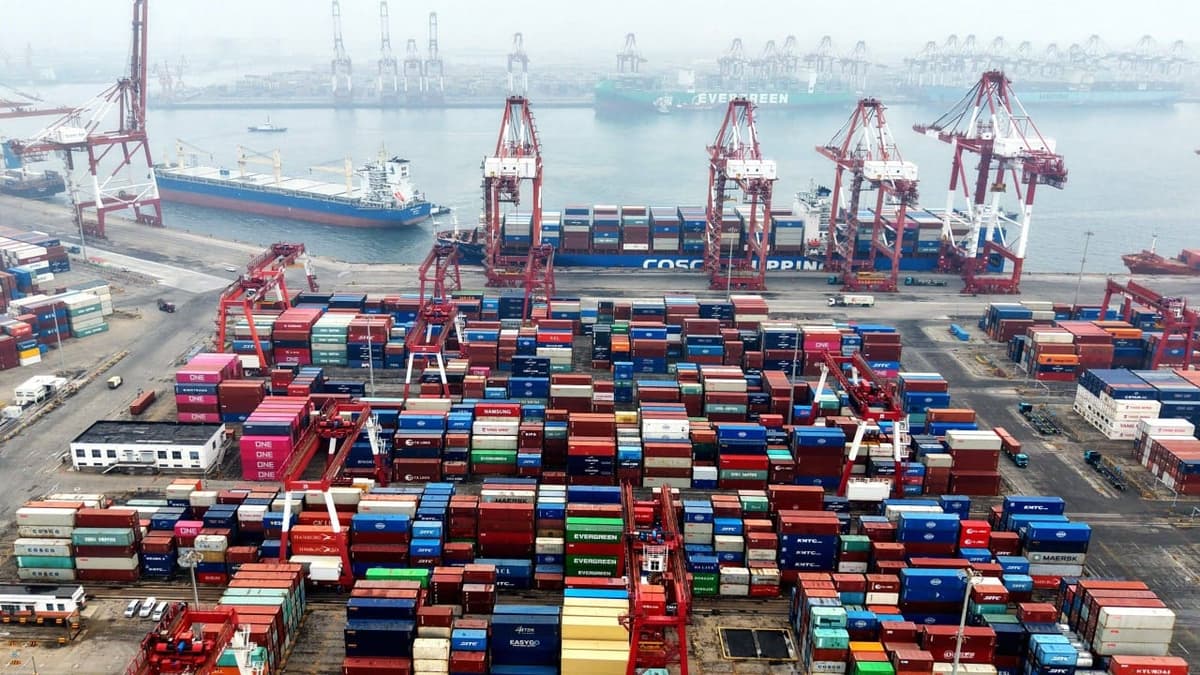
Trade Boom: China’s Exports Surge 21.8% to Start 2026 – Biggest Gain in 4 Years
•March 10, 2026
0
Why It Matters
The rapid export growth reinforces China’s role as a global manufacturing hub and could reshape trade balances, influencing commodity prices and investment flows worldwide.
Key Takeaways
- •Exports rose 21.8% Jan‑Feb 2026.
- •Largest quarterly gain since 2022.
- •ASEAN, EU drive demand surge.
- •AI tech spending fuels export growth.
- •US export decline contrasts Chinese rise.
Pulse Analysis
China’s export figures for January‑February 2026 reveal a 21.8% year‑over‑year increase, the most pronounced rise since 2022. This rebound comes as global consumers and businesses seek cost‑effective components, with ASEAN economies and the European Union accounting for the bulk of the uptick. The data underscores a broader rebalancing in world trade, where China regains momentum after a period of slower growth, while U.S. export volumes to the region contract sharply.
A key driver behind the export surge is the rapid adoption of AI‑enabled manufacturing processes. Chinese firms are investing heavily in smart factories, robotics, and data analytics, which boost productivity and allow faster scaling of high‑tech products such as semiconductors, electric‑vehicle parts, and advanced medical equipment. This technology push not only lifts export volumes but also upgrades the quality mix, positioning China to capture higher‑margin segments traditionally dominated by Western suppliers. Supply‑chain analysts note that the AI infusion reduces lead times and improves reliability, making Chinese goods more attractive to overseas buyers.
Looking ahead, the momentum is likely to persist if global demand remains resilient and Chinese policy continues to support tech‑focused export incentives. However, potential headwinds include tightening geopolitical tensions, export controls from the U.S., and domestic regulatory shifts. Investors should monitor trade‑balance data, AI investment trends, and policy announcements for signals on whether China can sustain its export acceleration through the rest of 2026 and beyond.
Trade boom: China’s exports surge 21.8% to start 2026 – biggest gain in 4 years
0
Comments
Want to join the conversation?
Loading comments...