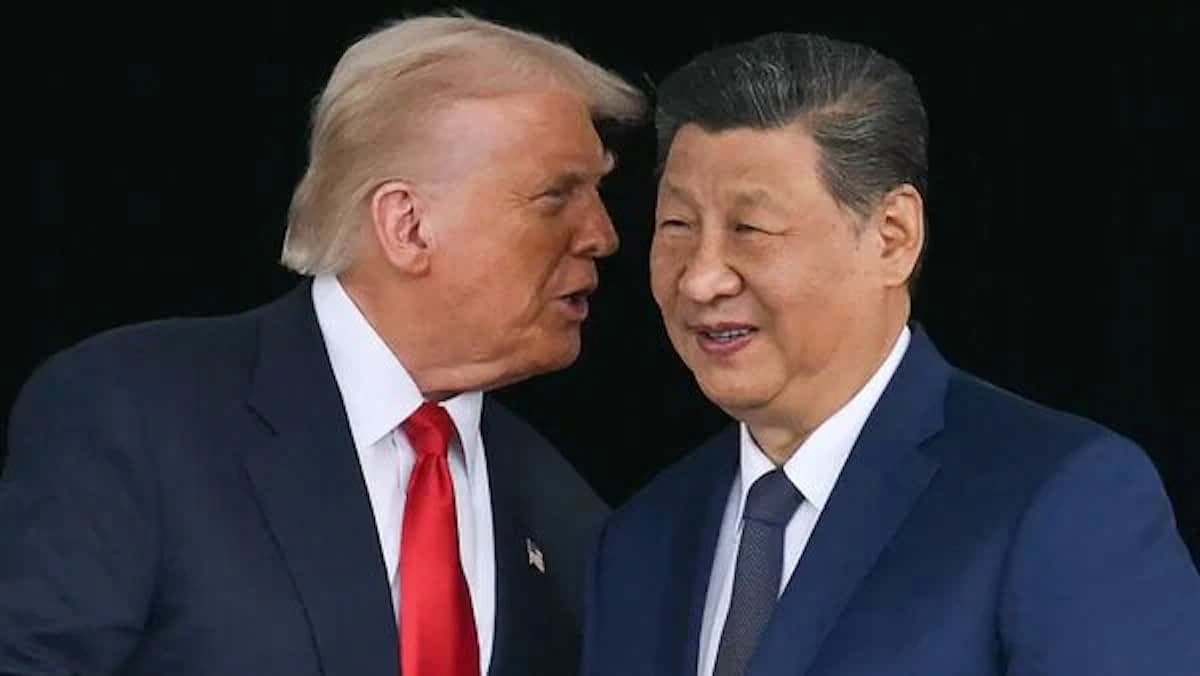
Trump’s ‘Madness’ Masks Calculated Quest for a Bipolar World
Why It Matters
The approach signals a fundamental shift from unipolar U.S. dominance toward a contested bipolar order, directly affecting trade flows, security commitments, and the future of dollar hegemony.
Key Takeaways
- •Trump leveraged tariffs on allies to force alignment against China
- •Venezuela and Iran strikes displayed resolve, shaping upcoming China talks
- •Trump‑Xi meeting in Busan framed a temporary G2 partnership
- •Allies like India and EU pursue strategic autonomy, challenging US pressure
- •Bipolar vision risks alienating partners, potentially accelerating multipolar shift
Pulse Analysis
Trump’s return to the Oval Office has been marked by a theatrical foreign‑policy style that masks a deeper geopolitical calculation. Rather than pursuing a costly full‑scale confrontation with Beijing, his administration seeks to re‑engineer the international system into a de‑facto bipolar arrangement. By positioning the United States and China as the two dominant poles, Washington hopes to retain leverage over global institutions, safeguard the primacy of the U.S. dollar, and avoid the economic fallout of a total decoupling. This vision draws on Cold‑War logic but adapts it to China’s hybrid strength in technology, finance, and military capabilities.
To operationalize the bipolar blueprint, Trump has turned tariffs into diplomatic weapons, threatening higher duties on key exports from the EU, Japan, South Korea, India and the United Kingdom. Simultaneously, limited but high‑profile military actions—such as the January 2026 operation that captured Venezuela’s Nicolás Maduro and the February 2026 strikes on Iran’s leadership—serve as demonstrations of resolve that pressure allies to curb engagement with Beijing. The October 2025 Trump‑Xi encounter in Busan was presented as an "amazing G2 moment," underscoring a tactical willingness to share the global agenda while quietly working to erode China’s influence through back‑channel diplomacy and selective decoupling.
The gamble carries significant risks. Persistent coercion may alienate traditional partners, prompting the EU, India and Japan to double down on strategic autonomy and diversify supply chains away from the United States. Such a backlash could accelerate the very multipolar diffusion Trump fears, weakening the dollar’s gravitational pull and fragmenting security architectures. Policymakers and investors must therefore monitor how these tariff disputes, alliance realignments, and the postponed Trump‑Xi summit reshape trade flows and defense spending, as the outcome will dictate whether the world moves toward a stable bipolar balance or a more dispersed, competitive order.
Trump’s ‘madness’ masks calculated quest for a bipolar world
Comments
Want to join the conversation?
Loading comments...