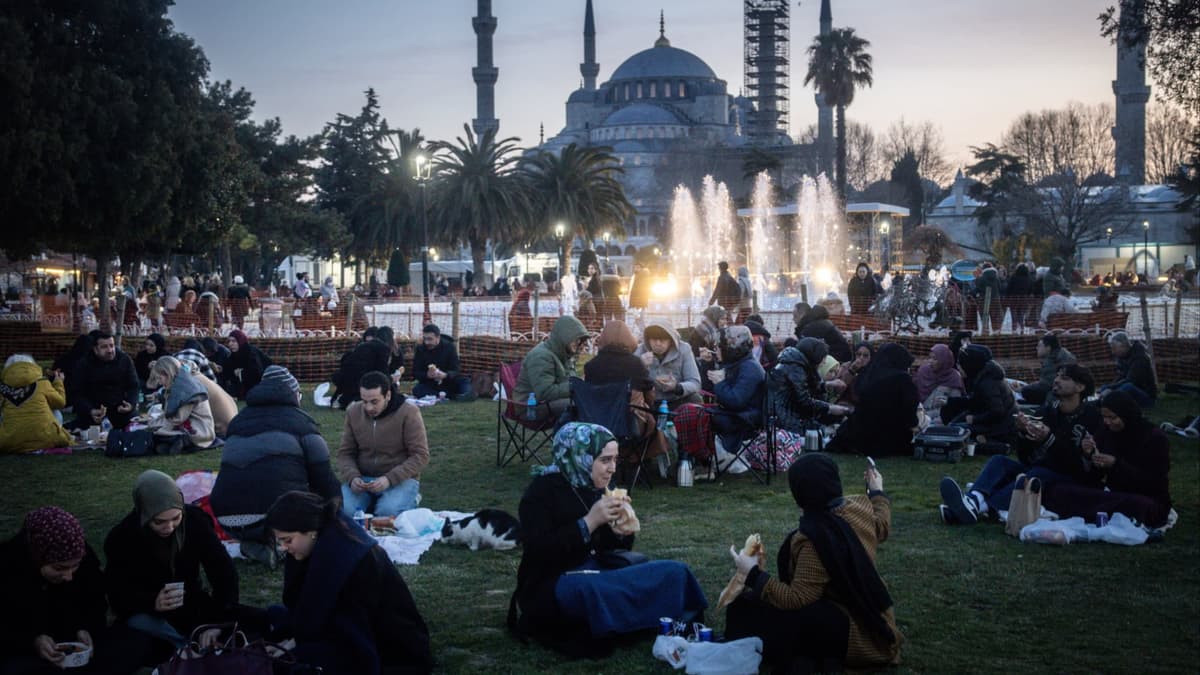
The crackdown signals Ankara’s urgent attempt to curb soaring food costs and mitigate growing political risk as inflation erodes public support for the ruling party.
Turkey’s latest price‑control campaign arrives at a volatile crossroads of macro‑economic pressure and cultural demand. Ramadan traditionally spikes food consumption, concentrating demand for staples such as chicken, meat and dairy. By suspending chicken exports and deploying trade inspectors, the government hopes to keep domestic supplies ample and curb a 32 percent food‑price surge that threatens to outpace overall inflation. The crackdown also includes hefty fines—up to TL 1.8 million—for retailers deemed to be hoarding or inflating prices, a move that underscores Ankara’s willingness to intervene directly in market pricing mechanisms.
Beyond the immediate consumer impact, the policy reflects deeper political calculations. Recent surveys show three‑quarters of Turks view the economy as mismanaged, and the cost‑of‑living crisis has become a central grievance against President Recep Tayyip Erdoğan. Business leaders, including the pro‑government Müsiad association, have publicly decried erratic price gaps, amplifying pressure on officials to demonstrate tangible action. The crackdown therefore serves as a symbolic reassurance to voters, attempting to restore confidence ahead of a critical electoral cycle while signaling that the administration will not tolerate perceived profiteering during a sacred period.
The broader macro‑economic outlook remains uncertain. While inflation has receded from its 86 percent peak, it still hovers above the central bank’s 24 percent target, and the IMF warns that volatile food prices pose a key risk to price stability. Continued price controls could distort market signals, potentially discouraging investment in agricultural production and export markets. Investors will watch closely how the Turkish central bank balances tightening monetary policy with political imperatives, as any misstep could reverberate through currency markets and affect foreign capital flows.
Recep Tayyip Erdoğan’s government seeks to tackle grievances over living costs as Muslim holy month begins · John Paul Rathbone, Istanbul
Published 18 hours ago
Turkey has banned chicken exports and cracked down on “exorbitant” food prices ahead of the Ramadan religious holiday at a time of economic hardship, stubbornly high inflation — and a dispute over an alleged $520 restaurant bill for a plate of meatballs.
Inspectors have been dispatched across the country to scour markets for what ministers have called “unfair price increases, market‑disrupting practices and any attempts to mislead consumers”. The trade ministry also suspended chicken exports after producers and retailers raised prices as much as 15 per cent.
Rising prices have undermined the popularity of President Recep Tayyip Erdoğan’s government, with recent polls suggesting three‑quarters of Turks believe the economy is poorly managed.
“We are on the ground against hoarding and exorbitant pricing practices,” trade minister Ömer Bolat said last week. “Our inspections will continue resolutely to ensure that citizens can shop peacefully, as befits the spiritual atmosphere of Ramadan.”
The holiday, which starts in Turkey on Thursday, is at once the holiest and most festive month in the Islamic calendar. Adherents refrain from eating and drinking between sunrise and sunset, breaking fast after dusk with a large dinner, a practice that can concentrate food demand and cause a jump in prices.

However, this year’s pre‑Ramadan crackdown — with accompanying fines that can reach TL 1.8 mn ($41 000) for “exorbitant price increases” — also responds to simmering public disquiet about the country’s cost‑of‑living crisis.
More than one‑third of Turks say living costs are now their biggest problem, according to the government’s latest life‑satisfaction survey, with food inflation — running at 32 per cent — a chief concern.
Even well‑to‑do industrialists have complained. Burhan Özdemir, head of Müsiad, a pro‑government business association, this week said no one in Turkey seemed to know the price of anything anymore.
“Nobody in this country asks what the cost of a kilo of ice cream is,” Özdemir said in a recent newspaper interview. “It’s abnormal to drink tea for 500 lira in one place and 5 lira in another. There is no such price gap anywhere in the world.”
Distorted food prices have long been a hot potato. Six years ago, then‑finance minister Berat Albayrak, who is also Erdoğan’s son‑in‑law, accused farmers of hoarding goods to sell later at a higher price, calling it “food terror”.
Mehmet Şimşek, the current finance minister, uses technocratic language more in keeping with the orthodox policies he implemented almost three years ago; he has been trying to curb the dramatic price rises unleashed by Albayrak’s ultra‑low‑interest‑rate policies.
After food prices jumped 7 per cent last month, Şimşek said it was because of “adverse weather conditions”, and would have a limited effect on “the underlying trend of inflation”.
Few Turks believe such forecasts, however. The IMF, while praising Şimşek’s reforms, also warned this month that inflation “remains well above target”, was “taking a toll on … inequality” and volatile food prices were one of the “main risks” to the central bank’s target.
Inflation, currently at 31 per cent, is down from its 86 per cent peak three and a half years ago. But the central bank overshot last year’s 24 per cent target and household surveys show Turks believe inflation this year could be as much as triple the official 16 per cent target for 2026.
A recent price scandal shows how complicated economic life has become. Deputy trade minister Mahmut Gürcan responded this week to claims “circulating on various social‑media platforms and news websites” about a diner who claimed he had been charged TL 22 850 ($522) for a portion of meatballs and a salad.
“As a result of investigations,” Gürcan said on Tuesday, “it was found that the aggrieved diner, named as Murat Ş, had ordered other food, as well as alcoholic and non‑alcoholic drinks.”
End of article
Comments
Want to join the conversation?
Loading comments...