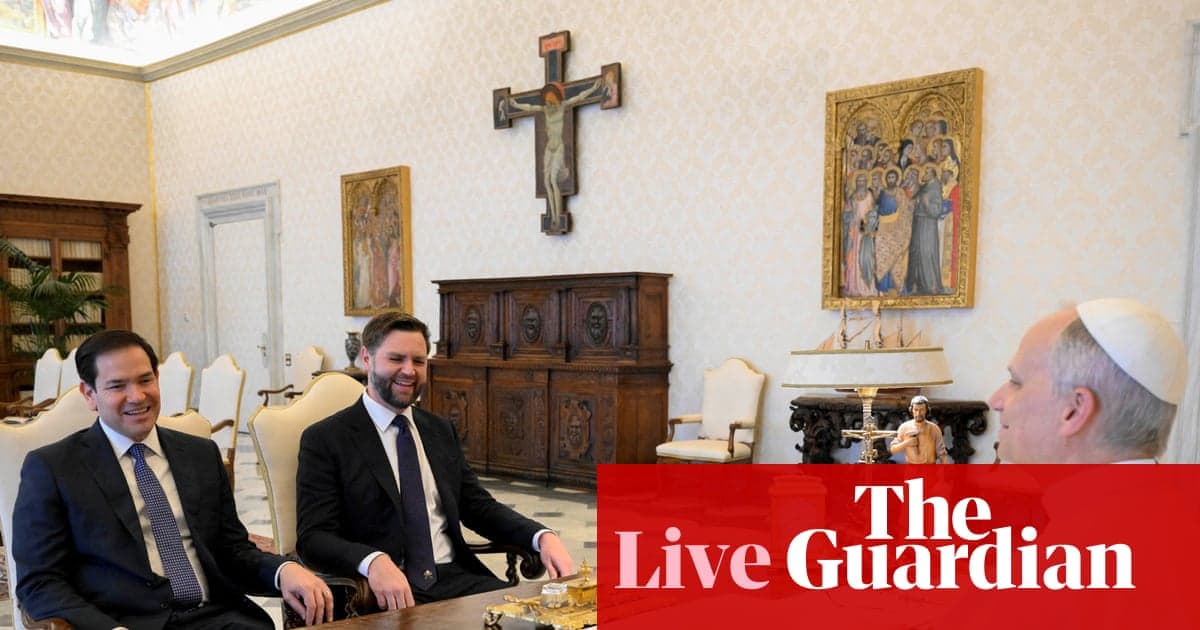
US Secretary of State Marco Rubio to Have ‘Frank’ Conversation with the Pope – Europe Live
Why It Matters
The dialogue could temper U.S. isolationist rhetoric and shape Iran strategy while signaling to allies the administration’s willingness to engage with moral authorities; at the same time, the surrounding geopolitical moves reveal shifting alliances and economic pressures that may reshape Western cohesion.
Key Takeaways
- •Rubio to meet Pope Leo for candid discussion on US Iran policy
- •Trump’s attacks on the pope spark backlash from Christian leaders
- •Russia restricts mobile internet ahead of Victory Parade security concerns
- •UK joins EU’s €90 bn Ukraine loan, citing domestic job creation
- •EU readies response as Trump threatens to raise US car tariffs
Pulse Analysis
The Vatican‑Washington meeting marks a rare moment of direct engagement between a senior U.S. cabinet official and the first U.S.-born pontiff. Rubio’s visit, framed as a "frank" dialogue, seeks to bridge the gap created by President Trump’s sharp rebukes of Pope Leo’s criticism of the planned Iran conflict. Historically, U.S. secretaries of state have used the Holy See as a back‑channel for soft power, and a constructive conversation could temper the administration’s hard‑line posture, reassure European allies, and provide moral framing for any future military action.
Beyond the Vatican, the week’s headlines illustrate a world in flux. Moscow’s decision to limit mobile internet ahead of its Victory Parade reflects heightened security anxieties and complicates commercial operations for Russian firms and foreign investors. In Europe, Britain’s entry into the EU’s €90 billion loan for Ukraine underscores a pragmatic pivot toward collective defense financing, while also promising domestic job creation. Simultaneously, the European Commission’s warning that it is prepared for any U.S. tariff escalation signals a brewing trade standoff that could ripple through automotive supply chains and affect transatlantic market stability.
For businesses and policymakers, these intersecting narratives signal both risk and opportunity. A successful Rubio‑Leo dialogue could ease diplomatic tensions, potentially averting harsher sanctions or military escalation in the Middle East, which would stabilize energy markets. Conversely, continued U.S. tariff threats and Russian communications blackouts introduce uncertainty for multinational corporations reliant on predictable trade and digital infrastructure. Stakeholders should monitor diplomatic outcomes closely, as they will likely influence investment decisions, supply‑chain resilience, and the broader geopolitical calculus shaping the global economy.
US secretary of state Marco Rubio to have ‘frank’ conversation with the pope – Europe live
Comments
Want to join the conversation?
Loading comments...