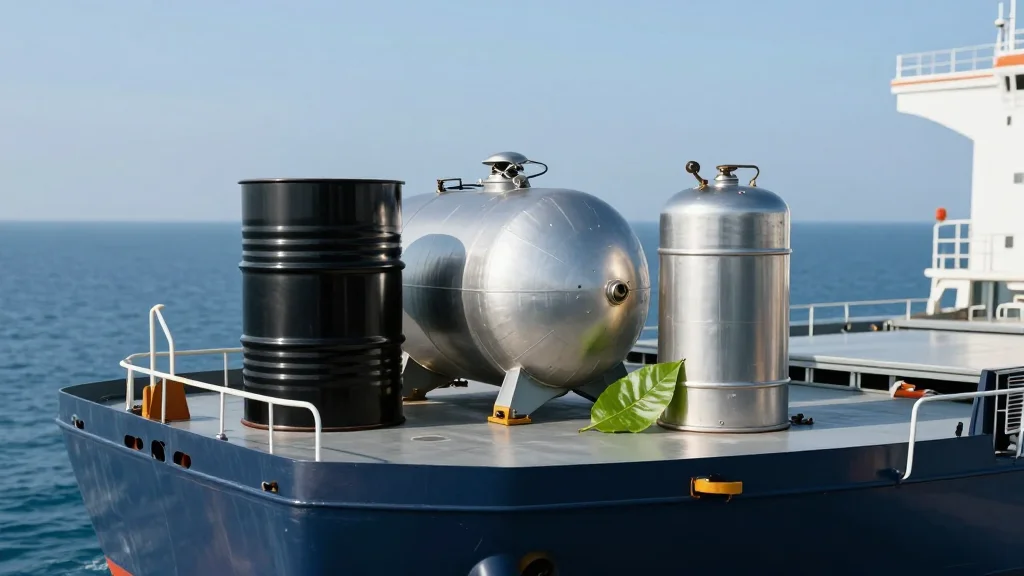
War-Driven Energy Shock Makes Case for More Alternative Fuels
Why It Matters
Rising bunker costs erode carrier margins while stricter IMO targets force a strategic pivot, making alternative fuels a critical lever for profitability and compliance.
Key Takeaways
- •VLSFO price jumped 70% to $930 per metric ton since war
- •IMO's Net‑Zero Framework pushes stricter emissions targets for 2030‑2050
- •Shipowners consider LNG, ammonia, and methanol as viable low‑carbon options
- •Alternative fuels could offset $400 bn annual bunker cost surge
Pulse Analysis
The war‑driven energy shock has turned bunker fuel from a predictable expense into a volatile cost center, with VLSFO prices climbing more than $390 per metric ton since February. This spike not only squeezes operating margins but also reshapes the economics of ship design and route planning. As carriers grapple with higher fuel bills, the financial calculus increasingly favors fuels that offer price stability and lower carbon intensity, prompting a surge in feasibility studies for liquefied natural gas, green ammonia, and methanol retrofits.
Concurrently, the International Maritime Organization is tightening the regulatory noose with its Net‑Zero Framework, which envisions a 40% reduction in shipping CO₂ by 2030 and a full phase‑out of carbon‑intensive fuels by 2050. The framework’s draft includes market‑based measures, carbon intensity targets, and a timeline for alternative‑fuel certification. For shipowners, compliance will require not just technology upgrades but also new supply‑chain partnerships, as the availability of low‑carbon bunkers remains uneven across key trade lanes.
Investors and analysts are watching the intersection of price volatility and regulation as a catalyst for long‑term transformation. Companies that secure early access to alternative‑fuel infrastructure can lock in lower fuel costs, mitigate regulatory risk, and position themselves as sustainability leaders. Meanwhile, financiers are developing green loan products tied to emissions‑reduction milestones, further incentivizing the shift. In this environment, the strategic choice of fuel becomes a decisive factor in maintaining competitive advantage and meeting stakeholder expectations.
War-driven energy shock makes case for more alternative fuels
Comments
Want to join the conversation?
Loading comments...