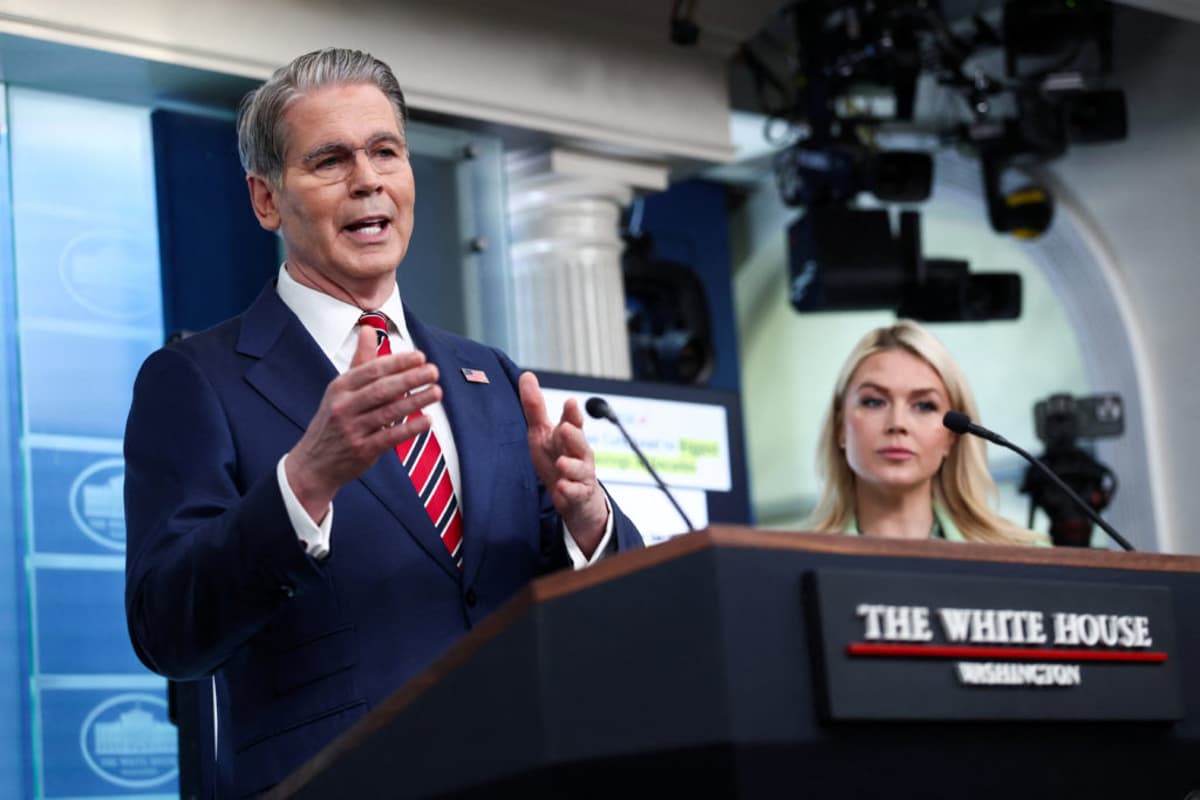
WATCH: Bessent Warns that U.S. Is Launching 'Financial Equivalent' Of Bombing Iran
Companies Mentioned
Why It Matters
The threat of expansive secondary sanctions raises the stakes of U.S.–Iran tensions, potentially disrupting global oil flows and exposing multinational banks to compliance risk.
Key Takeaways
- •Treasury threatens secondary sanctions on banks handling Iranian oil revenues
- •Bessent predicts U.S. gasoline to drop to $3 per gallon this summer
- •Letters sent to banks in China, Hong Kong, UAE, Oman
- •White House maintains diplomatic talks despite looming ceasefire expiration
Pulse Analysis
The Treasury's new warning marks a sharp escalation in the United States' economic strategy toward Tehran. By threatening secondary sanctions—penalties that can be imposed on non‑U.S. banks and corporations that process Iranian oil payments—the administration is extending its reach beyond traditional primary sanctions. This approach puts financial hubs in Asia and the Middle East on notice, forcing them to tighten due‑diligence protocols and potentially reroute Iranian oil trade through more opaque channels, which could increase compliance costs and market opacity.
In parallel, Bessent's optimism about gasoline prices hinges on the anticipated reopening of the Strait of Hormuz, a critical chokepoint for global crude supplies. If the waterway clears, additional oil can reach U.S. refineries, easing the current $4.11‑per‑gallon pump price and nudging it toward the $3 target Bessent cited. However, the specter of secondary sanctions may deter some traders from resuming shipments, creating a tug‑of‑war between supply‑side relief and financial pressure tactics that could keep pump prices volatile in the short term.
Politically, the administration's hardline stance coexists with ongoing diplomatic overtures. The White House's assertion that talks are still active, even as the cease‑fire deadline approaches, suggests a dual‑track policy: applying economic pain while keeping diplomatic channels open. This balancing act reflects broader U.S. objectives to curb Iran's nuclear ambitions without triggering a full‑scale conflict, but it also introduces uncertainty for investors watching both sanctions risk and the potential for renewed negotiations to reshape regional stability.
WATCH: Bessent warns that U.S. is launching 'financial equivalent' of bombing Iran
Comments
Want to join the conversation?
Loading comments...