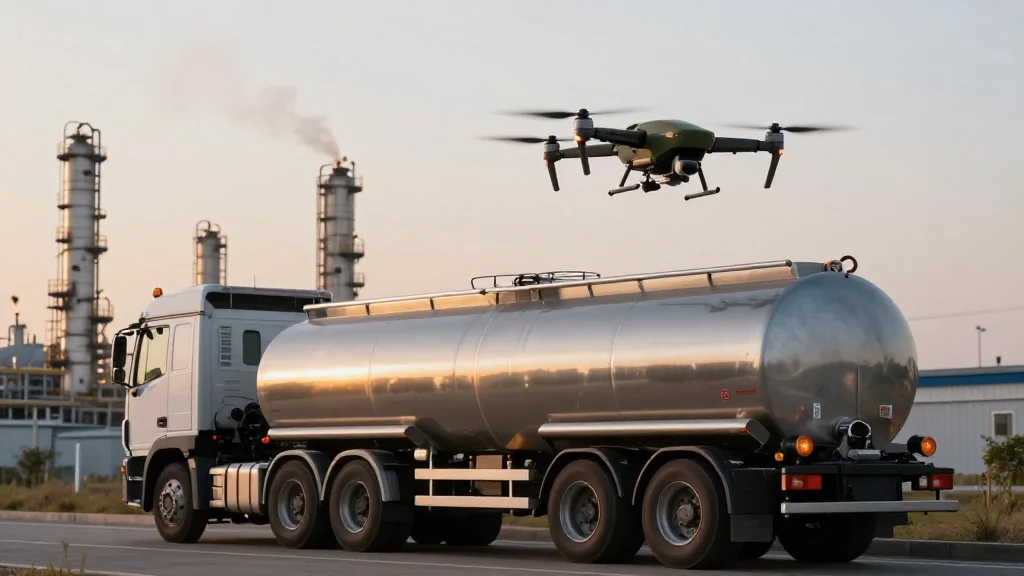
When the Refineries Burn: Ukraine’s Strikes Turn Russia’s Energy Backbone Into a Cautionary Tale
Key Takeaways
- •Ukraine's drones knocked out ~25% of Russia's refining capacity
- •April refinery runs fell to 4.7 million barrels per day, 16‑year low
- •Russia may halt diesel and jet fuel exports to protect domestic supply
- •Kyiv allocated $112 million for medium‑range strike systems
- •The campaign highlights concentration risk and cyber‑physical vulnerability in critical infrastructure
Pulse Analysis
The Ukrainian drone campaign has become a textbook case of how asymmetric weapons can disrupt a major oil‑producing nation. By targeting nodes such as the Ryazan and Moscow refineries, the strikes have cut roughly 83 million tons of annual capacity, driving Russia’s April throughput to its lowest level since 2009. This operational shock ripples through global markets: the International Energy Agency now projects a 4.5 million‑barrel‑per‑day shortfall in the second quarter, tightening an already strained diesel market and prompting price volatility that affects transport and logistics firms worldwide.
Moscow’s contemplated export curbs on diesel and jet fuel signal a strategic pivot from revenue generation to domestic rationing. Historically, Russian fuel exports have underpinned its wartime economy, but with a quarter of refining capacity offline, the Kremlin faces a supply‑demand mismatch. Halting exports would tighten global diesel supplies, pressuring downstream industries from shipping to agriculture. The move also illustrates how geopolitical conflict can rapidly alter commodity flows, forcing traders and policymakers to reassess risk buffers and diversify sourcing strategies.
Beyond the immediate energy implications, the strikes illuminate a broader cyber‑physical risk paradigm. Concentration of processing capacity in a few large refineries creates single points of failure that can be exploited by inexpensive, software‑guided drones or cyber intrusions. Resilience planners are now emphasizing distributed defense architectures, real‑time data visibility, and integrated response protocols that treat physical sabotage and cyber attacks as a unified threat. Organizations with robust inventory tracking and flexible rerouting capabilities are better positioned to mitigate disruptions, highlighting the strategic value of investing in both physical hardening and advanced data discipline.
When the refineries burn: Ukraine’s strikes turn Russia’s energy backbone into a cautionary tale
Comments
Want to join the conversation?