Which Trump Tariffs Are in Place, in the Works or Ruled Illegal
Why It Matters
The court’s decision challenges the legal foundation of the broad 10 percent import tax, potentially forcing a major recalibration of U.S. trade policy and affecting costs for manufacturers, retailers, and consumers nationwide.
Key Takeaways
- •Federal court ruled 10% global tariff exceeds presidential authority
- •Appeal filed; tariff stays in effect during legal challenge
- •Trump’s tariffs target fentanyl, commodities, forced‑labor goods
- •Tariff volatility fuels uncertainty for U.S. importers
- •Potential revisions could reshape supply chains and pricing
Pulse Analysis
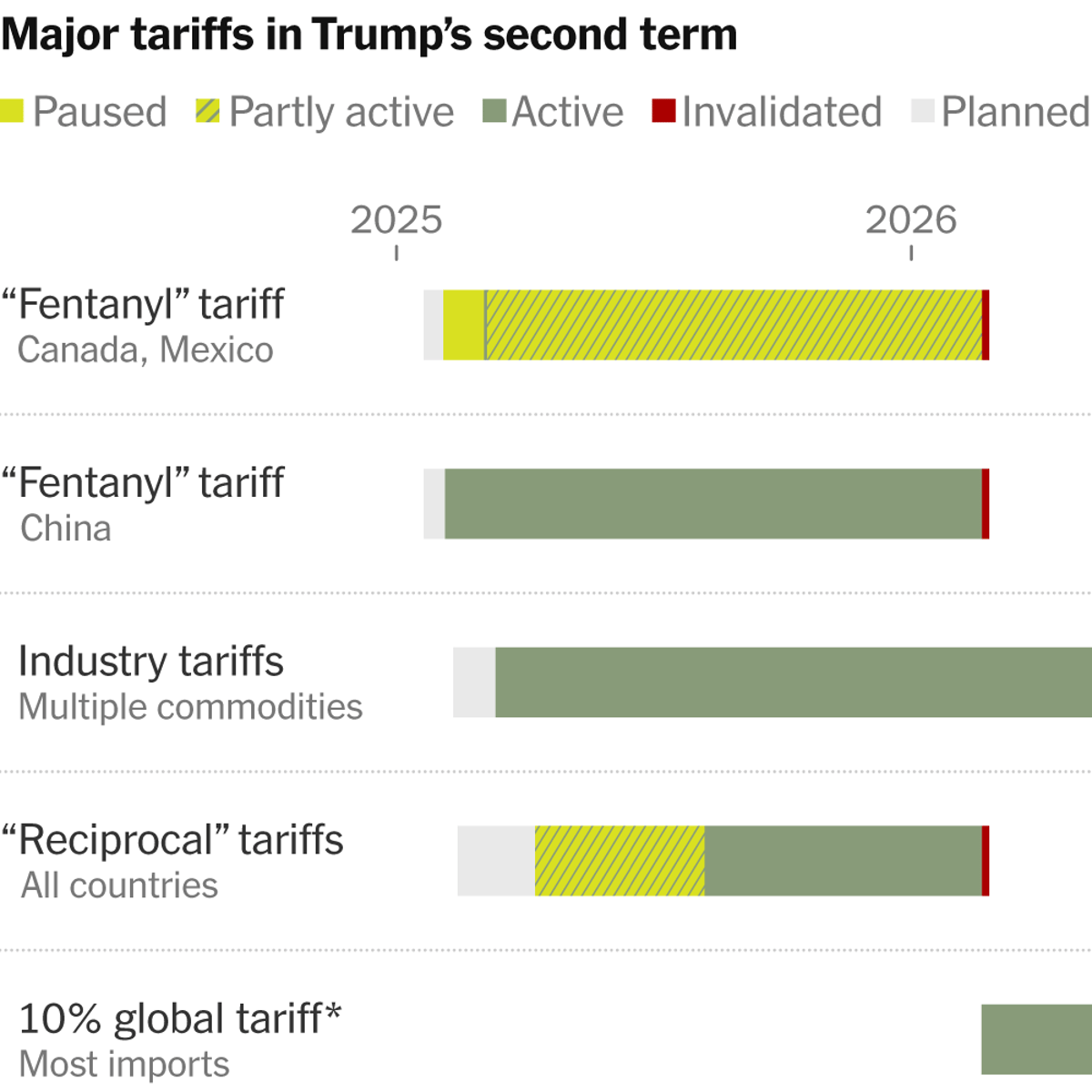
Trump’s tariff strategy has evolved from targeted measures—such as the fentanyl duties on Canada, Mexico and China—to sweeping import taxes that now touch virtually every product entering the United States. By imposing a 10 percent levy on the majority of imports, the administration aimed to pressure trading partners, protect domestic industries, and address perceived unfair practices. However, the breadth of the policy has sparked legal challenges, with critics arguing that the president overstepped the authority granted by the Trade Expansion Act and related statutes.
The recent ruling by a federal trade court marks a pivotal moment in the trade war. Judges concluded that the blanket 10 percent tariff lacks a clear statutory basis, effectively deeming it ultra vires. Although the administration has lodged an appeal, the tariff remains active pending a final decision, leaving importers to navigate a hybrid regime of enforced duties and pending legal uncertainty. This limbo complicates budgeting and pricing strategies for companies that rely on imported components, from automotive parts to consumer electronics, and may prompt firms to seek alternative sourcing or hedge against potential cost spikes.
For the broader economy, the outcome of the appeal could reshape the United States’ trade posture for years to come. A reversal would reinforce the administration’s aggressive leverage tool, potentially prompting retaliatory measures from affected countries. Conversely, a sustained invalidation could signal a retreat from broad protectionism, encouraging a return to more nuanced, sector‑specific tariffs. In either scenario, businesses must stay agile, monitor regulatory developments closely, and reassess supply‑chain risk management to mitigate the financial impact of shifting trade policy.
Which Trump Tariffs Are in Place, in the Works or Ruled Illegal
Comments
Want to join the conversation?
Loading comments...