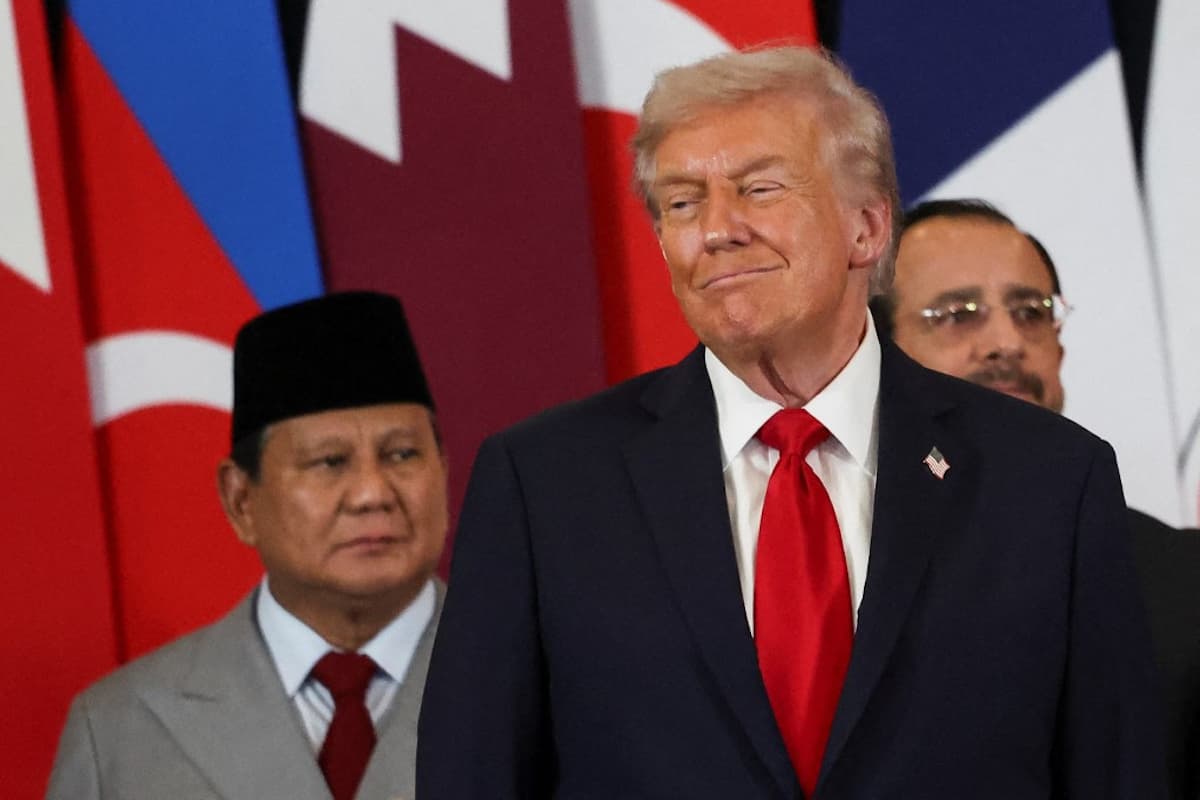
Why China Won’t Hit Back over Indonesia’s US Trade Deal
•March 9, 2026
0
Why It Matters
The deal reshapes U.S. influence in Southeast Asia while testing China’s tolerance for indirect trade constraints, and Beijing’s restrained response preserves its strategic foothold in Indonesia’s market.
Key Takeaways
- •Indonesia-US ART sets 19% tariffs on many goods.
- •China labels deal “third‑party” but avoids retaliation.
- •Beijing prioritizes long‑term Indonesia ties over short‑term disputes.
- •Retaliation likely aimed at US, not Indonesia.
- •Trade war risk low unless core Chinese interests threatened.
Pulse Analysis
The United States and Indonesia finalized the Agreement on Reciprocal Trade (ART) in February, establishing a 19 percent tariff ceiling on a wide range of products and embedding a clause that obliges Jakarta to apply measures with the same restrictive effect as U.S. duties or sanctions on “third parties.” While the text stops short of naming China, policymakers in Washington intend the provision to limit Chinese goods that might be re‑routed through Indonesian ports. For Jakarta, the pact offers greater market access to American consumers and a diversification of supply chains, but it also places the archipelago in the crosshairs of great‑power competition.
Beijing’s reaction has been measured. The foreign ministry’s standard “third‑party” disclaimer mirrors earlier statements on U.S. trade pacts across Asia, serving more as a diplomatic cue than a prelude to sanctions. China’s trade calculus weighs the billions of dollars of Indonesian imports—particularly energy, minerals and agricultural products—against the symbolic gain of a punitive response. Past episodes, such as the modest protest over Panama’s shift away from the Belt and Road, show that China reserves hard‑line measures for actions that threaten core strategic assets or critical supply‑chain chokepoints. The ART does not meet that threshold.
The restraint signals a pragmatic shift in the U.S.–China rivalry, where both powers prefer to win influence rather than ignite a bilateral trade war that could destabilize the region. For multinational firms, the key takeaway is that Indonesia will continue to serve as a neutral hub, but companies should monitor any U.S. policy tweaks that could trigger secondary Chinese measures. Investors should also watch how Beijing leverages diplomatic channels—such as investment incentives and infrastructure projects—to offset the modest trade friction. In the longer run, the ART may accelerate Southeast Asian efforts to balance ties with both superpowers while preserving economic autonomy.
Why China won’t hit back over Indonesia’s US trade deal
0
Comments
Want to join the conversation?
Loading comments...