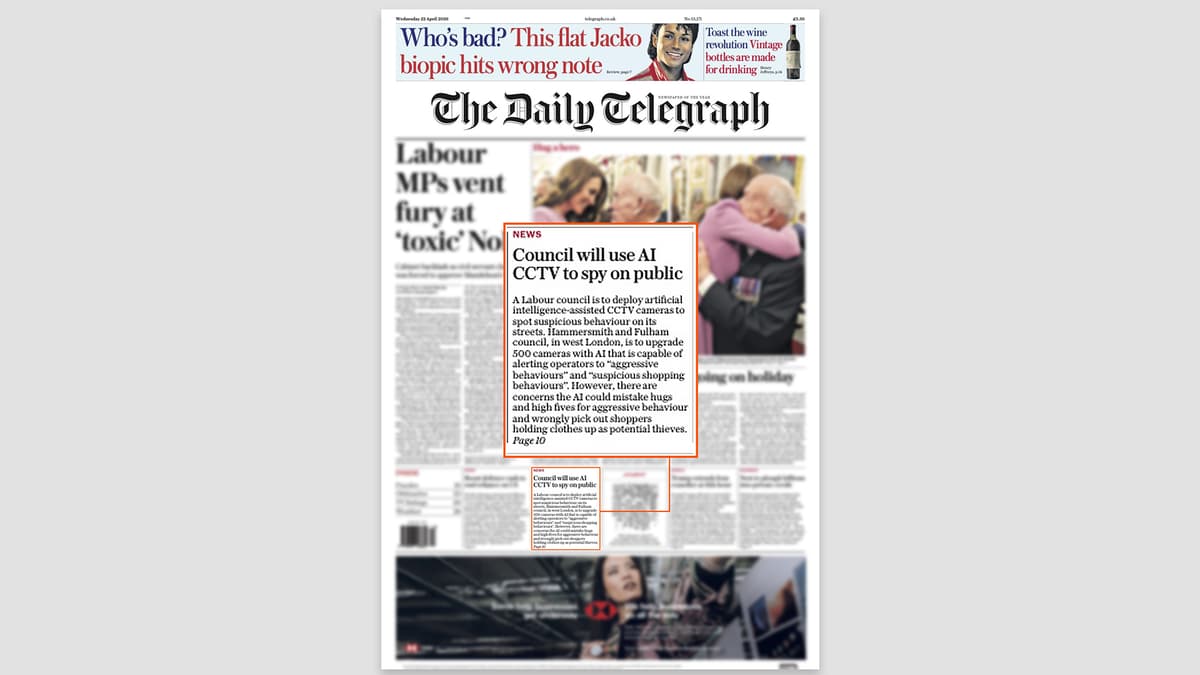
The Telegraph – Council Plans to Wire AI Surveillance Into 500 CCTV Cameras
Key Takeaways
- •Hammersmith & Fulham council allocates £3 m (~$3.8 m) for AI‑enabled CCTV.
- •500 cameras get AI modules for slip detection, vehicle ID, aggression alerts.
- •Big Brother Watch warns AI may flag ordinary behavior as suspicious.
- •Implementation could set precedent for UK councils adopting predictive policing tech.
- •Taxpayer‑funded system raises privacy and civil‑rights concerns across London.
Pulse Analysis
AI‑enhanced video surveillance is moving from experimental pilots to mainstream municipal deployments, and Hammersmith and Fulham’s £3 million upgrade exemplifies that shift. Across Britain, local authorities are wrestling with aging camera networks that offer limited analytical value. By layering machine‑learning models onto 500 existing lenses, the council hopes to automate incident detection, streamline traffic enforcement, and pre‑empt violent encounters. The investment, roughly $3.8 million, reflects both the falling cost of edge AI chips and the growing appetite for data‑driven public‑safety solutions.
The technology promises to identify slip‑and‑fall accidents, read license plates, and flag behaviours classified as aggressive. Yet experts warn that training data often lack the nuance needed to distinguish a hurried commuter from a genuine threat, leading to false positives that strain police resources and erode public trust. Bias in facial‑recognition and behavioural‑analysis algorithms can disproportionately target minority communities, a concern echoed by civil‑rights watchdog Big Brother Watch. As councils scale such systems, rigorous validation, transparent governance, and clear opt‑out mechanisms become essential to mitigate unintended consequences.
Beyond the immediate safety agenda, the rollout raises broader questions about surveillance capitalism and democratic oversight. Taxpayer‑funded AI cameras could set a precedent, prompting neighboring boroughs to adopt similar tools without robust legislative frameworks. Privacy advocates argue that continuous monitoring infringes on the reasonable expectation of anonymity in public spaces, potentially chilling lawful expression. Policymakers must balance the allure of operational efficiency with safeguards that protect civil liberties, ensuring that AI serves the public interest rather than becoming an unchecked instrument of control.
The Telegraph – Council plans to wire AI surveillance into 500 CCTV cameras
Comments
Want to join the conversation?