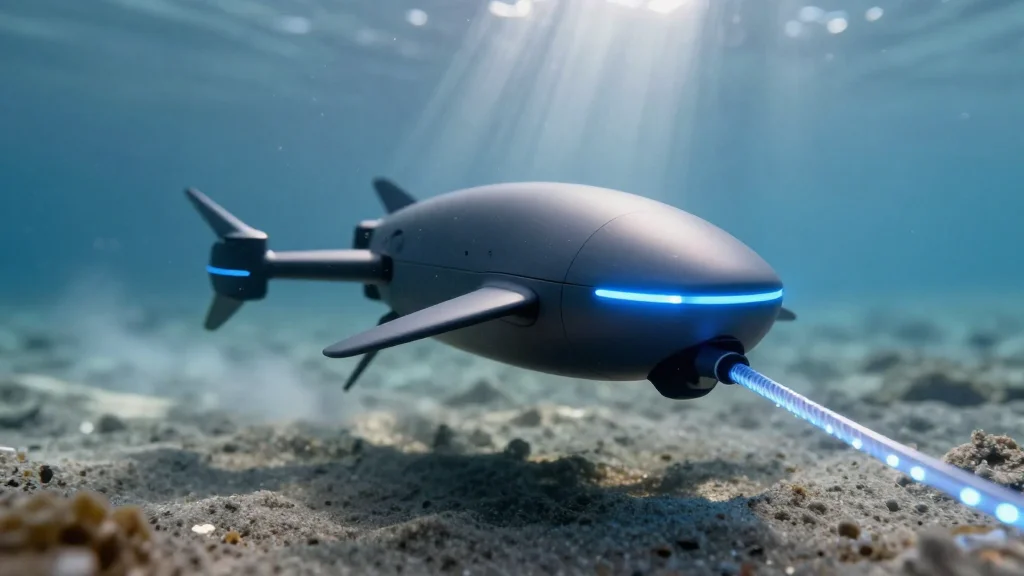
AUKUS Launches Autonomous Drone Program to Shield Undersea Cables

Why It Matters
Protecting subsea cables is a GovTech priority because these fibers carry the bulk of global data traffic, financial transactions, and emergency communications. A successful autonomous drone shield could set a new standard for safeguarding digital infrastructure against state‑sponsored sabotage and criminal interference. Moreover, the project demonstrates how defense partnerships can accelerate the commercialization of advanced sensor and AI technologies, potentially spilling over into civilian maritime monitoring, environmental protection, and disaster response. The initiative also forces policymakers to confront the legal and diplomatic challenges of operating armed, unmanned systems in international waters. How the AUKus partners define acceptable use, attribution standards, and escalation protocols will shape future norms for undersea security and could influence global governance of emerging maritime technologies.
Key Takeaways
- •AUKus announced its first Pillar Two “signature project”: autonomous underwater drones for cable protection.
- •Australia will buy three second‑hand Virginia‑class submarines to streamline submarine logistics.
- •Defence Minister Richard Marles warned that 99% of Australia’s internet traffic relies on just 15 subsea cables.
- •U.S. Defence Secretary Pete Hegseth highlighted multi‑mission UUV payloads to maintain maritime advantage.
- •Deployment is targeted for 2027, pending sensor integration and AI validation.
Pulse Analysis
The AUKus drone programme reflects a broader trend of militaries turning to unmanned, AI‑driven platforms to address asymmetric threats. Historically, undersea cable protection relied on surface patrols and passive monitoring; the shift to autonomous UUVs promises faster response times and continuous coverage, reducing the window for sabotage. This could spur a new market for commercial firms that specialize in underwater sensor fusion, low‑frequency acoustic communication, and autonomous navigation, creating opportunities for GovTech startups that can meet stringent defence standards.
From a strategic perspective, the project deepens the trilateral bond by linking high‑cost submarine procurement with a shared technology pipeline. The decision to purchase second‑hand Virginia‑class boats underscores a pragmatic approach to cost‑efficiency while still delivering a credible deterrent. By pairing these platforms with drones, the partners create a layered defence architecture that complicates adversary calculations, especially for actors like China and Russia that have demonstrated a willingness to target subsea infrastructure.
Looking ahead, the success of the AUKus drones will hinge on interoperability standards and data‑sharing protocols among the three nations. If the pilots prove effective, we may see a cascade of similar initiatives in other regions, prompting allies to develop joint undersea security frameworks. Conversely, any misstep—such as an accidental collision with civilian vessels—could trigger diplomatic fallout and stall further adoption. The next few years will therefore be a litmus test for how quickly autonomous maritime security can move from prototype to policy‑driven operational reality.
AUKUS launches autonomous drone program to shield undersea cables
Comments
Want to join the conversation?
Loading comments...