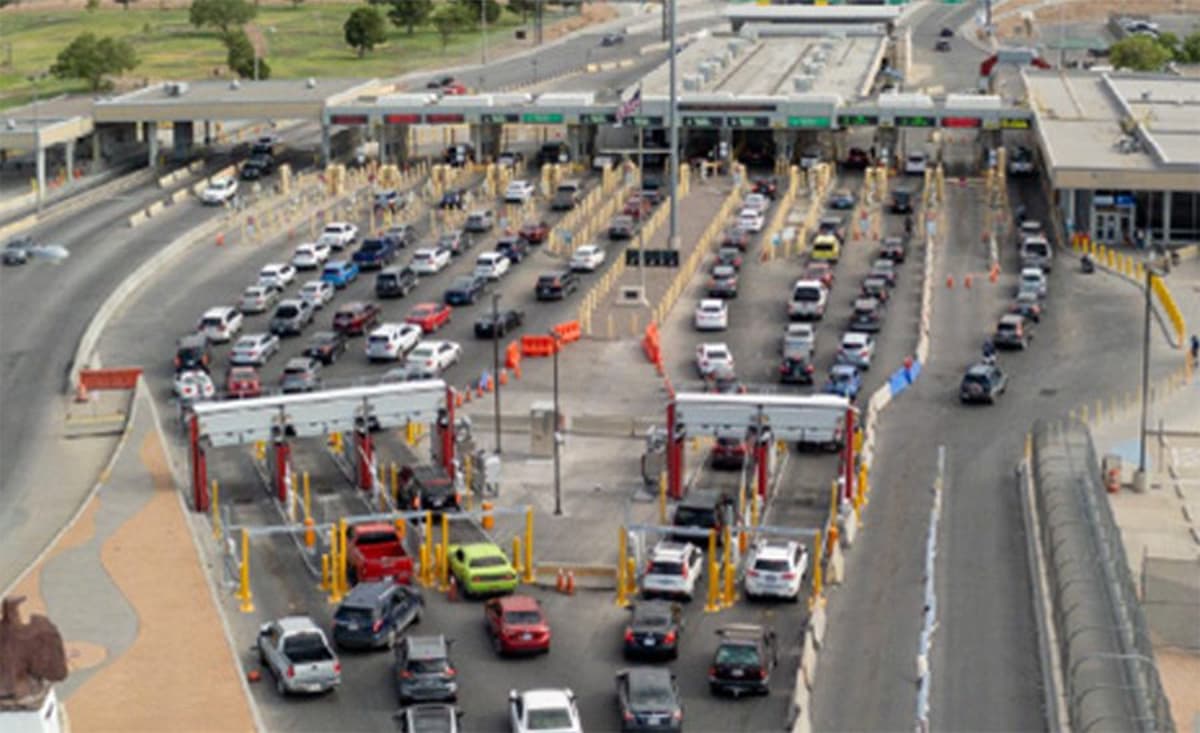
Border Security Bill Passes Congress, Funds CBP Inspection Systems, Civil Works
Why It Matters
By financing advanced inspection tools and necessary infrastructure, the act strengthens the nation’s ability to detect illegal goods while expediting legitimate trade, directly impacting supply‑chain efficiency and national security.
Key Takeaways
- •Secure America Act allocates $3.45 billion for CBP inspection tech.
- •Funding covers scanning systems, roadway upgrades, utility connections.
- •Legislation extends border security financing through 2029.
- •Bill passed House 214‑212, now awaiting presidential signature.
- •Enhanced inspection aims to reduce contraband and improve processing speed.
Pulse Analysis
The Secure America Act marks the most sizable federal commitment to border infrastructure in a decade, allocating $3.45 billion to Customs and Border Protection (CBP) for inspection technology and related civil works. Passed by a narrow 214‑212 margin in the House and already cleared by the Senate, the bill now rests on President Donald Trump's desk. By extending funding through 2029, the legislation provides a multi‑year budget certainty that allows agencies to plan large‑scale upgrades without the disruption of annual appropriations battles, a notable shift in the political calculus surrounding immigration and trade policy.
At the heart of the funding are non‑intrusive inspection portals—high‑resolution X‑ray and gamma‑ray scanners that can assess cargo without unloading. Deploying these systems often requires extensive site preparation, including roadway widening, utility hookups, and dedicated command centers. The act’s civil‑works component directly addresses those logistical hurdles, ensuring that ports such as El Paso’s Bridge of the Americas can integrate the technology without costly delays. For CBP, the upgrades promise faster clearance times, reduced reliance on manual inspections, and a higher detection rate for contraband and illicit shipments.
The investment carries ripple effects for the broader supply chain. Faster, more reliable inspections reduce dwell time for trucks and containers, lowering transportation costs for manufacturers and retailers that depend on just‑in‑time delivery models. Moreover, the modernized infrastructure enhances the United States’ credibility in international trade negotiations, signaling a commitment to secure yet efficient borders. Industry analysts expect that the act will also spur private‑sector innovation in scanning equipment, as vendors compete for federal contracts, potentially driving down costs and accelerating technology adoption across North America.
Border Security Bill Passes Congress, Funds CBP Inspection Systems, Civil Works
Comments
Want to join the conversation?
Loading comments...