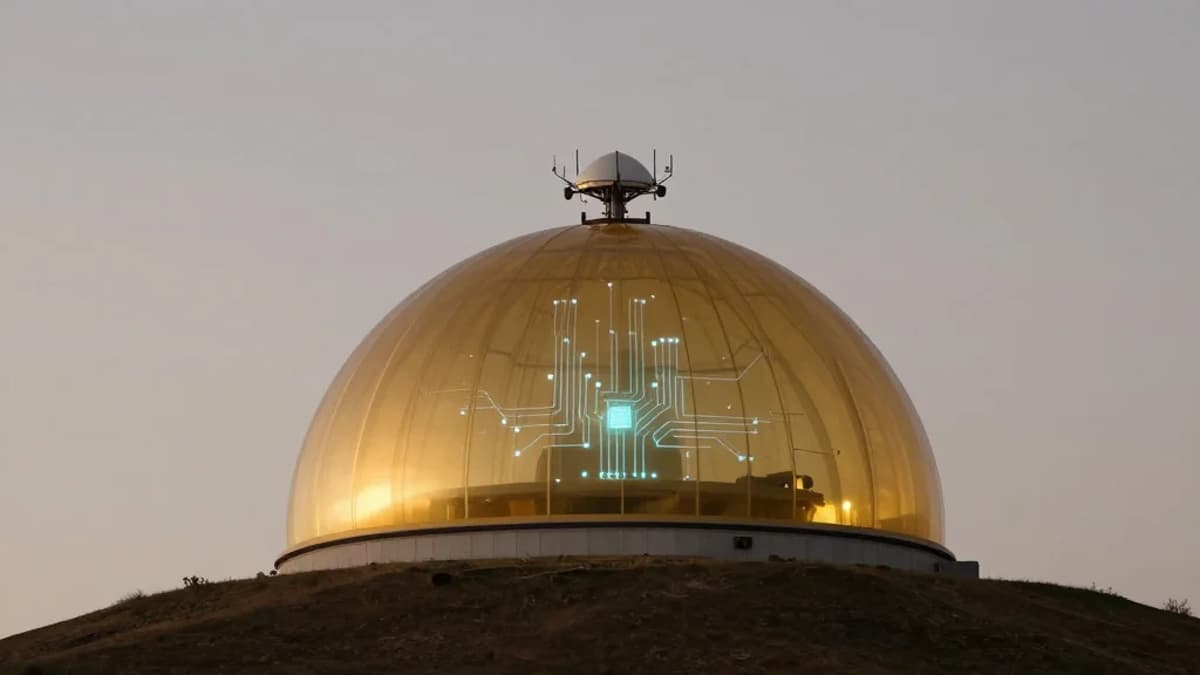
Building the Digital Foundation for Golden Dome
•March 2, 2026
0
Companies Mentioned

Red Hat
Microsoft
MSFT
Why It Matters
The collaboration signals that commercial cloud and AI capabilities are now critical to accelerating U.S. missile‑defense deployment and enhancing deterrence, while deepening reliance on private‑sector expertise for national security.
Key Takeaways
- •Integrated software accelerates missile‑defense decision cycles
- •Modern infrastructure ensures resilient, secure data sharing
- •Automation and AI boost response speed and coordination
- •Red Hat and Microsoft partner on defense cloud solutions
- •Golden Dome aims layered air and missile protection
Pulse Analysis
The Golden Dome concept reflects a strategic shift toward a fully integrated, layered defense architecture capable of countering sophisticated air and missile threats. Achieving this vision requires a digital backbone that can ingest massive sensor streams, process them in real time, and disseminate actionable intelligence across multiple command nodes. Traditional stovepiped systems lack the agility and scalability needed for such rapid decision cycles, prompting defense planners to look toward commercial cloud technologies and open‑source ecosystems for a more flexible solution.
Red Hat and Microsoft are positioning their combined expertise to fill that gap. Red Hat’s open‑source middleware and Kubernetes‑based orchestration provide a resilient, vendor‑agnostic platform for deploying mission‑critical workloads, while Microsoft’s Azure Government cloud offers hardened, compliant infrastructure with built‑in AI services. Together, they promise automated data pipelines, edge‑to‑cloud analytics, and AI‑driven threat prioritization that can shave seconds off response times—an advantage that can be decisive in high‑speed missile engagements. Their joint roadmap also stresses interoperability, ensuring legacy defense systems can be modernized without costly replacements.
For the broader defense industry, this partnership signals a market pivot toward digital transformation as a core procurement criterion. Contractors will need to demonstrate cloud‑native capabilities, zero‑trust security models, and AI integration to remain competitive in future contracts. Moreover, the emphasis on automation and open standards may lower barriers for smaller innovators to contribute specialized algorithms or sensor fusion tools. As geopolitical tensions drive demand for rapid, reliable defense responses, the Golden Dome’s digital foundation could become a benchmark for next‑generation security architectures worldwide.
Building the Digital Foundation for Golden Dome
0
Comments
Want to join the conversation?
Loading comments...