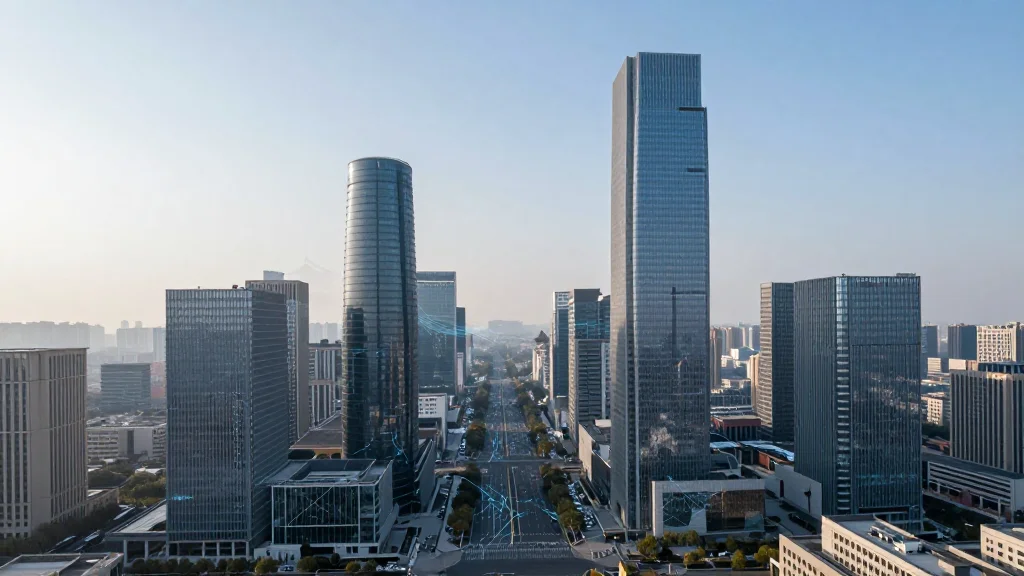
China’s $842 Billion Xiong’an Smart‑City Project Lags Behind Schedule

Why It Matters
Xiong’an was billed as a showcase for China’s next‑generation GovTech capabilities, promising to fuse urban planning with AI, big data, and cloud services. Its delays cast doubt on the nation’s ability to deliver on such integrated digital governance models at scale, potentially slowing the rollout of similar initiatives in other regions. Moreover, the project’s financial magnitude—over half a trillion dollars—means that prolonged setbacks could strain public budgets and affect confidence among domestic and foreign technology partners. The outcome of Xiong’an will also influence how Chinese policymakers balance political ambition with practical execution in future smart‑city projects. A successful turnaround could reaffirm the top‑down model, while continued stagnation may prompt a shift toward more decentralized, market‑driven approaches to urban digital transformation.
Key Takeaways
- •Construction began in 2017 on the Xiong’an New Area, a flagship smart‑city project.
- •The project’s reported cost is 842 billion Australian dollars (≈ $560 billion USD).
- •Xi Jinping defended the initiative, calling his decision “entirely correct.”
- •A recent forum urged officials to “further emancipate the mind” and improve coordination.
- •The city remains largely empty, with key digital infrastructure still unimplemented.
Pulse Analysis
The Xiong’an delay underscores a recurring tension in China’s GovTech playbook: the clash between political will and operational complexity. While the central government can marshal massive capital and set ambitious timelines, the execution of integrated digital ecosystems demands granular coordination across ministries, private vendors, and local authorities—an area where bureaucratic inertia often surfaces. The Xiong’an case may become a cautionary tale for other megaprojects that aim to embed AI and IoT at the core of urban governance.
Historically, China’s large‑scale infrastructure successes—high‑speed rail, 5G rollout—have hinged on clear, incremental milestones and a robust supply chain. Smart‑city initiatives, however, add layers of software development, data governance, and citizen adoption that are less predictable. If Xiong’an can pivot quickly, leveraging its existing physical assets to launch pilot digital services, it could still serve as a proof‑of‑concept for future GovTech deployments. Conversely, prolonged stagnation could erode confidence among domestic tech firms and foreign investors, prompting a recalibration of how the state approaches digital urbanization.
Going forward, analysts will monitor whether Xi’s renewed call for “strategic focus and historical patience” translates into concrete policy levers—such as streamlined procurement, talent incentives, or public‑private partnership reforms. The ability to convert the unfinished concrete into a functioning smart city will be the litmus test for China’s broader ambition to lead the next wave of government‑technology integration worldwide.
China’s $842 Billion Xiong’an Smart‑City Project Lags Behind Schedule
Comments
Want to join the conversation?
Loading comments...