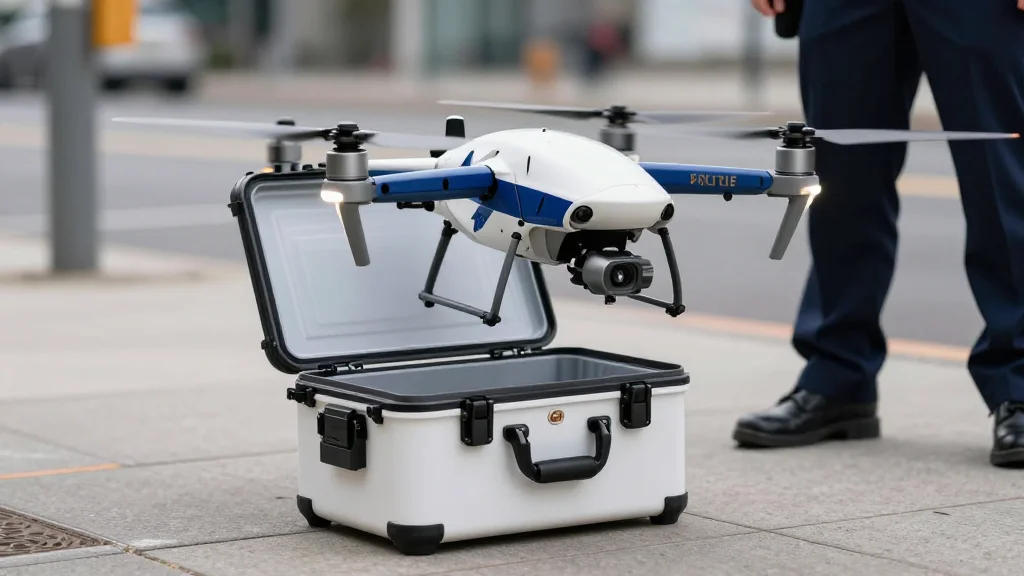
Cleveland Police Put More Drones on the Beat
Why It Matters
Rapid aerial response shortens incident timelines and improves situational awareness, giving police a tactical edge in urban policing. The technology also boosts early evidence capture, potentially increasing case solvability and public safety outcomes.
Key Takeaways
- •DFR drones launch within 90 seconds from weather‑proof boxes.
- •73 incidents responded to by DFR since start of year.
- •59 trained pilots support searches, suspect tracking, evidence capture.
- •Fleet logged 2,185 routine drone deployments in 2025.
Pulse Analysis
The adoption of Drone as First Responder (DFR) technology marks a significant shift in how UK police forces manage emergencies. By integrating remotely piloted aircraft into the dispatch workflow, Cleveland Police can deliver real‑time aerial intelligence within minutes, a capability that traditional ground units cannot match. This rapid visual overview helps commanders allocate resources more efficiently, reduces response times, and provides a safer environment for officers who can assess threats before arriving on scene.
Beyond immediate incident response, the DFR system enhances investigative processes. High‑resolution video and thermal imaging captured during deployments create a digital evidence trail that can be reviewed in court, strengthening prosecutions. The ability to locate missing persons or track illegal off‑road bikes from the air also expands the force’s operational reach, especially in hard‑to‑access urban or rural areas. With 59 trained pilots and a proven fleet that logged over two thousand flights last year, Cleveland Police demonstrates how scaling drone expertise can become a core policing asset.
The broader implications for law enforcement are clear: as more forces adopt similar programs, the competitive advantage of aerial first responders will likely become a baseline expectation. Investment in drone infrastructure, training, and regulatory compliance will be essential to maintain public trust while leveraging the technology’s benefits. For municipalities, the DFR model offers a cost‑effective way to augment existing resources, improve public safety outcomes, and stay ahead of evolving security challenges.
Cleveland Police put more drones on the beat
Comments
Want to join the conversation?
Loading comments...