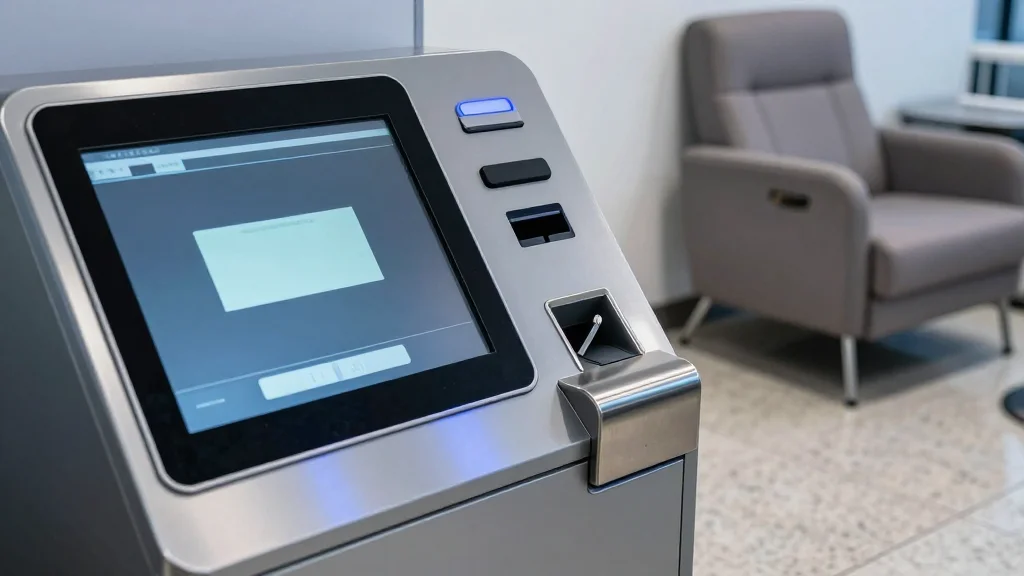
Delhi to Revamp Sub‑Registrar Offices with Passport Seva‑Style Kiosks and AC Lounges

Why It Matters
Modernising sub‑registrar offices tackles one of India’s most persistent governance challenges: opaque, time‑consuming property registration that fuels corruption and slows real‑estate markets. By digitising workflows and introducing transparent token systems, Delhi aims to reduce transaction costs for homeowners, developers and lenders, thereby improving market efficiency. The project also serves as a testbed for emerging GovTech tools—AI verification and blockchain record‑keeping—that could be replicated across other public‑service domains such as birth registration, vehicle licensing and tax collection. If the Delhi model proves effective, it could accelerate the Indian government's broader digital‑government agenda, encouraging states to allocate budgetary resources toward similar upgrades. Private‑sector participation would create a new revenue stream for GovTech firms, fostering innovation and competition in a market that has traditionally been dominated by legacy IT providers.
Key Takeaways
- •Delhi will redesign all sub‑registrar offices to mirror Passport Seva Kendra centres.
- •New facilities will feature token‑based queues, digital help desks and air‑conditioned lounges.
- •AI‑powered document verification and blockchain‑backed record storage are being piloted.
- •Chief Minister Rekha Gupta pledged a “most advanced property registration system” in India.
- •Private companies will be invited to set up and run premium service centres.
Pulse Analysis
Delhi’s decision to import the Passport Seva Kendra playbook into property registration reflects a pragmatic recognition that citizen‑centric design can cut friction in high‑stakes transactions. The original passport centres succeeded by moving from walk‑in, paper‑heavy processes to appointment‑driven, digitally managed flows. Applying that template to land records—an arena historically plagued by manual verification and patronage networks—could dramatically lower the opportunity cost for both buyers and sellers. The token system alone promises to shrink average wait times, while the AC lounges address a softer, yet politically salient, comfort metric for a climate‑sensitive city.
The involvement of private operators marks a departure from the purely bureaucratic model that has dominated Indian land‑record administration. By outsourcing the front‑end service layer, the government hopes to inject market discipline, but it also introduces new risk vectors: contract enforcement, data sovereignty and the potential for service‑level disparities across neighborhoods. Successful governance will hinge on robust monitoring frameworks and clear escalation paths for citizen grievances.
From a market perspective, the initiative could catalyse a wave of GovTech investment focused on end‑to‑end property‑registration suites. Companies that can bundle AI verification, blockchain anchoring and user‑friendly kiosk interfaces stand to win sizable contracts not only in Delhi but across the nation’s 28 states. However, the technology stack must be calibrated to India’s heterogeneous digital literacy levels and variable internet connectivity. If Delhi can demonstrate measurable reductions in processing time and corruption complaints within the first year, it will provide a compelling case study for scaling the model, potentially reshaping how Indian governments deliver core civic services.
Delhi to Revamp Sub‑Registrar Offices with Passport Seva‑Style Kiosks and AC Lounges
Comments
Want to join the conversation?
Loading comments...