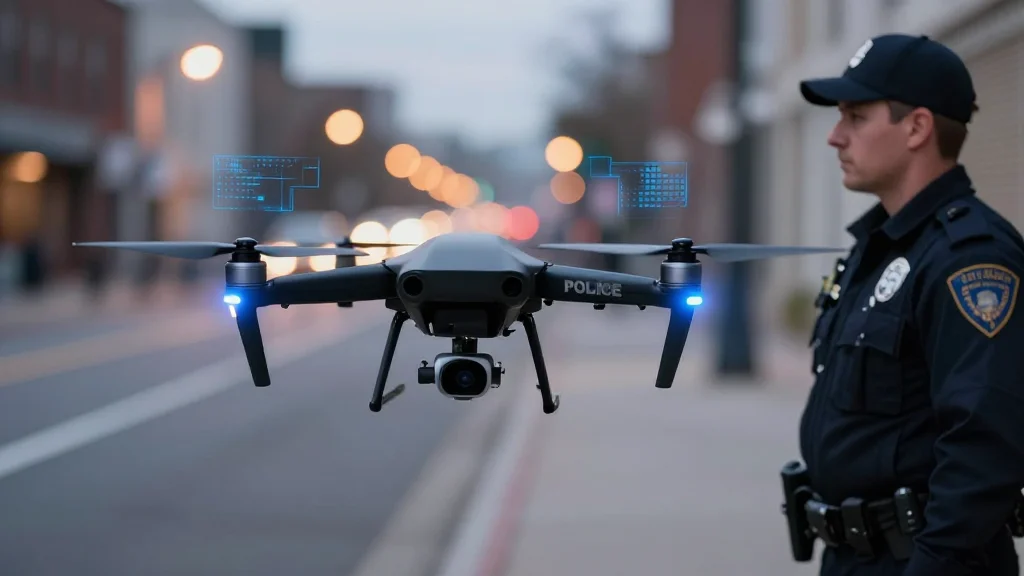
Drone Program Gives Fort Worth Police ‘Eyes in the Sky’
Companies Mentioned
Why It Matters
The partnership demonstrates how municipalities can use cost‑effective drone technology to boost officer safety and response speed while maintaining accountability, setting a template for other U.S. police forces.
Key Takeaways
- •Two drones deployed with eight officers and two sergeants.
- •Drones can arrive before units, creating “negative response time.”
- •Program operates under FAA Part 107 waiver up to 400 feet.
- •All footage owned by Fort Worth Police; Flock only accesses support cases.
- •Trial is one‑year, no‑cost partnership aiming city‑wide coverage.
Pulse Analysis
The Fort Worth Police Department’s drone program reflects a growing trend among U.S. law‑enforcement agencies to integrate unmanned aerial systems into daily operations. By pairing real‑time video feeds with a dedicated command team, the city can assess evolving incidents—such as missing persons, barricaded subjects, or large‑scale accidents—within seconds, a capability that traditional dispatch and patrol units cannot match. This rapid situational awareness not only improves officer safety but also reduces the likelihood of escalation, delivering tangible public‑safety benefits that justify the investment.
Operationally, the program adheres to FAA Part 107 waivers, allowing flights up to 400 feet while employing radar‑based collision avoidance and predefined no‑fly zones. Each mission is logged and posted to a transparency portal, addressing community privacy concerns and reinforcing accountability. The drones’ cameras remain horizon‑focused during transit, only tilting downward upon arrival, and all captured data is owned by the police department, with Flock Safety accessing footage solely for support purposes. Such safeguards are critical for maintaining public trust as surveillance capabilities expand.
Beyond Fort Worth, the initiative signals a scalable model for municipalities seeking cost‑effective alternatives to manned aircraft. Drones cost a fraction of helicopter operations while delivering comparable aerial perspectives, making them attractive for budget‑constrained cities. As more agencies adopt similar trials, industry standards around training, data governance, and inter‑agency coordination will likely coalesce, shaping the future of public‑safety technology across the United States.
Drone Program Gives Fort Worth Police ‘Eyes in the Sky’
Comments
Want to join the conversation?
Loading comments...