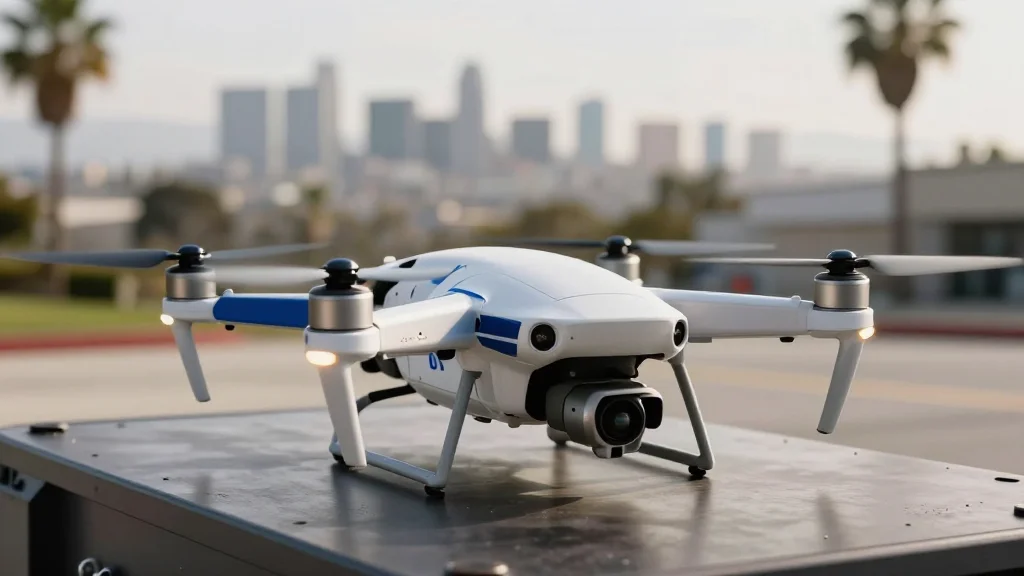
Drones Join Police Helicopters in Los Angeles’ Skies
Why It Matters
Shifting from costly helicopters to agile drones could cut public‑safety expenses and speed responses, but it also intensifies debates over surveillance, accountability, and community trust in Los Angeles.
Key Takeaways
- •LAPD used drones 3,500+ times in 2024, half arrived first
- •Fleet to grow to 24 units, funded partly by $1.2M donation
- •Drones saved an estimated $3,500 per SWAT incident versus helicopters
- •Two drone crashes this year highlight reliability and safety challenges
Pulse Analysis
Los Angeles police have turned to unmanned aerial vehicles as a pragmatic supplement to their aging helicopter fleet. The department’s "drone as a first responder" program, launched in July, logged over 3,500 sorties last year, often reaching scenes faster than ground units. With a compact three‑foot frame, four rotors, and infrared night vision, these drones can cover two miles in roughly two minutes, giving commanders real‑time visual intelligence that can de‑escalate situations or redirect resources. The rapid adoption reflects broader municipal trends where cities seek cost‑effective, technology‑driven tools for public safety.
Financial pressure is a primary driver behind the expansion. LAPD helicopters, among the world’s largest municipal fleets, consume about $50 million annually—more than the combined budgets of 14 city agencies. By contrast, a single drone deployment can shave roughly $3,500 from a SWAT operation, mainly through lower fuel and maintenance costs. The upcoming increase to 24 drones, partially financed by a $1.2 million private donation, promises further savings and operational flexibility, especially for routine calls like break‑ins or crowd monitoring. Yet the limited half‑hour flight time and modest payload mean drones will remain complementary rather than a full replacement for rotary‑wing assets.
The surge in aerial surveillance also raises privacy and oversight questions. Critics argue that drones, unlike identifiable helicopters, can operate covertly, potentially expanding police reach into neighborhoods already wary of aerial monitoring. Recent incidents—such as a drone crash during a World Series game and another collision with a high‑rise building—highlight safety and reliability challenges that could erode public confidence. As AI integration and longer‑range batteries evolve, policymakers will need clear guidelines to balance efficiency gains with civil liberties, ensuring that the next generation of police drones serves the community without becoming a source of contention.
Drones Join Police Helicopters in Los Angeles’ Skies
Comments
Want to join the conversation?
Loading comments...