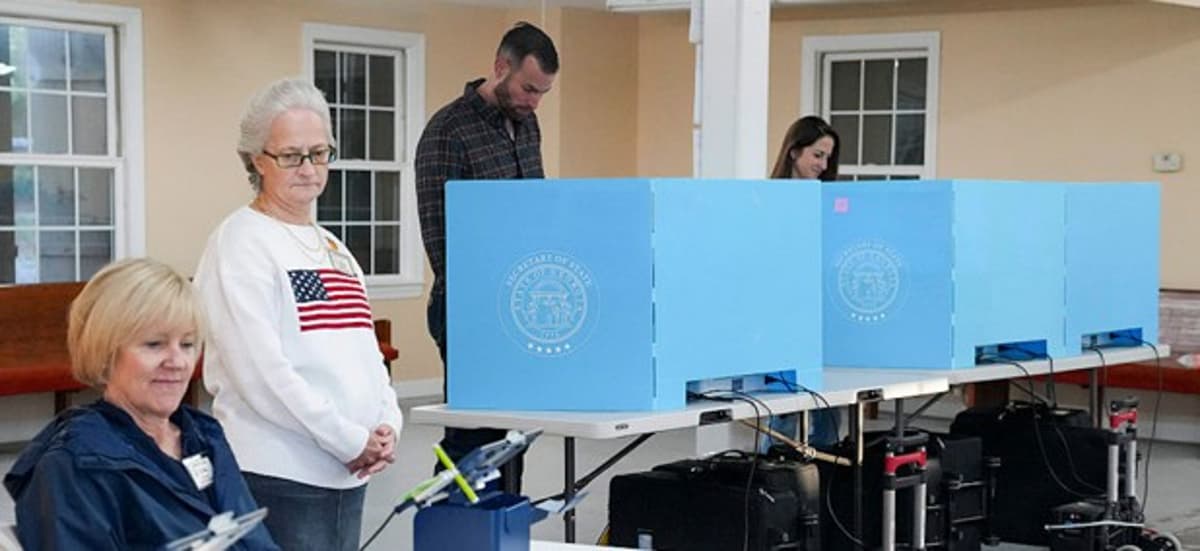
Election Officials Left in Limbo as State Leaders Contemplate Next Steps for Ballot QR Codes
Why It Matters
The unresolved QR‑code ban threatens election integrity and staffing stability ahead of the 2026 midterms, risking voter confidence and costly litigation.
Key Takeaways
- •2024 law bans ballot QR codes after July 1, but no funding allocated.
- •Legislative deadline extension failed; Governor Kemp may call special session.
- •Election officials fear staff resignations if rapid system change required.
- •Proposed fallback: hand‑marked paper ballots or optical scanners needing new equipment.
- •Legal challenges likely over scanner certification and emergency backup procedures.
Pulse Analysis
Georgia’s election apparatus faces a looming compliance crisis as the July 1 deadline to eliminate QR‑code ballot scanning approaches. The 2024 statute that outlawed QR codes was passed without accompanying budget provisions, forcing counties to operate under contradictory mandates. Without a legislative fix, local officials must scramble to either revert to traditional hand‑marked paper ballots or adopt new optical‑scan technology—each option demanding significant training, procurement, and procedural overhaul. This uncertainty compounds the logistical pressures of the May primaries and upcoming runoff elections, where staffing shortages could undermine poll operations.
Stakeholders are divided on the optimal stopgap. Voting‑rights groups and some bipartisan legislators urge Governor Brian Kemp to call a special session, yet the governor must balance that call against campaign‑fundraising bans that limit lawmakers’ activities during a session. Meanwhile, the State Election Board contemplates activating the emergency backup system, which would require pre‑printed paper ballots and manual distribution—a process unfamiliar to many poll workers, especially in large counties like DeKalb. The board’s mixed‑party composition reflects the broader political stakes, as any misstep could affect tightly contested state legislative and congressional races.
The technical path forward is equally fraught. The state budget already earmarked $1.8 million for scanners capable of reading human‑readable text and $5 million for a full hand recount in November, but the Election Assistance Commission has not certified this optical‑scanning technology. Legal experts predict swift challenges that could land in federal court, delaying implementation and potentially forcing counties to revert to paper‑only voting. As Georgia prepares for a contentious 2026 election cycle, the resolution of the QR‑code ban will serve as a bellwether for how quickly election infrastructure can adapt to legislative gaps without compromising voter confidence.
Election officials left in limbo as state leaders contemplate next steps for ballot QR codes
Comments
Want to join the conversation?
Loading comments...