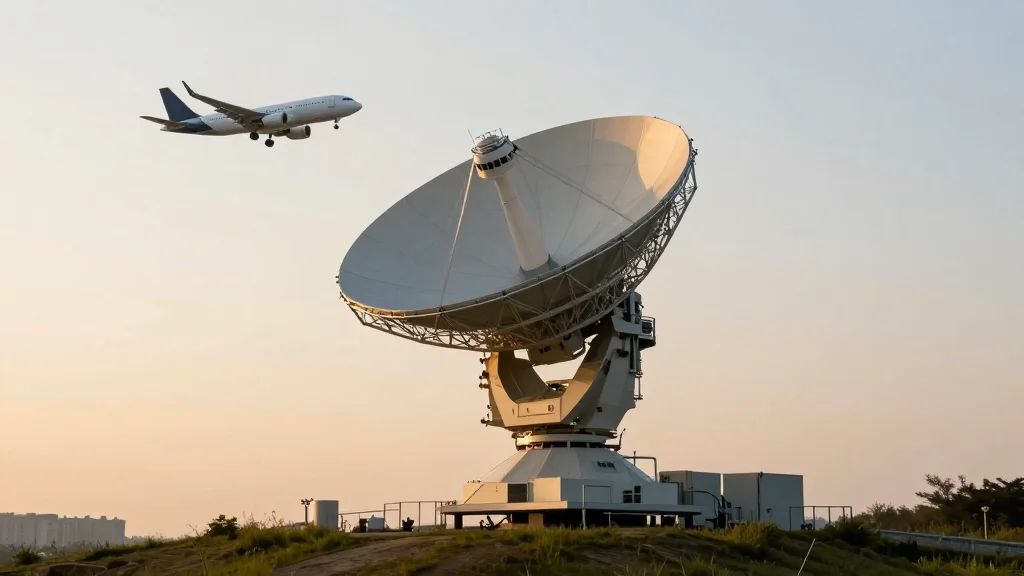
FAA Launches $12.5 B Radar Modernization, Targeting 612 Outdated Systems by 2028

Companies Mentioned
Why It Matters
Modernizing the FAA’s radar network directly impacts national aviation safety, reducing the risk of system‑wide outages that can cascade into massive flight delays and economic losses. The $12.5 billion investment also illustrates how the federal government is mobilizing advanced GovTech solutions—such as fiber‑optic communications and solid‑state radar—to replace legacy infrastructure that has become a liability. Successful execution could set a precedent for other agencies facing similar modernization challenges, from the Department of Transportation’s highway sensors to the Department of Defense’s legacy command‑and‑control systems. Beyond safety, the project signals a strategic alignment between U.S. defense contractors and civilian agencies, blurring the line between military‑grade technology and public‑service applications. This convergence may accelerate innovation cycles, lower procurement costs through shared R&D, and create new market opportunities for firms that can navigate both defense and civilian regulatory environments.
Key Takeaways
- •$12.5 billion allocated to replace 612 FAA radar systems by end‑2028
- •Contracts awarded to RTX (U.S.) and Indra (Spain) with Peraton overseeing execution
- •Over $6 billion already committed; total projected spend $32 billion
- •Project replaces 14 radar families and converts copper wiring to fiber optics
- •FAA Administrator Bryan Bedford called the radar network "long overdue for an upgrade"
Pulse Analysis
The FAA’s radar modernization is more than a capital‑intensive upgrade; it is a litmus test for how the federal government can orchestrate large‑scale GovTech transformations. Historically, aviation infrastructure upgrades have been incremental, hampered by fragmented funding and legacy procurement rules. By bundling the entire radar replacement into a single, multi‑billion‑dollar contract, the FAA is leveraging economies of scale and forcing suppliers to deliver end‑to‑end solutions rather than piecemeal components. This approach mirrors the defense sector’s acquisition model, where long‑term contracts and integrated oversight have yielded rapid technology adoption.
However, the financial magnitude raises red flags. The $20 billion gap beyond the initial $12.5 billion allocation suggests that the FAA may need to seek additional appropriations or re‑allocate funds from other programs. If Congress balks, the agency could face schedule slips, eroding the safety benefits that the upgrade promises. Moreover, the reliance on foreign partner Indra introduces geopolitical considerations, especially as supply‑chain security becomes a focal point for U.S. policymakers.
Looking ahead, the radar overhaul could catalyze a wave of similar initiatives across the public sector. Agencies managing critical infrastructure—energy grids, water treatment, and public transit—are likely to adopt the FAA’s model of consolidated contracts, fiber‑optic upgrades, and solid‑state hardware. Success will hinge on transparent reporting, disciplined project management, and the ability to balance cost containment with the imperative of modernizing aging systems. The FAA’s progress will therefore be watched not only by airlines and passengers but also by the broader GovTech ecosystem seeking a roadmap for large‑scale digital renewal.
FAA Launches $12.5 B Radar Modernization, Targeting 612 Outdated Systems by 2028
Comments
Want to join the conversation?
Loading comments...